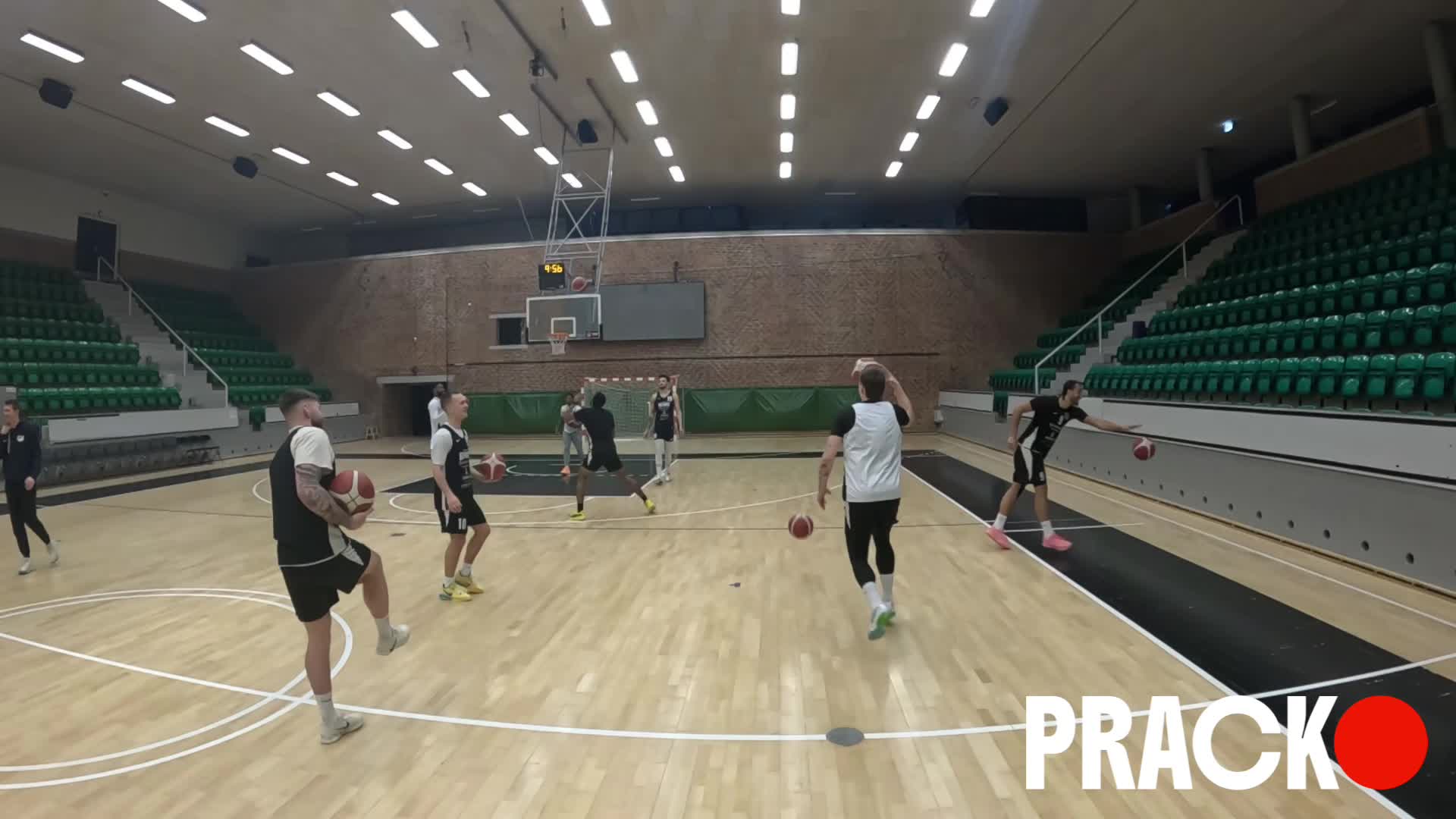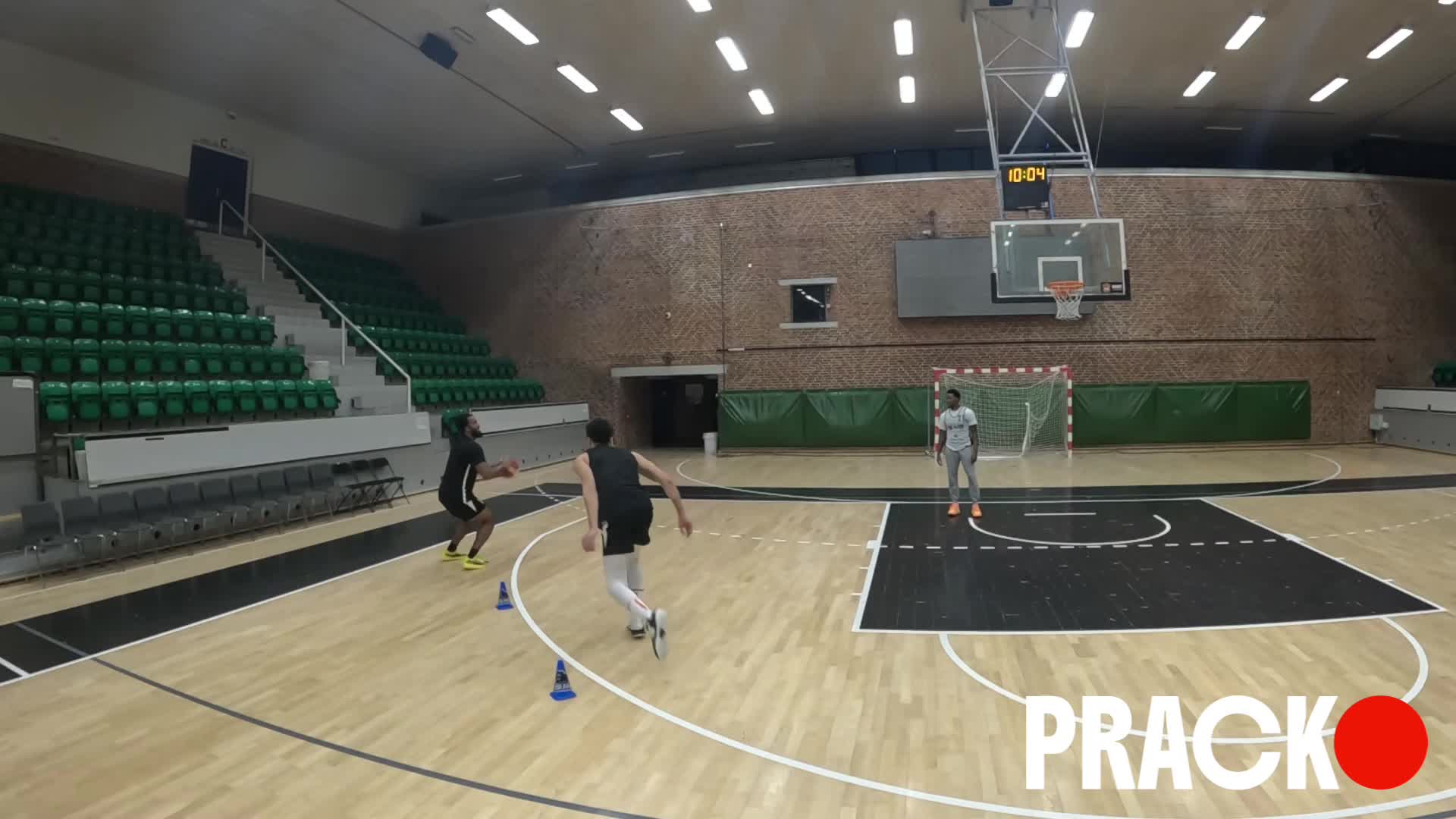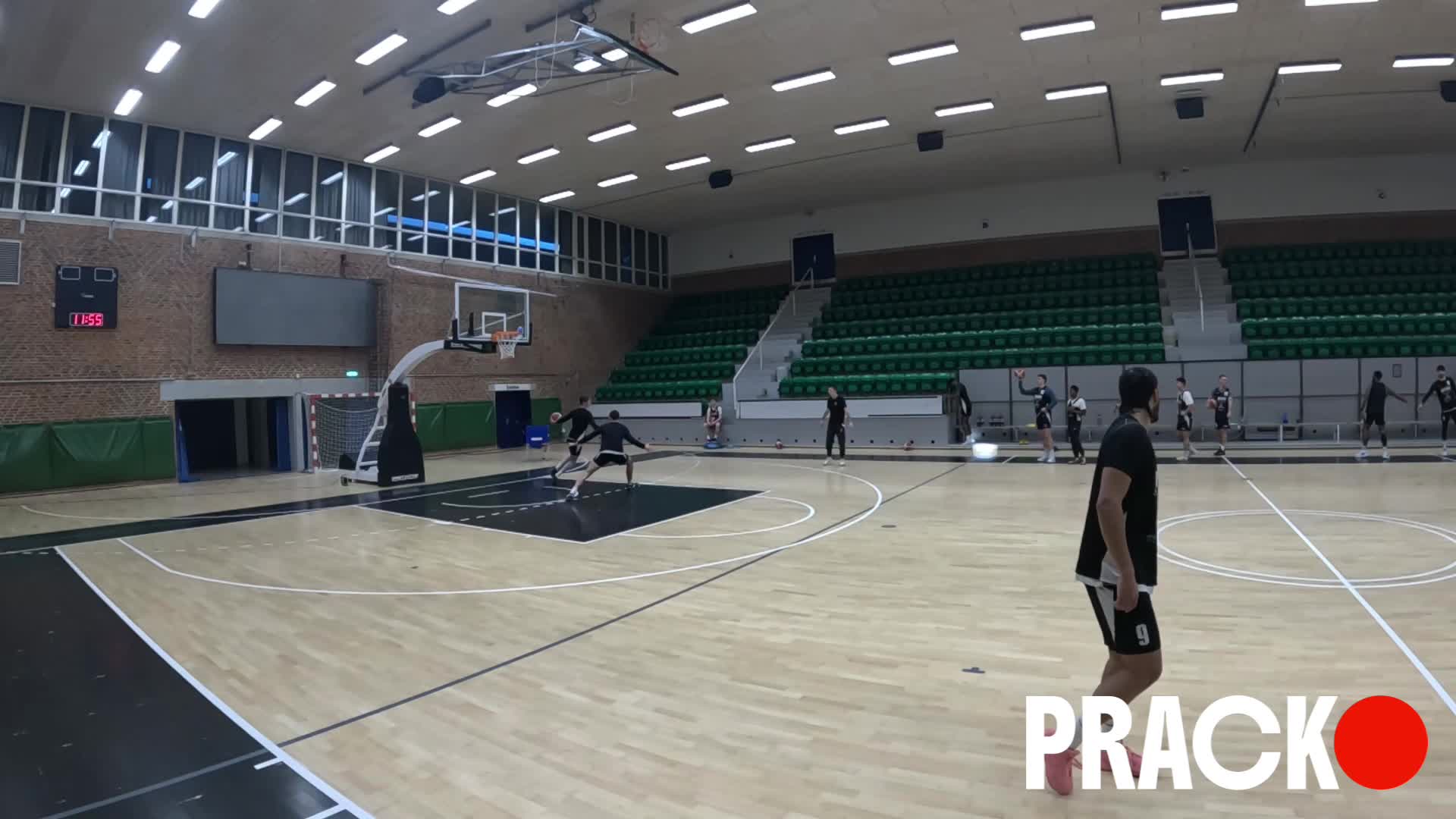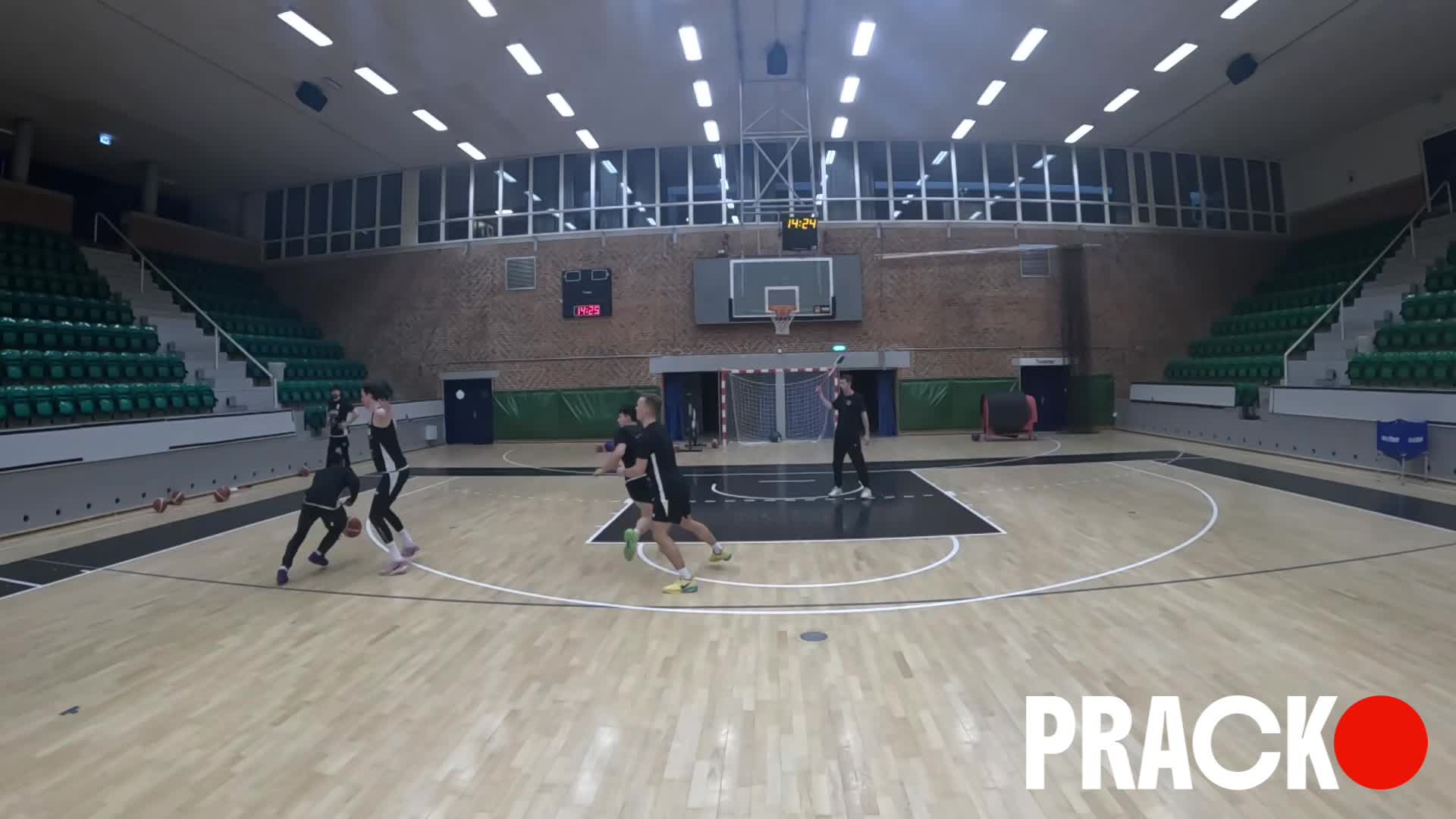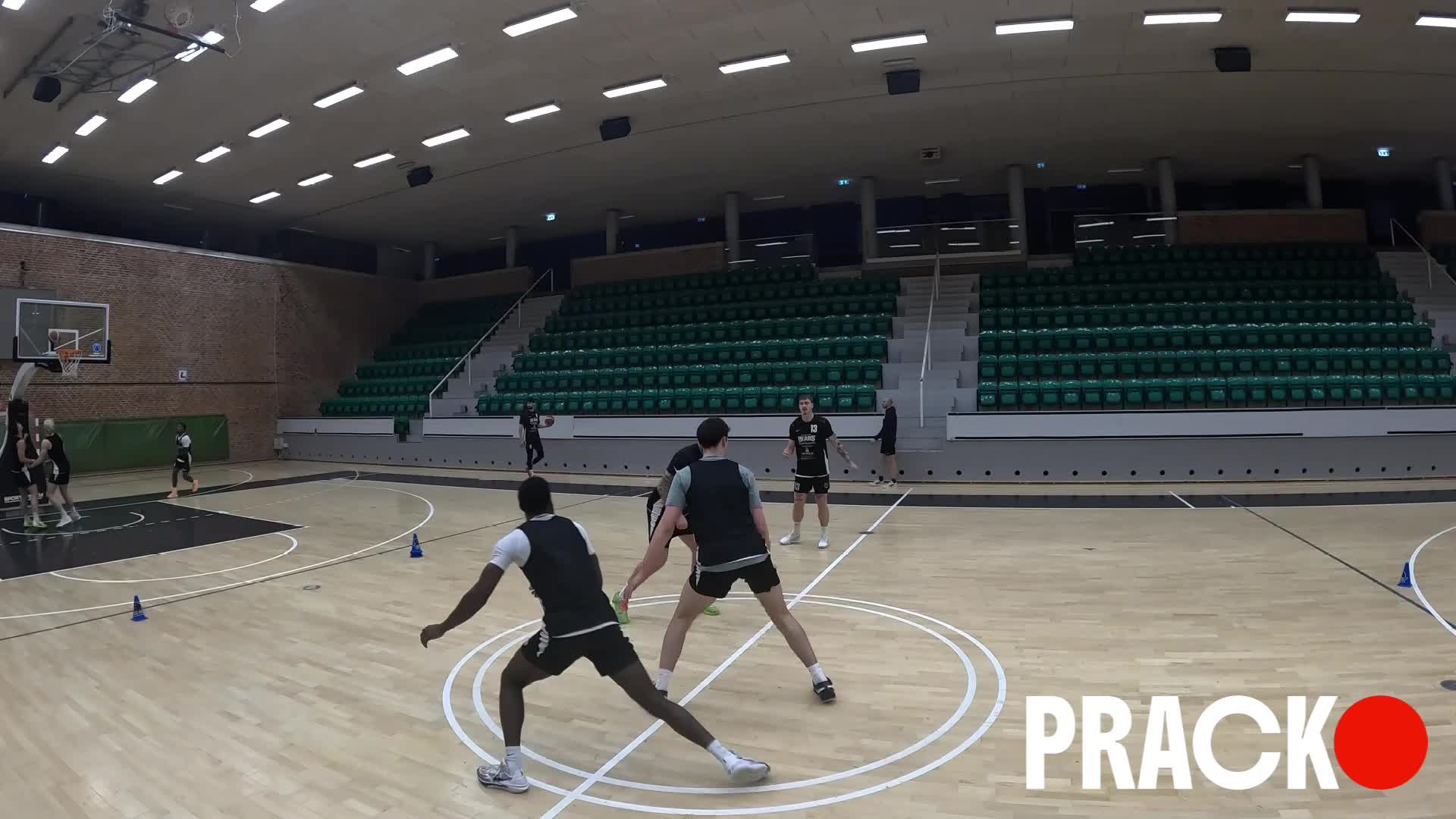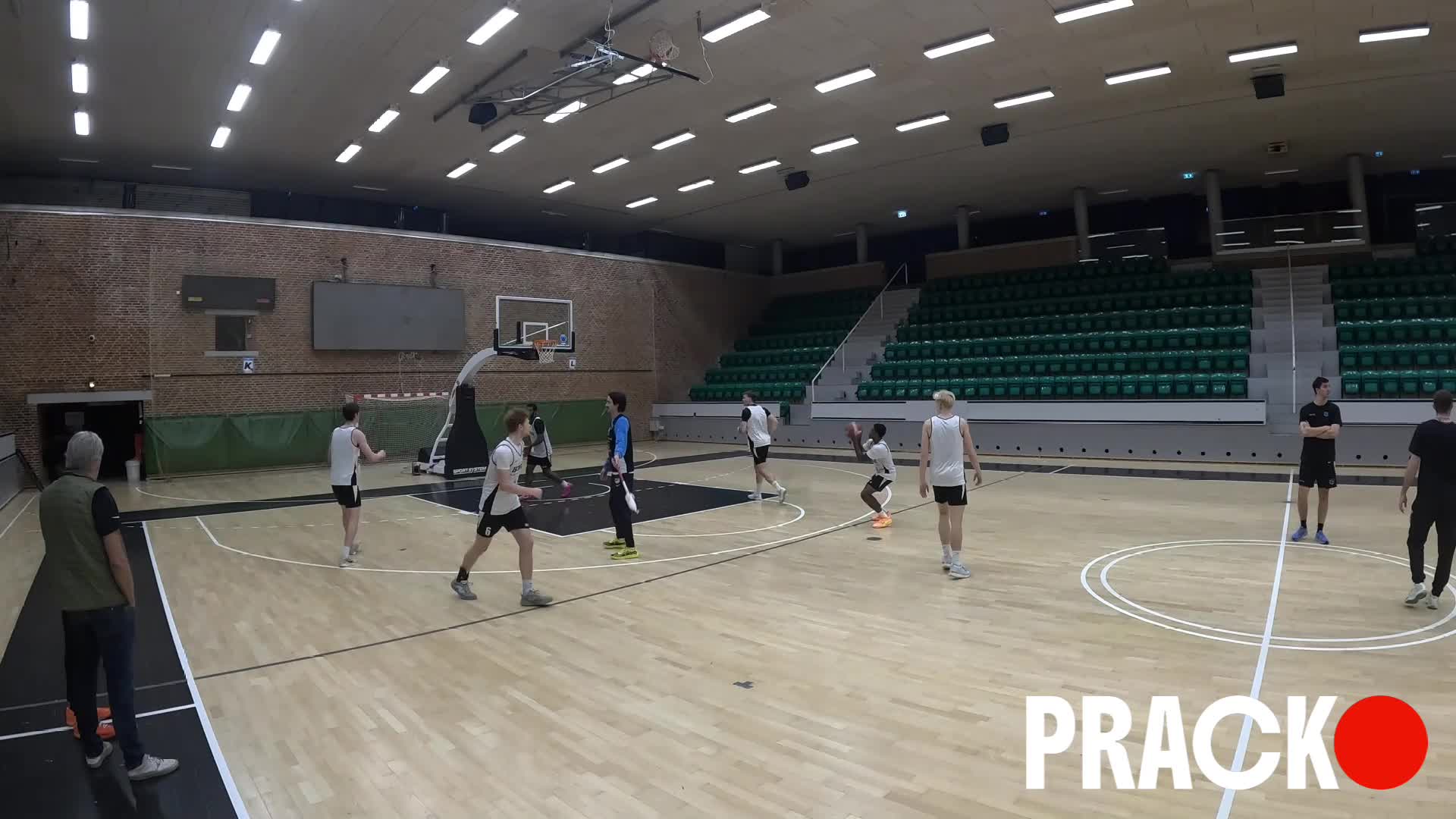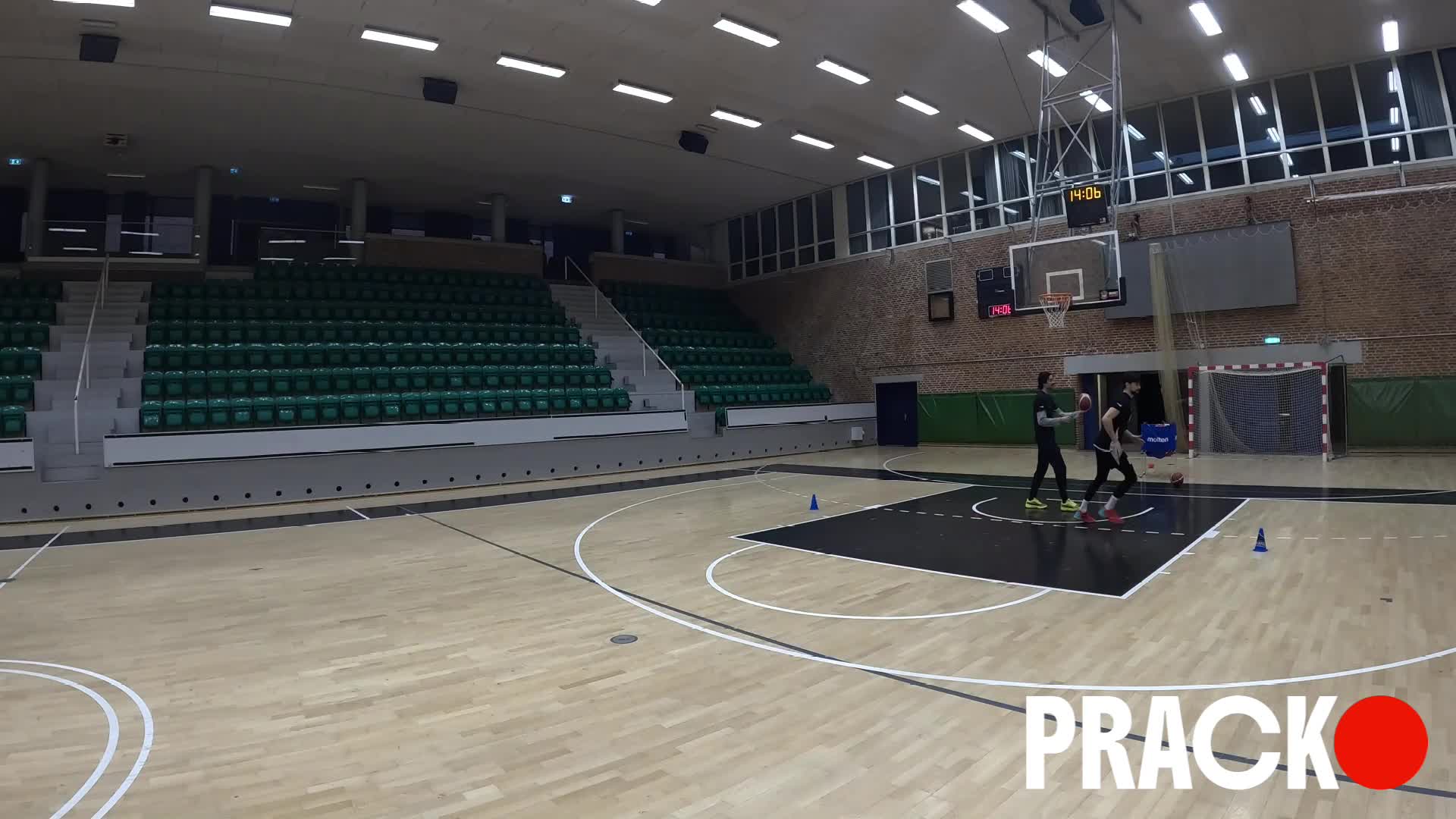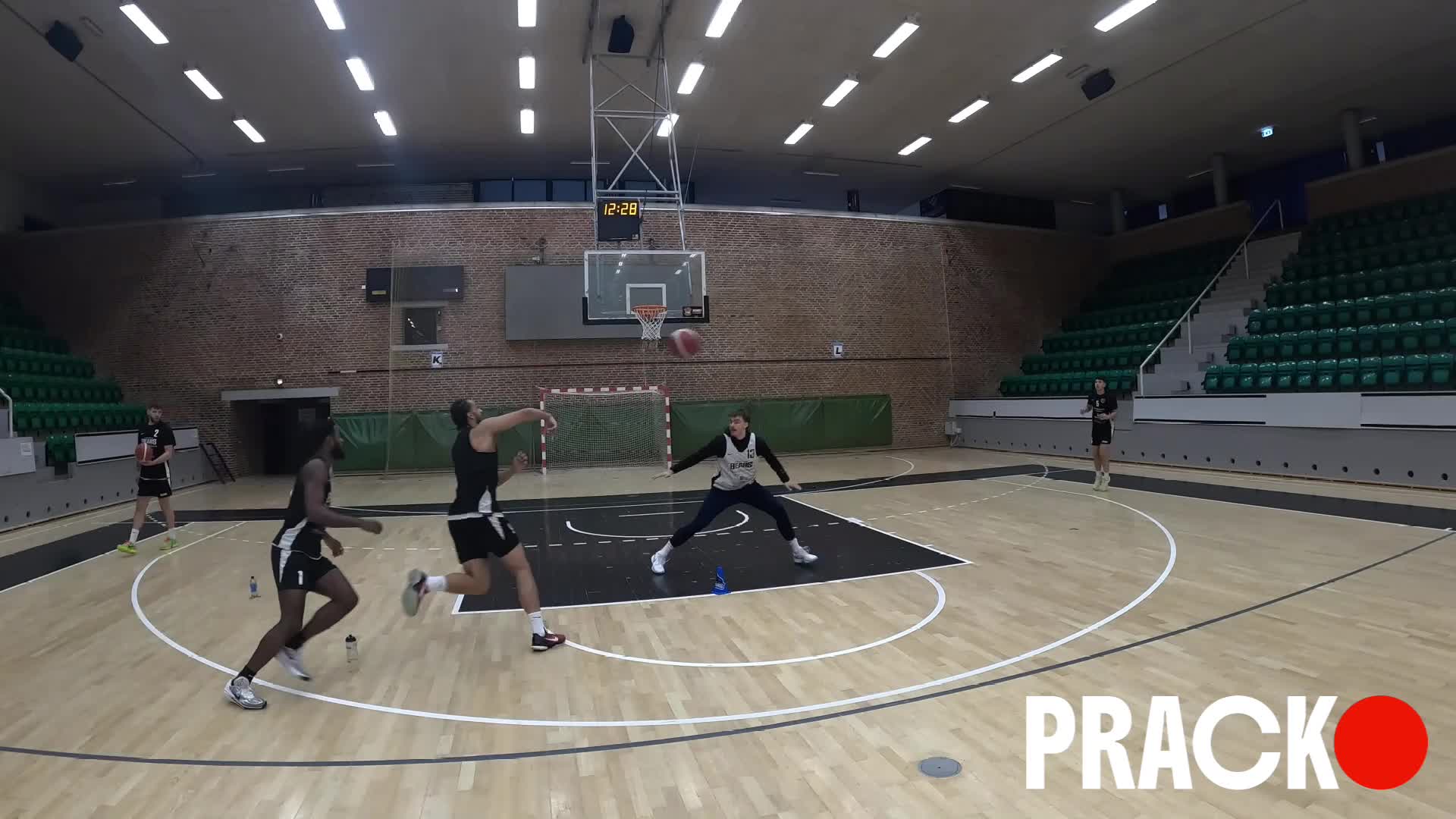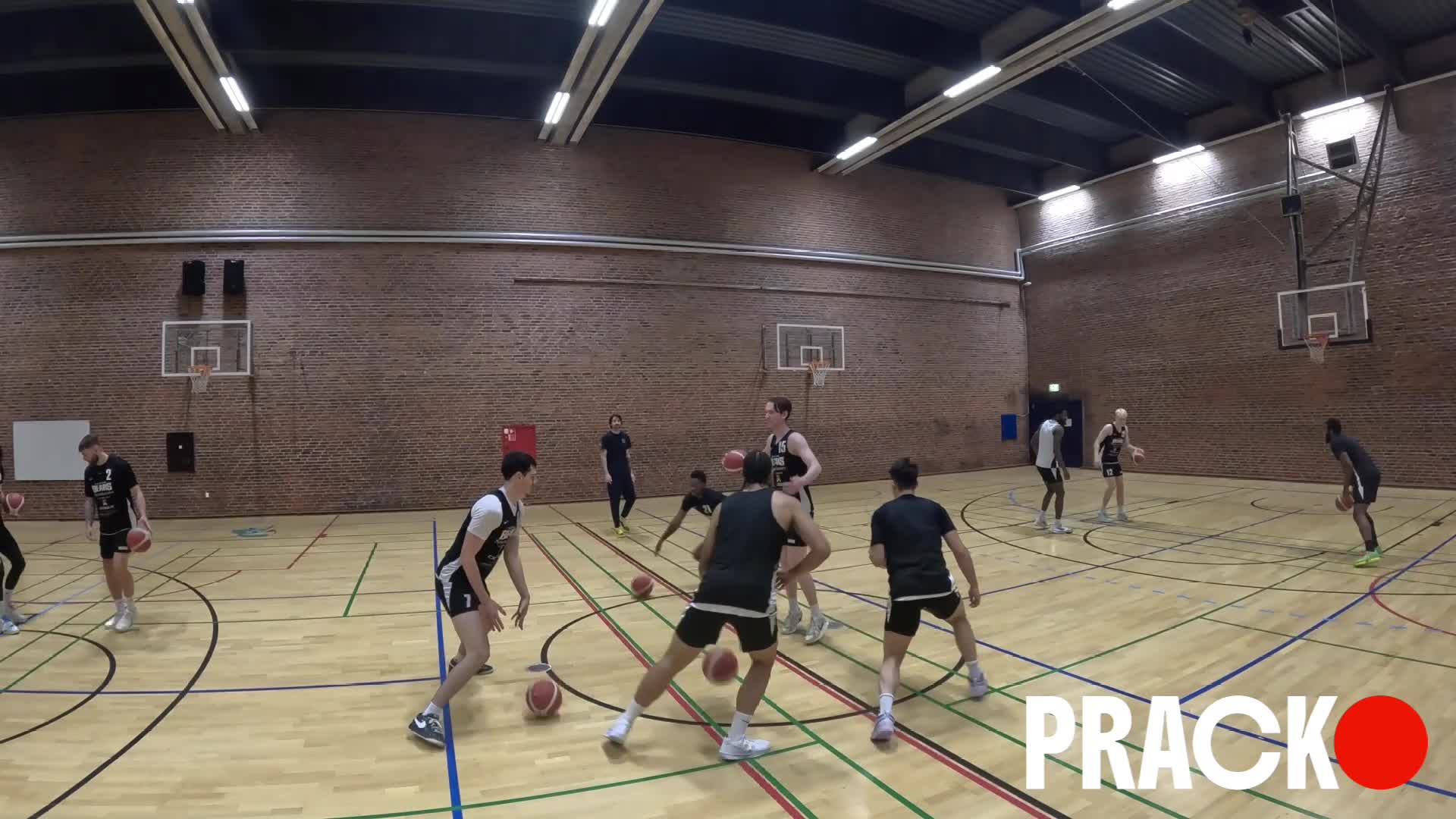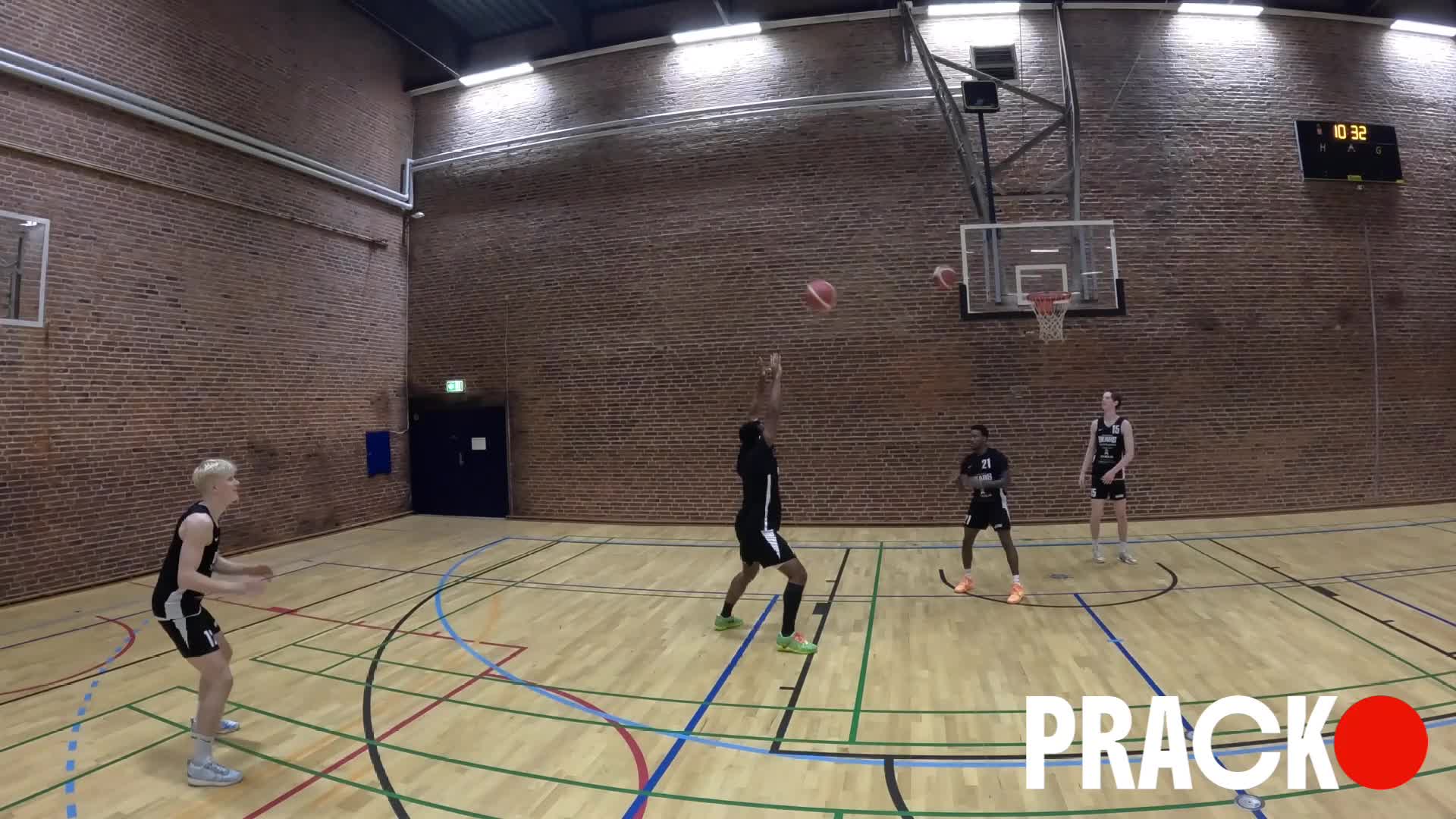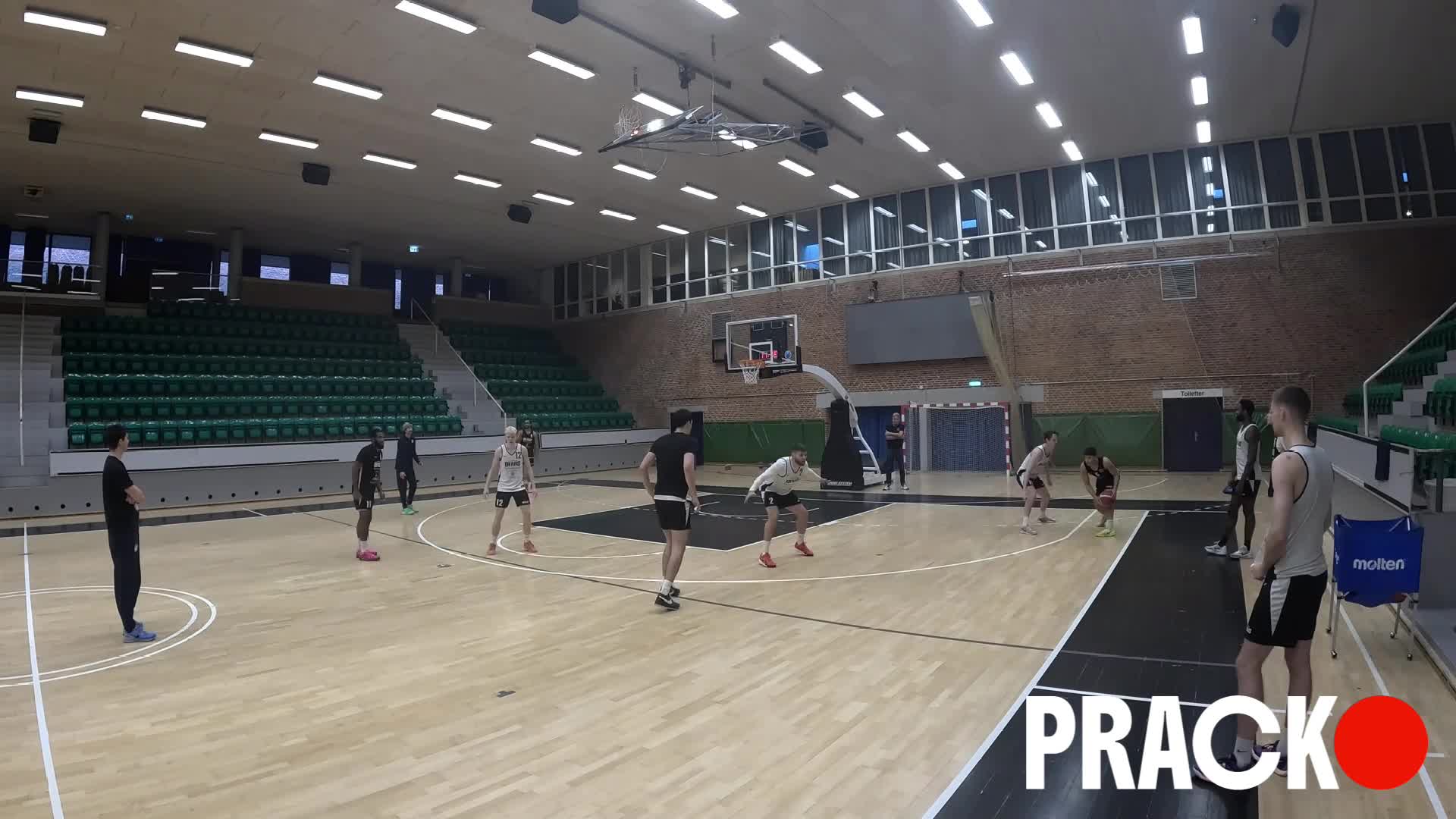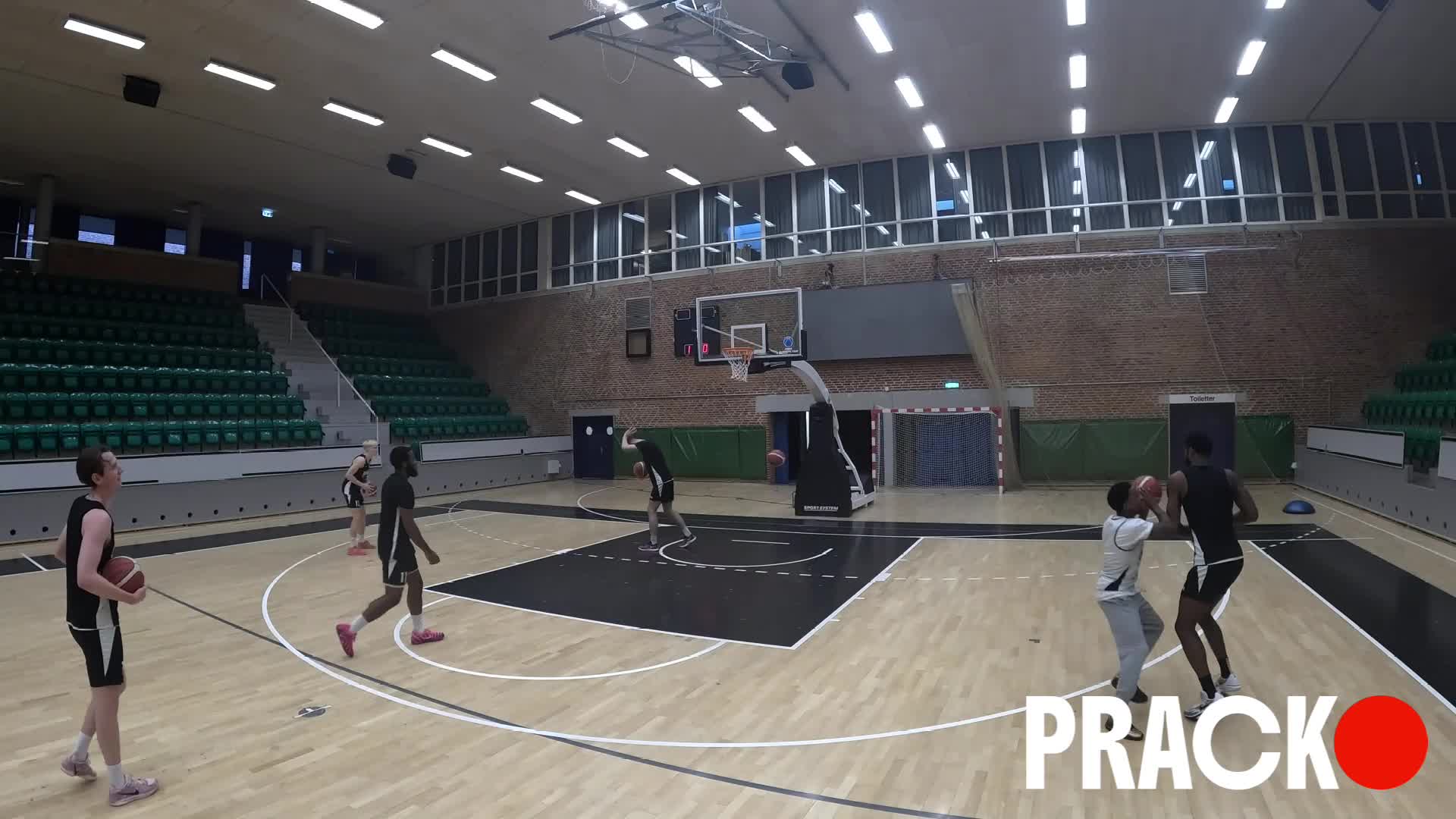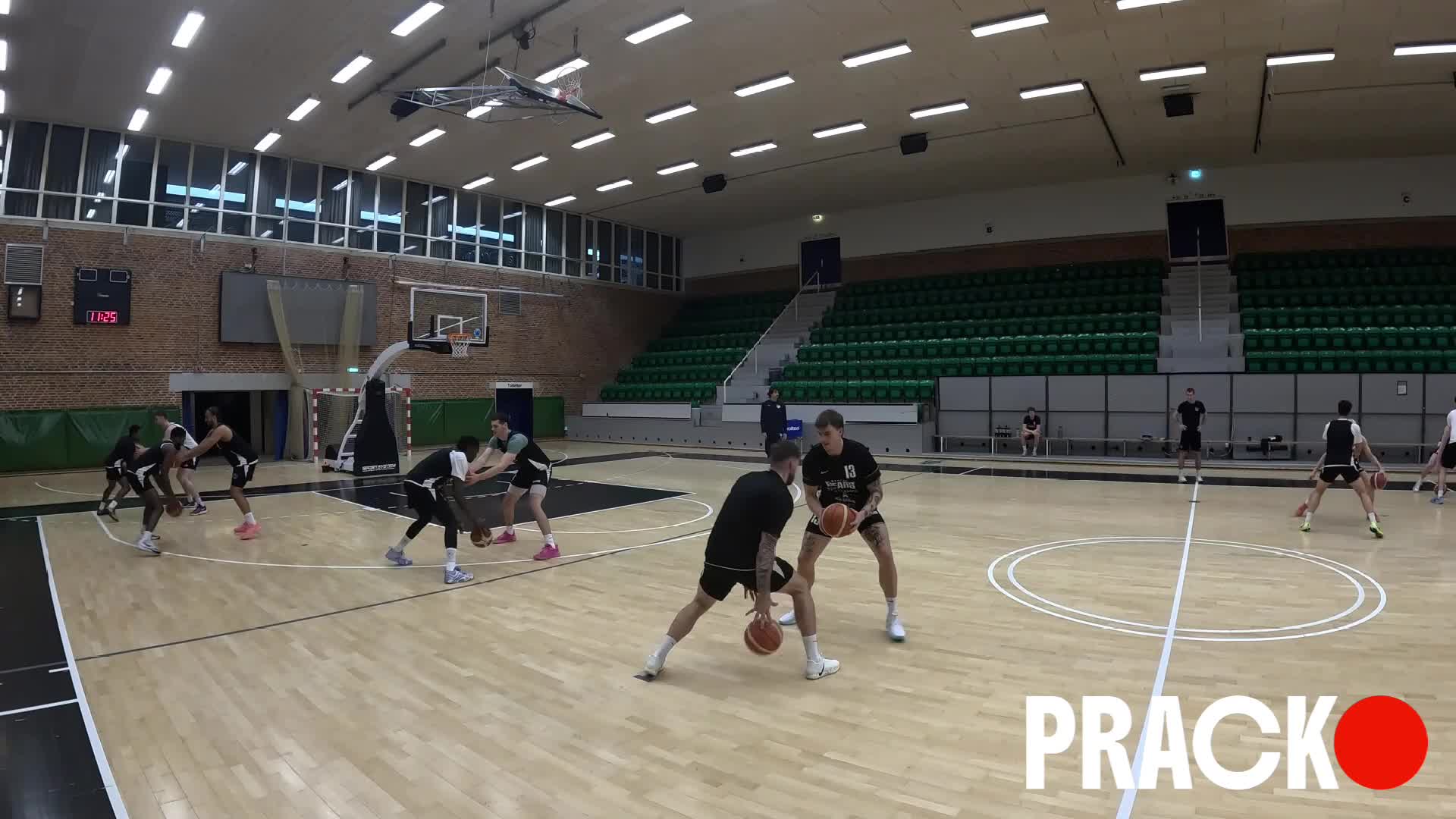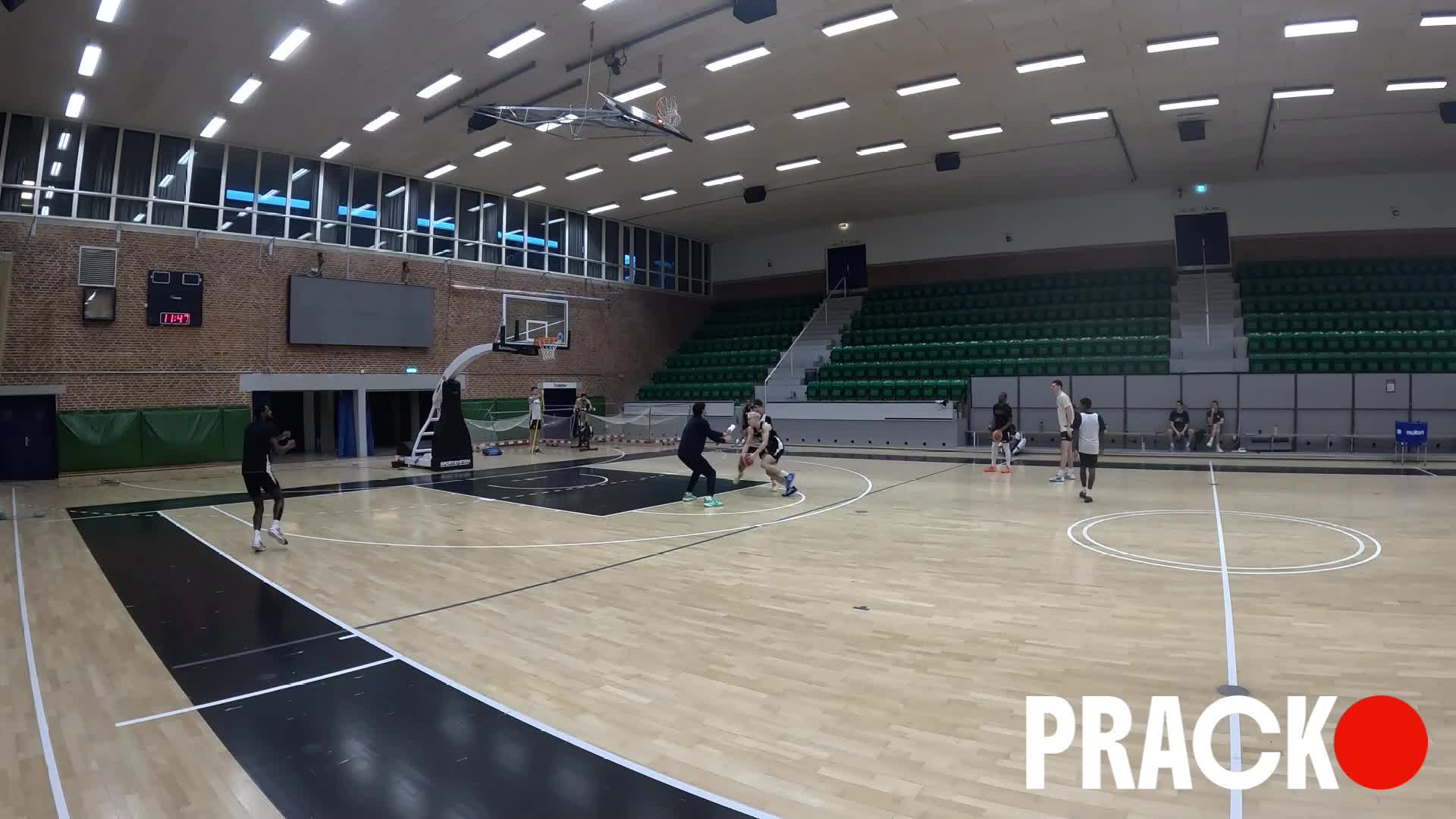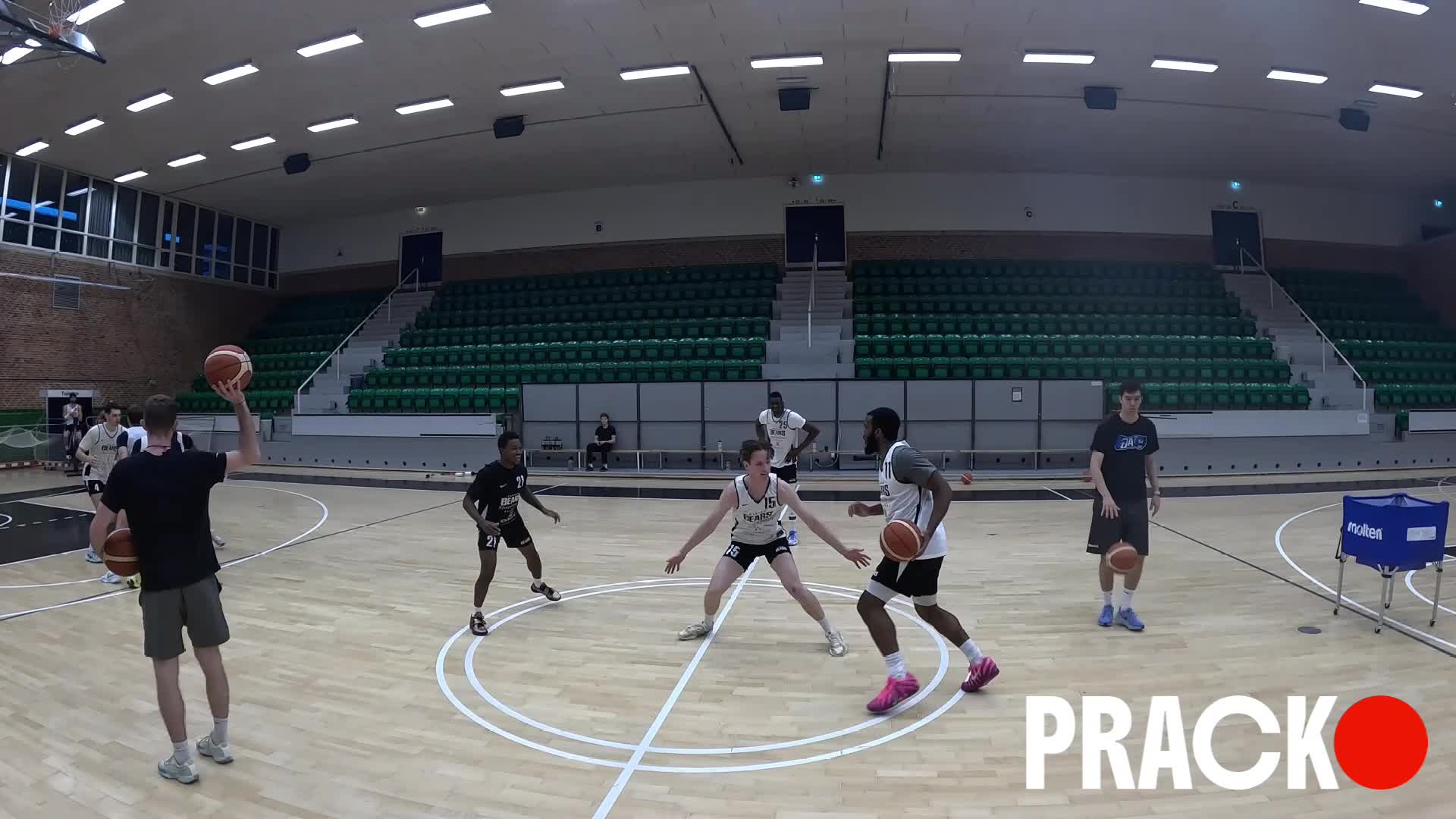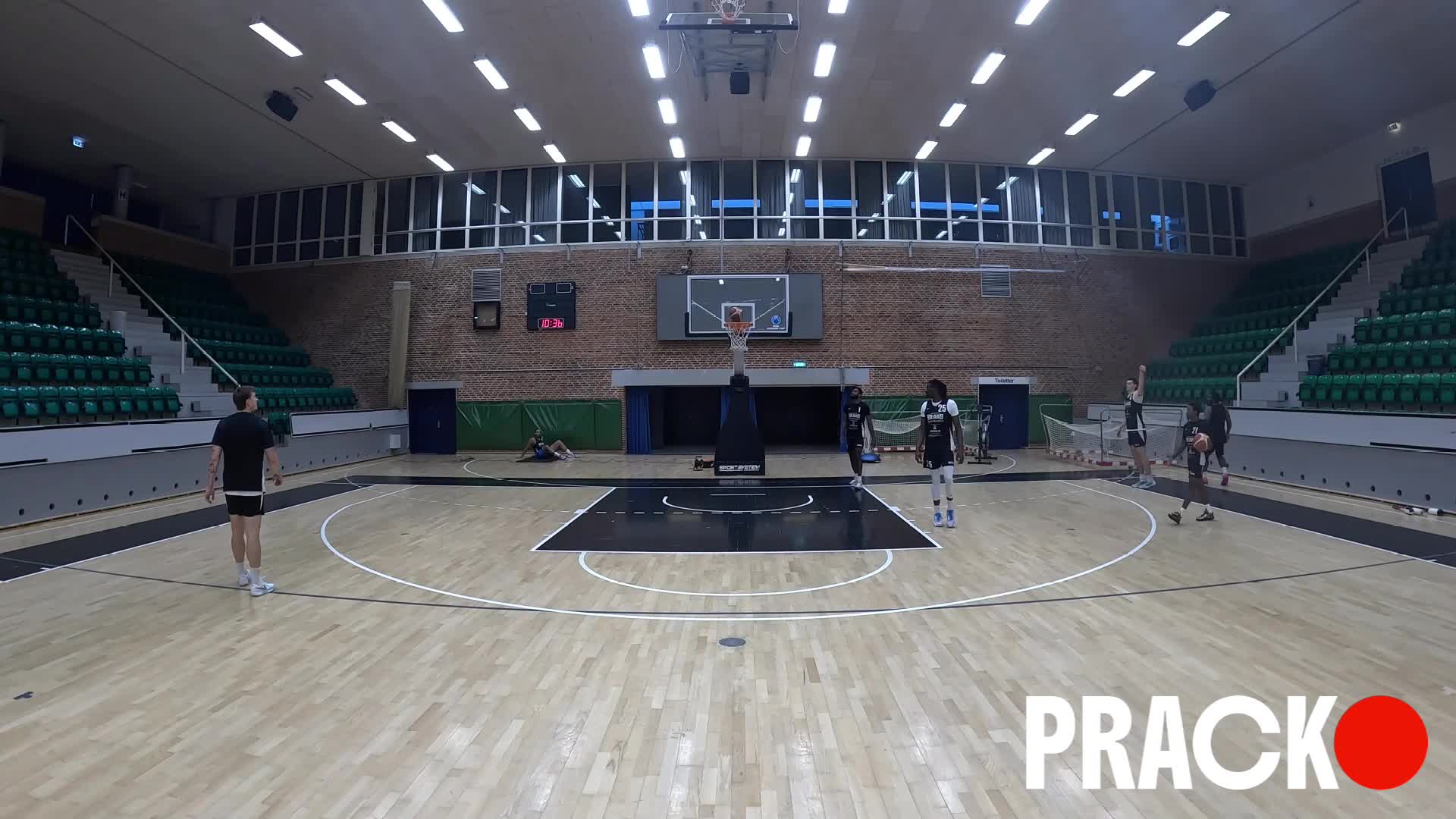
Drill Library

Explore curated practice drills. Search by title or description, and filter by focus type, mental level, physical level, player counts, and tags to spot the right clips fast.

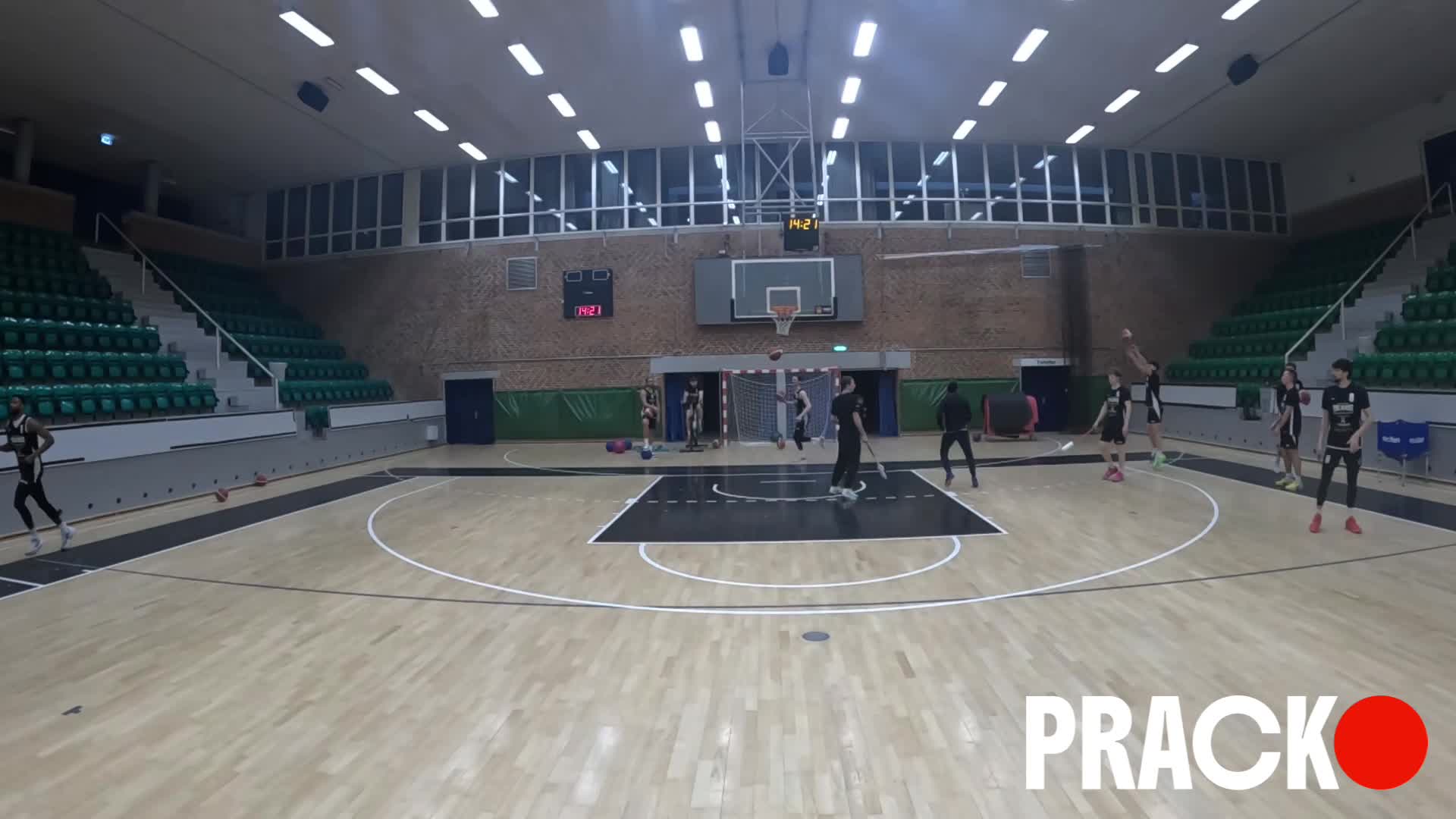
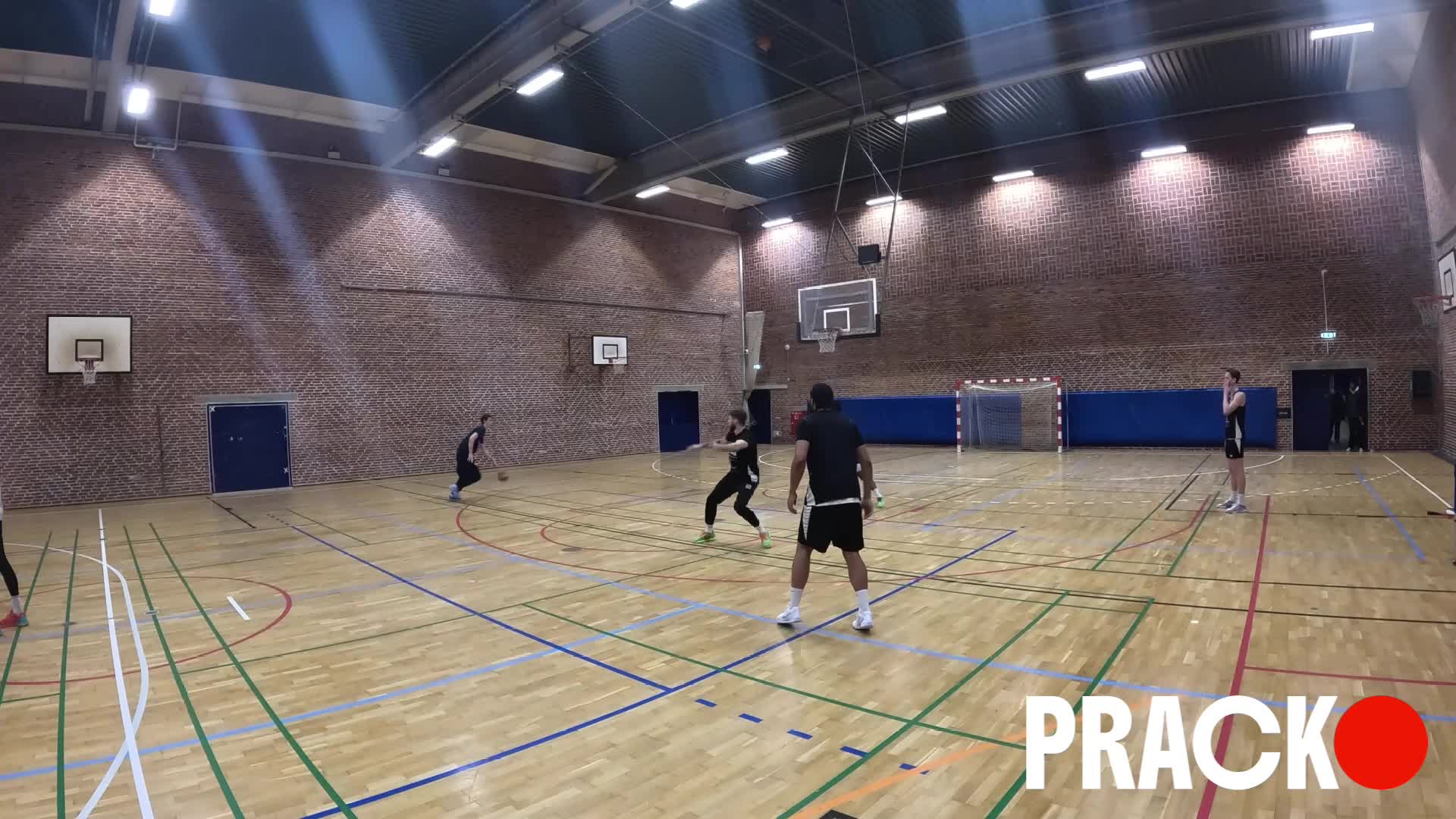
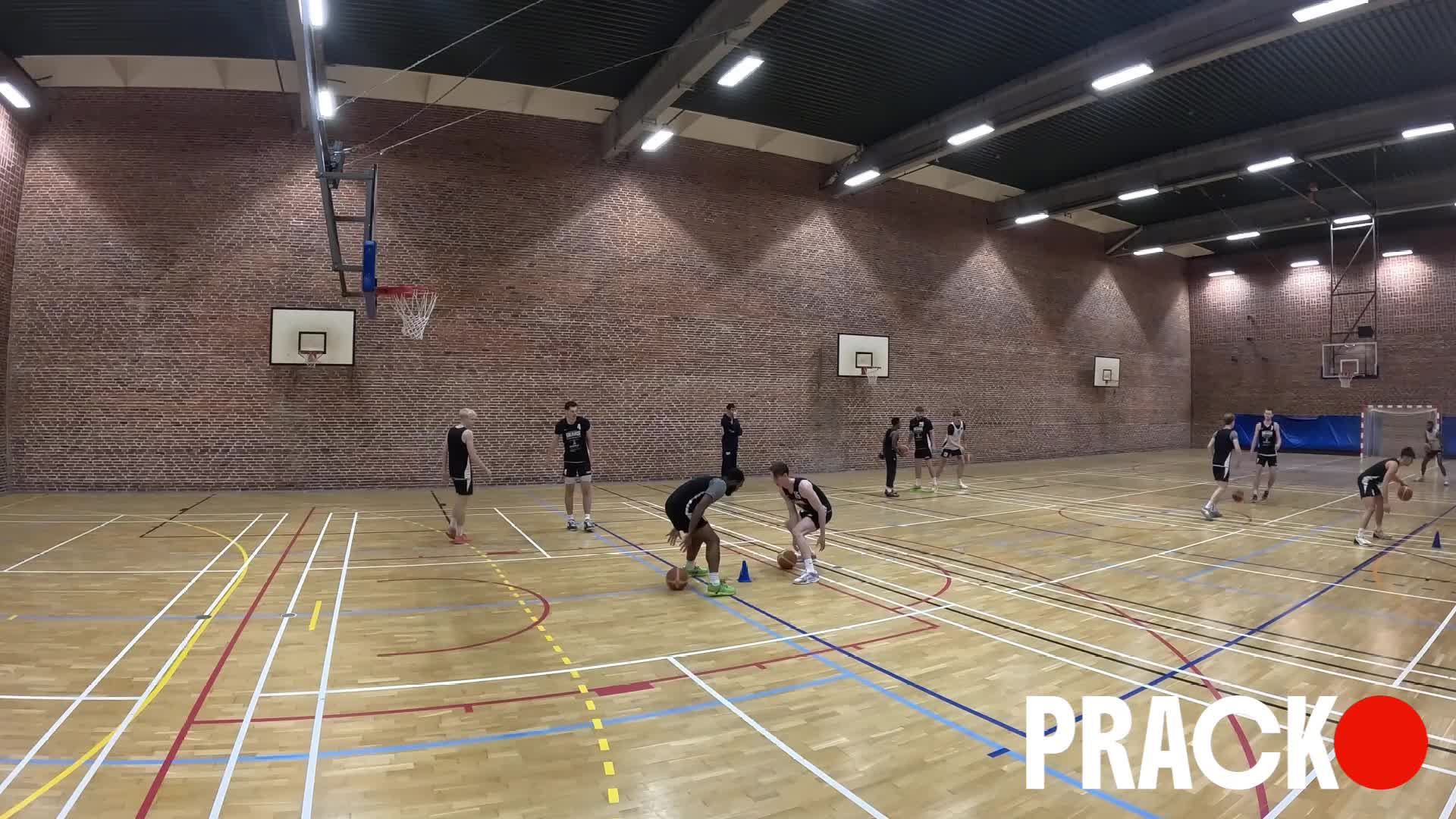
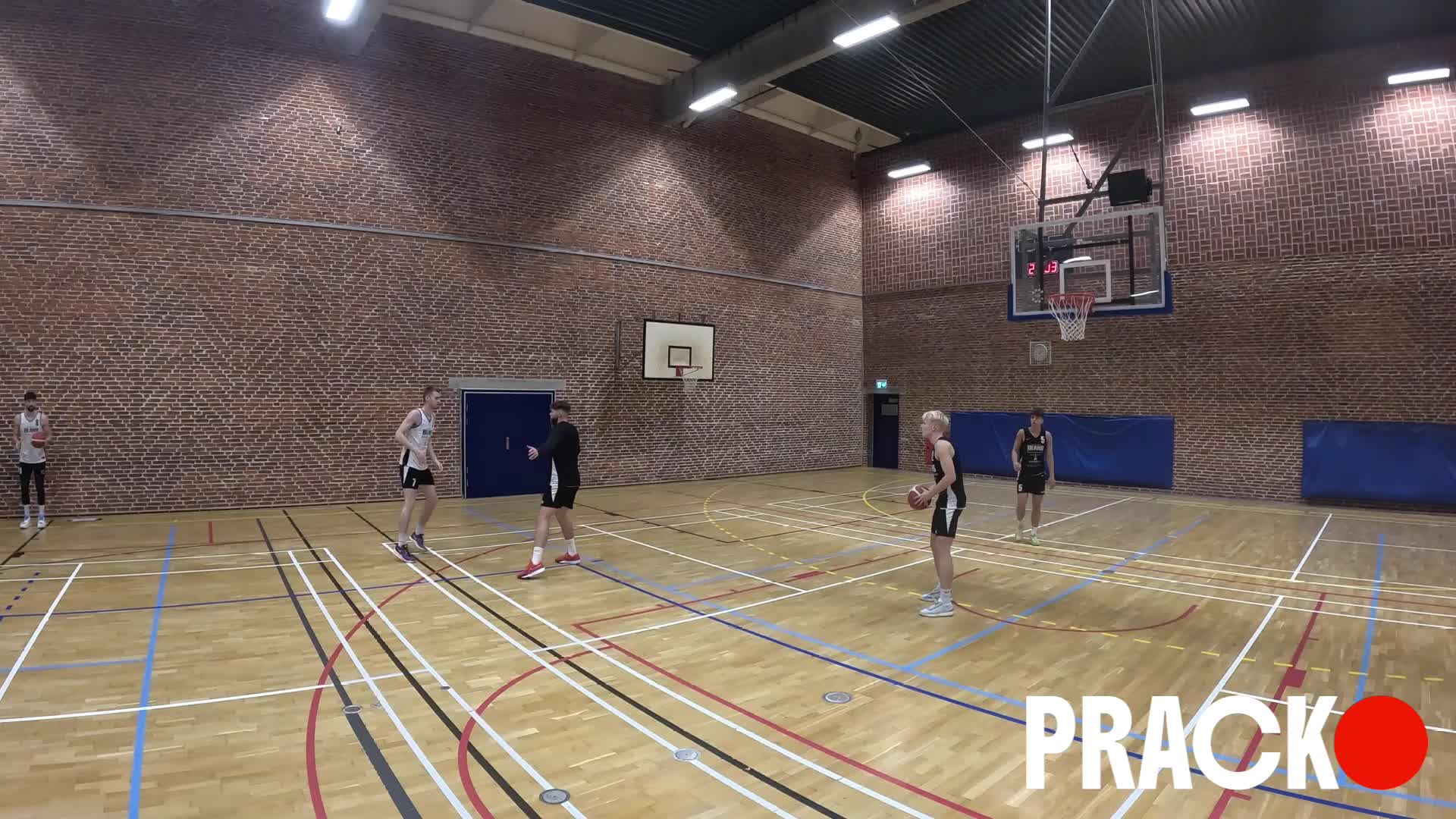
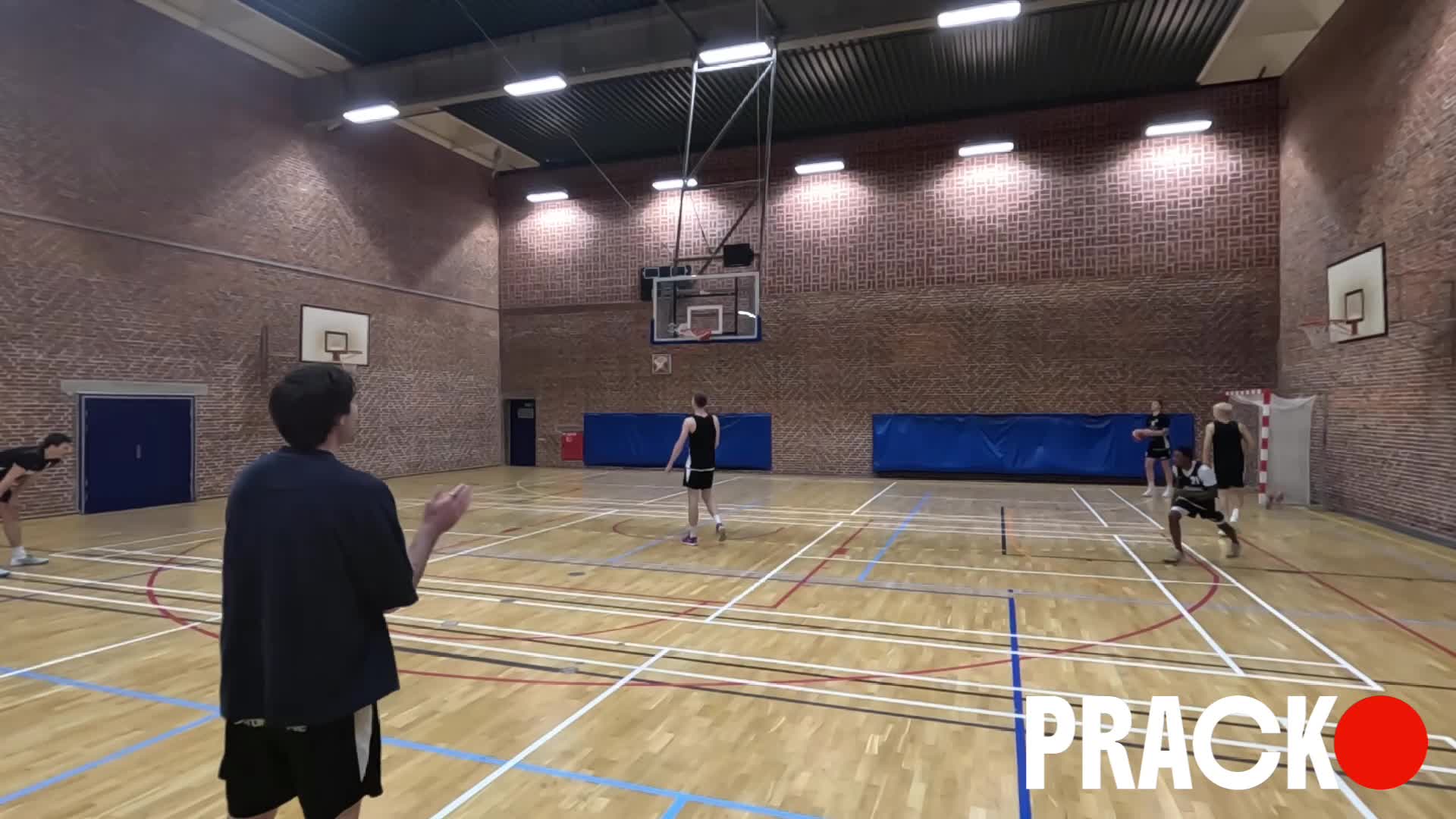
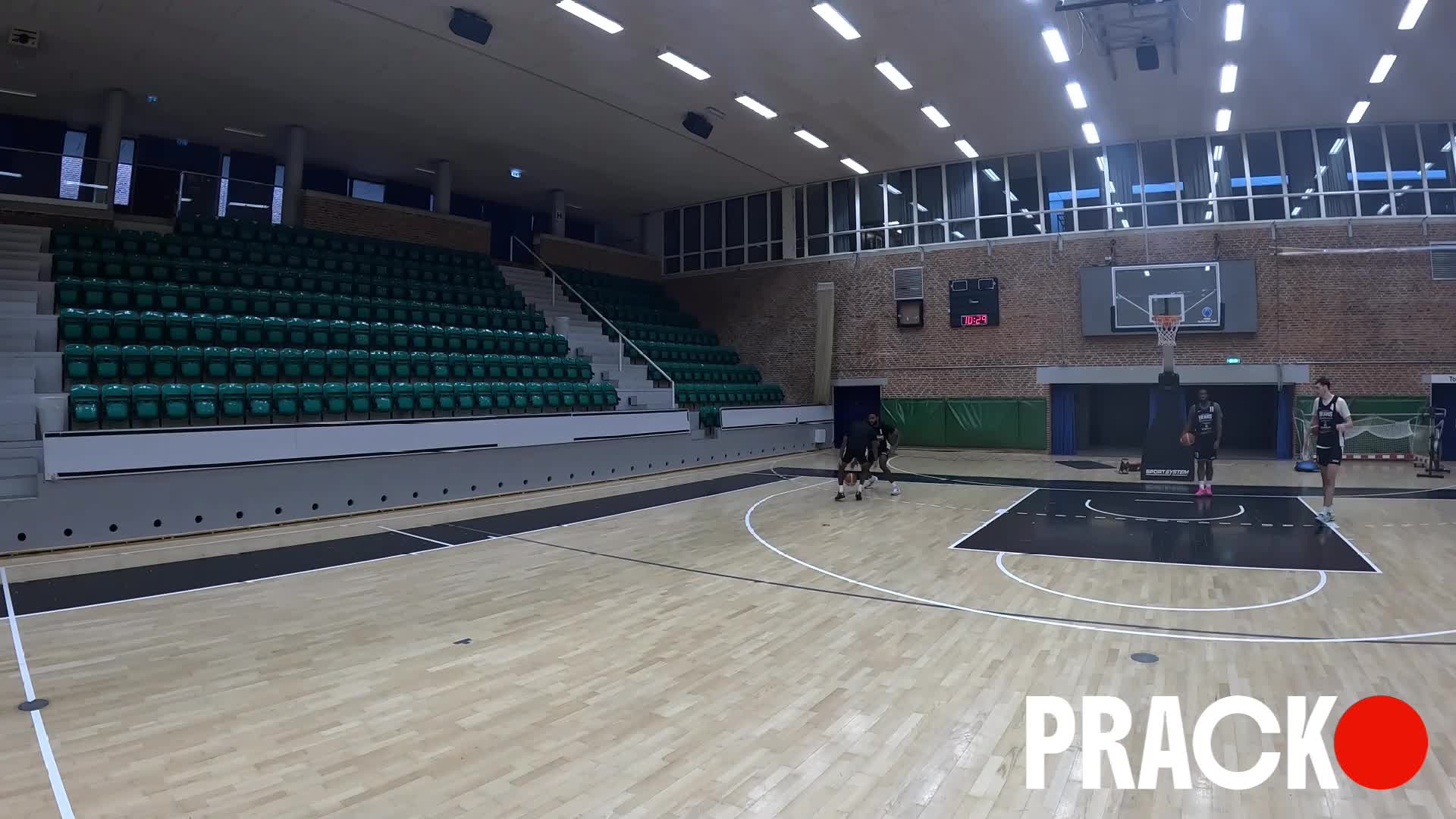
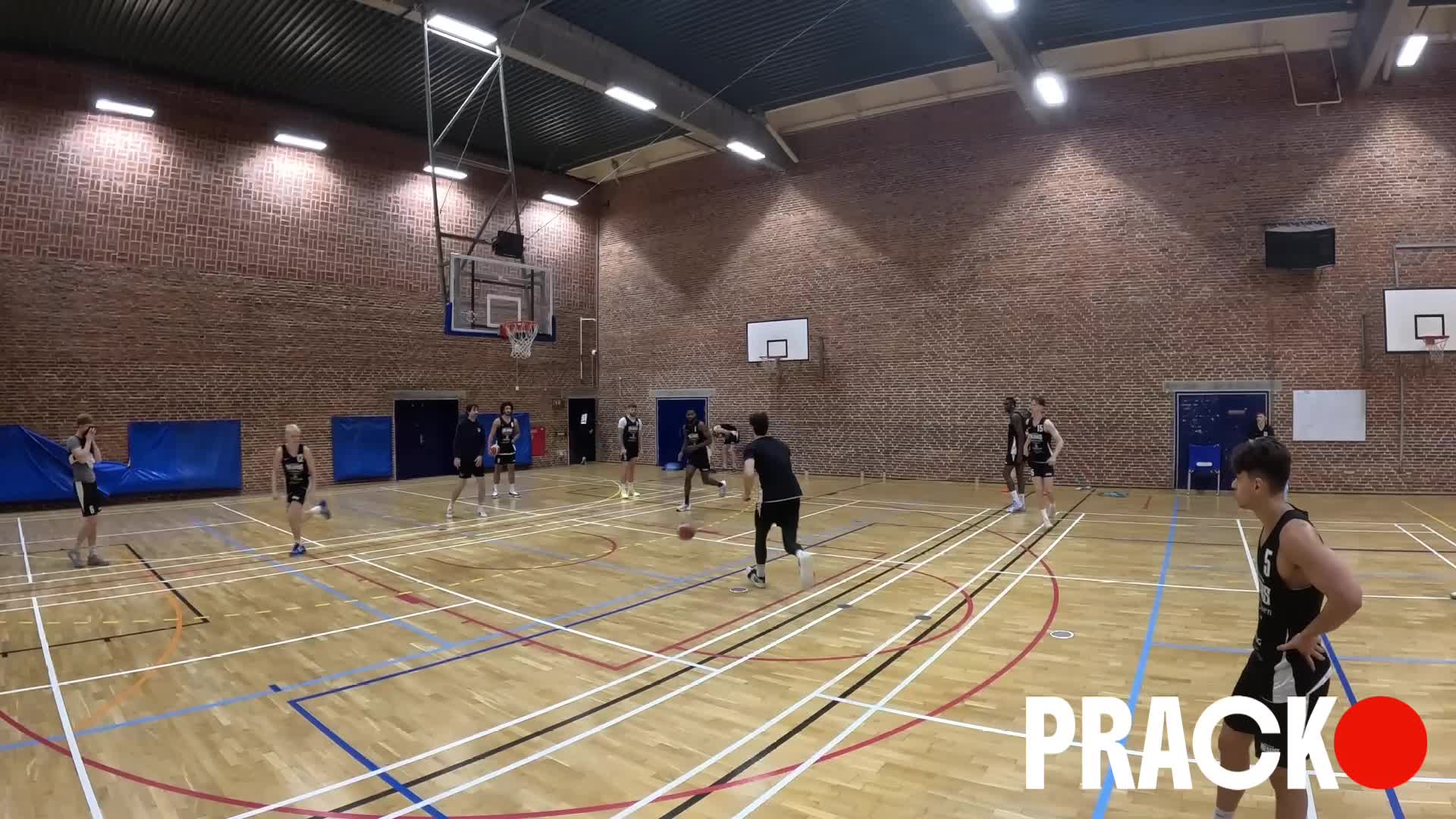
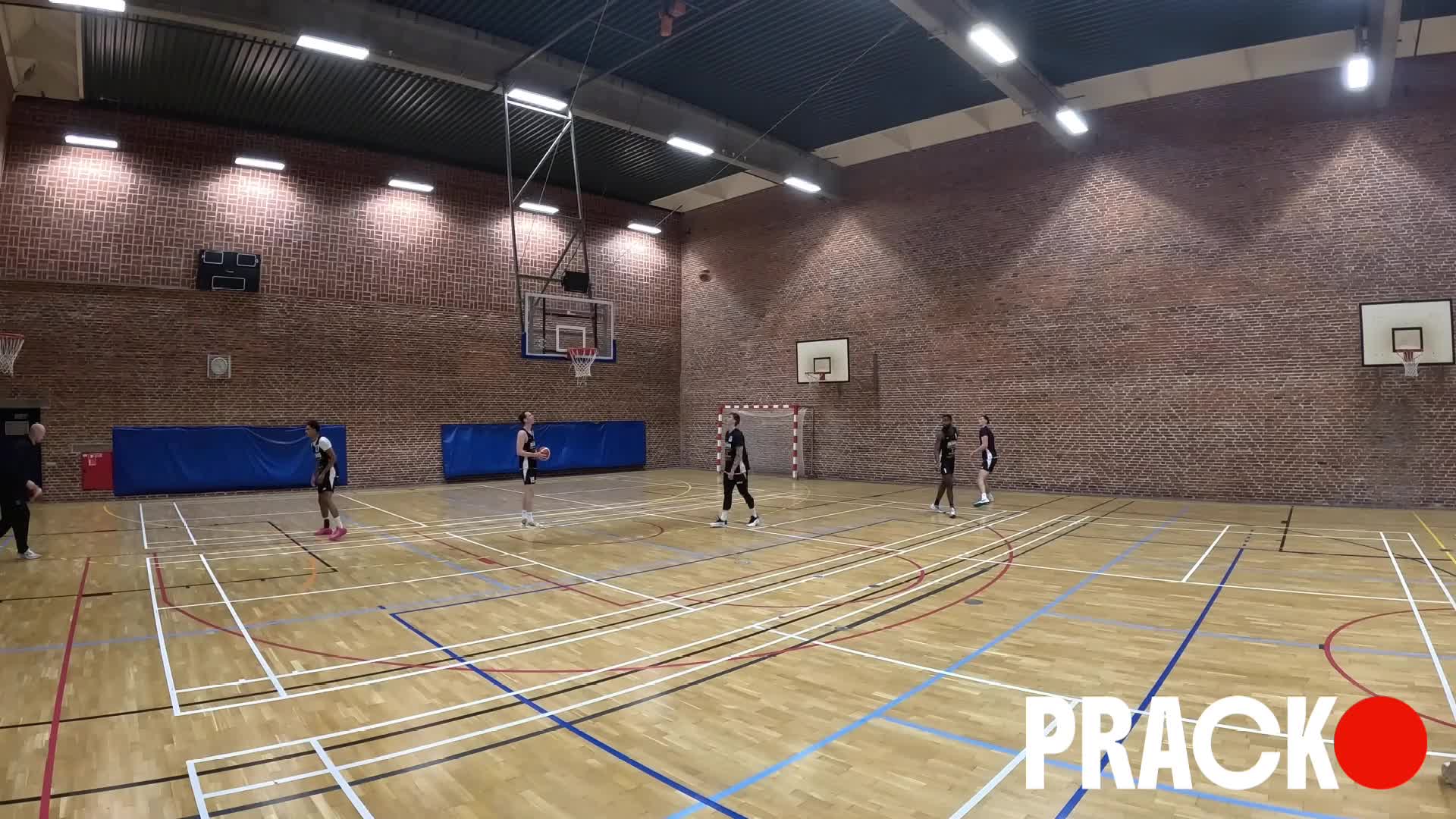
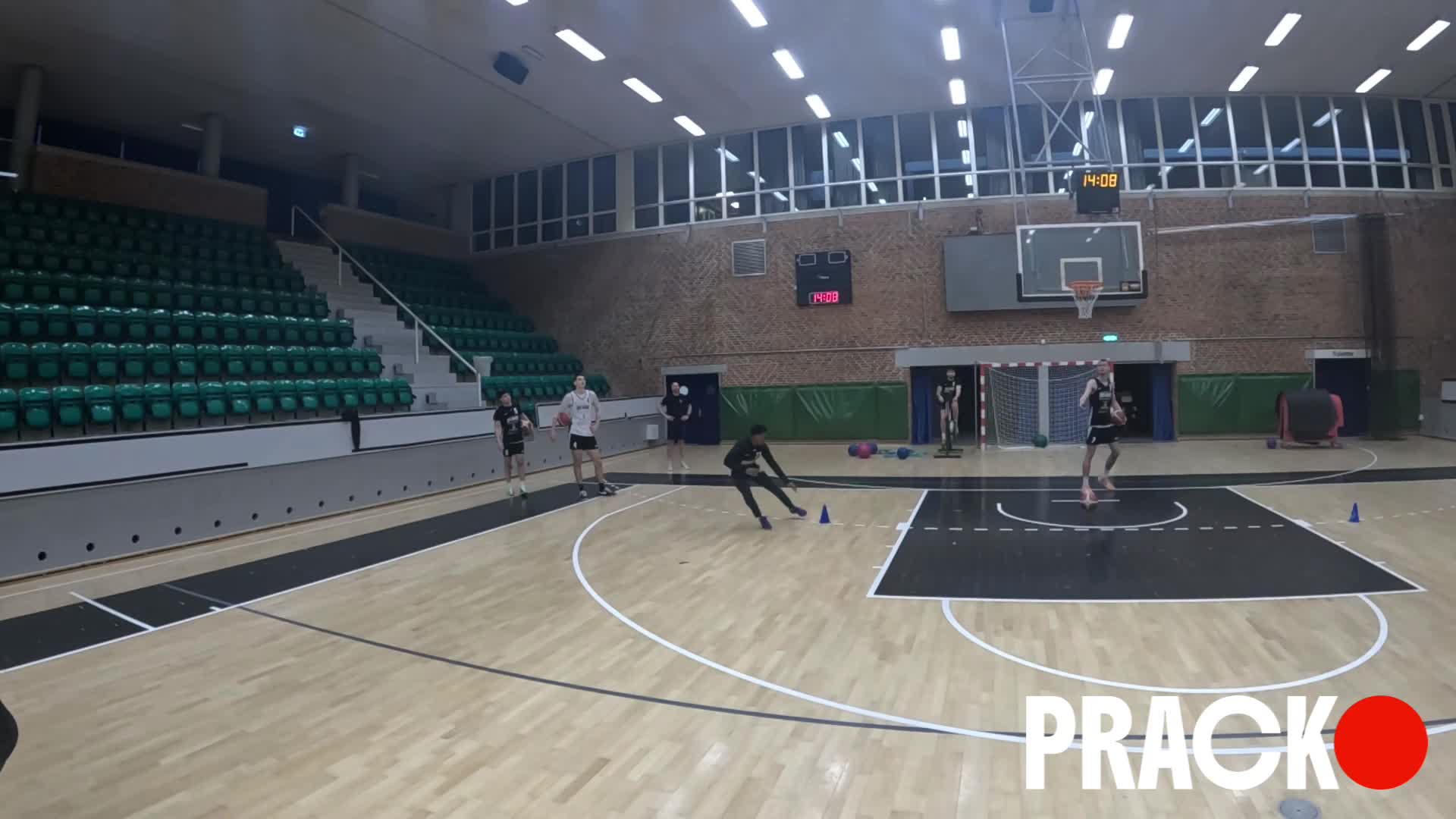
Movement Shooting: toss, touch, and run thumbnail
Movement Shooting

Movement Shooting: toss, touch, and run

MentalLevel 1PhysicalLevel 1Players1+

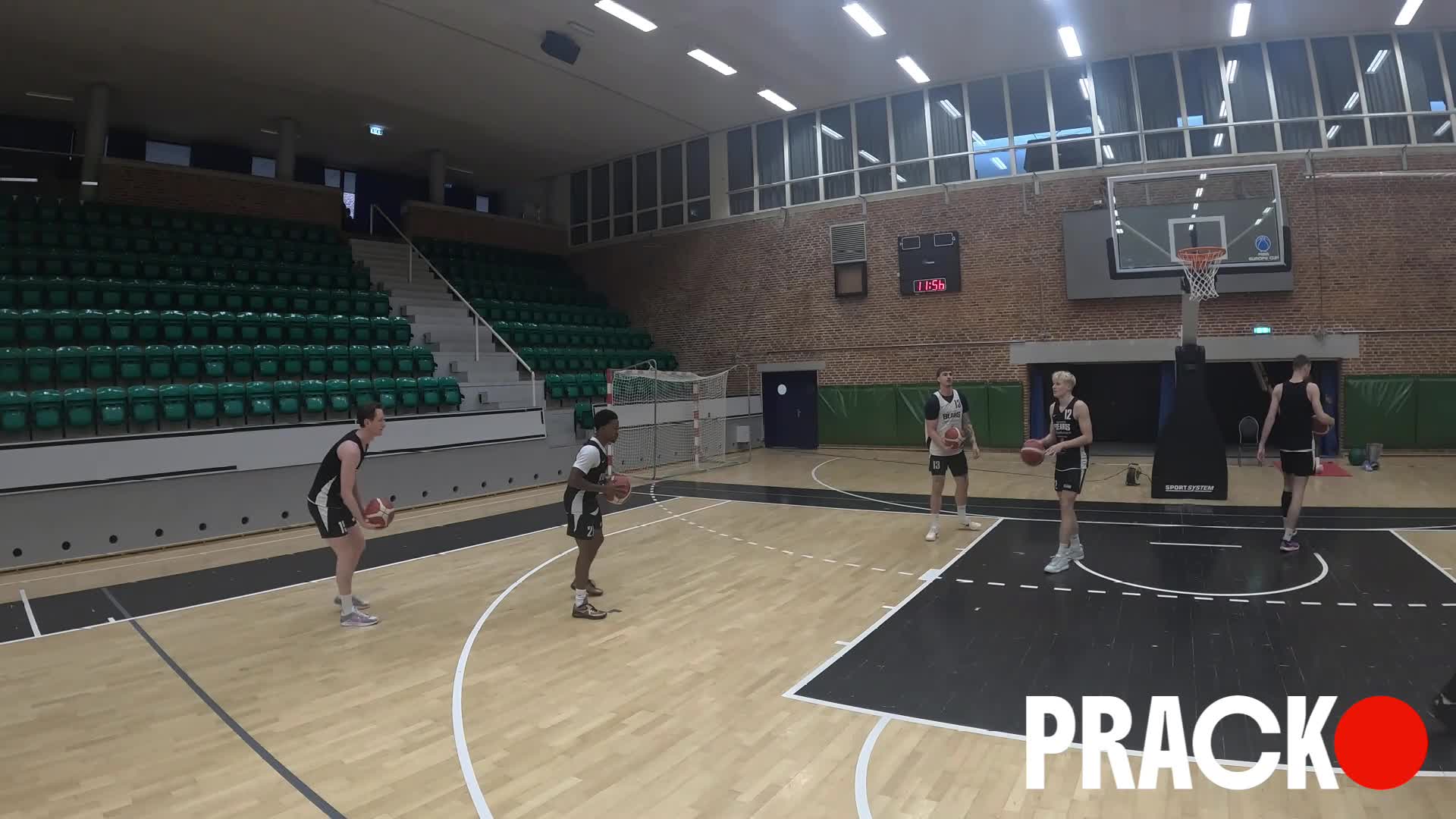
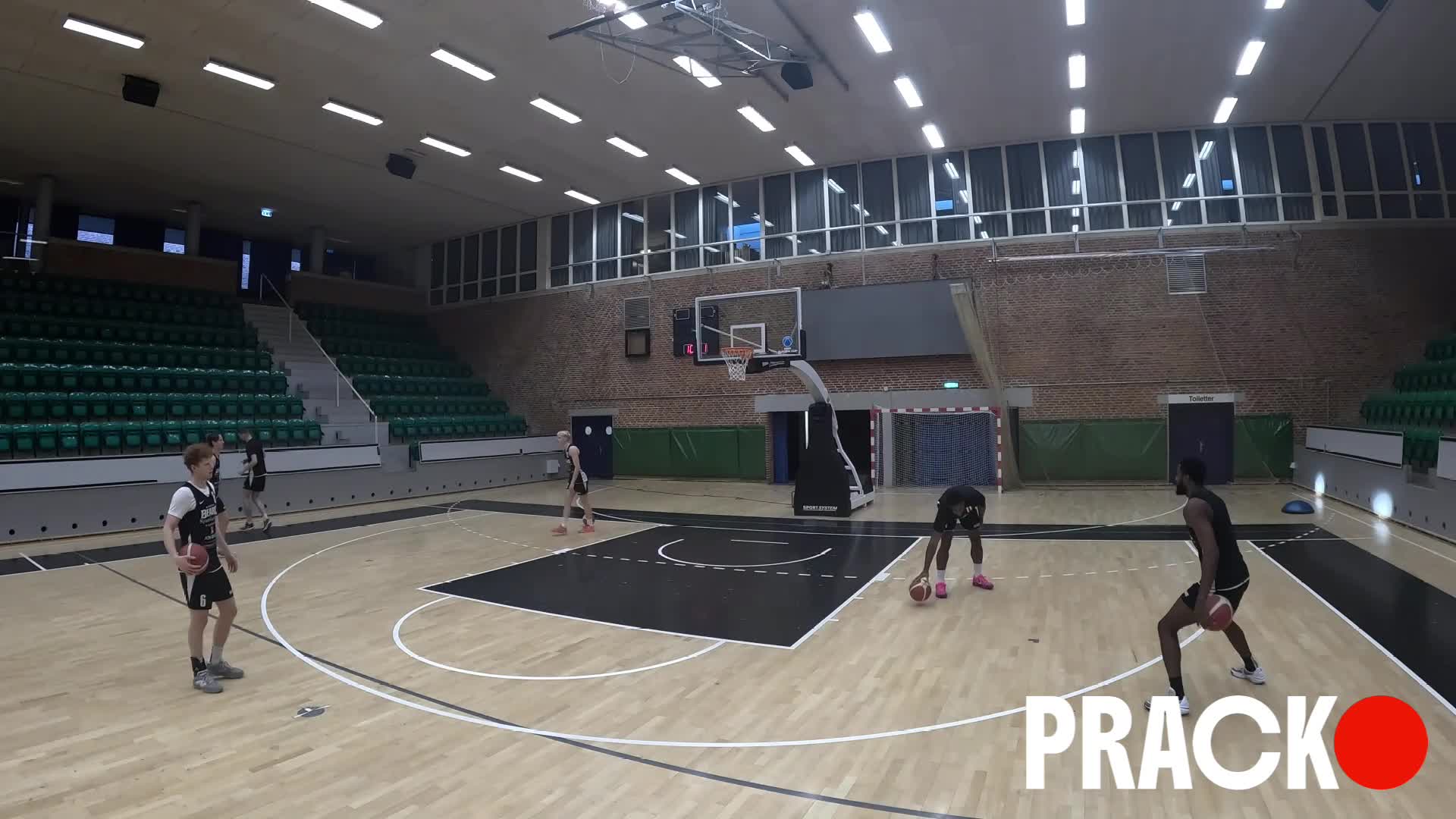
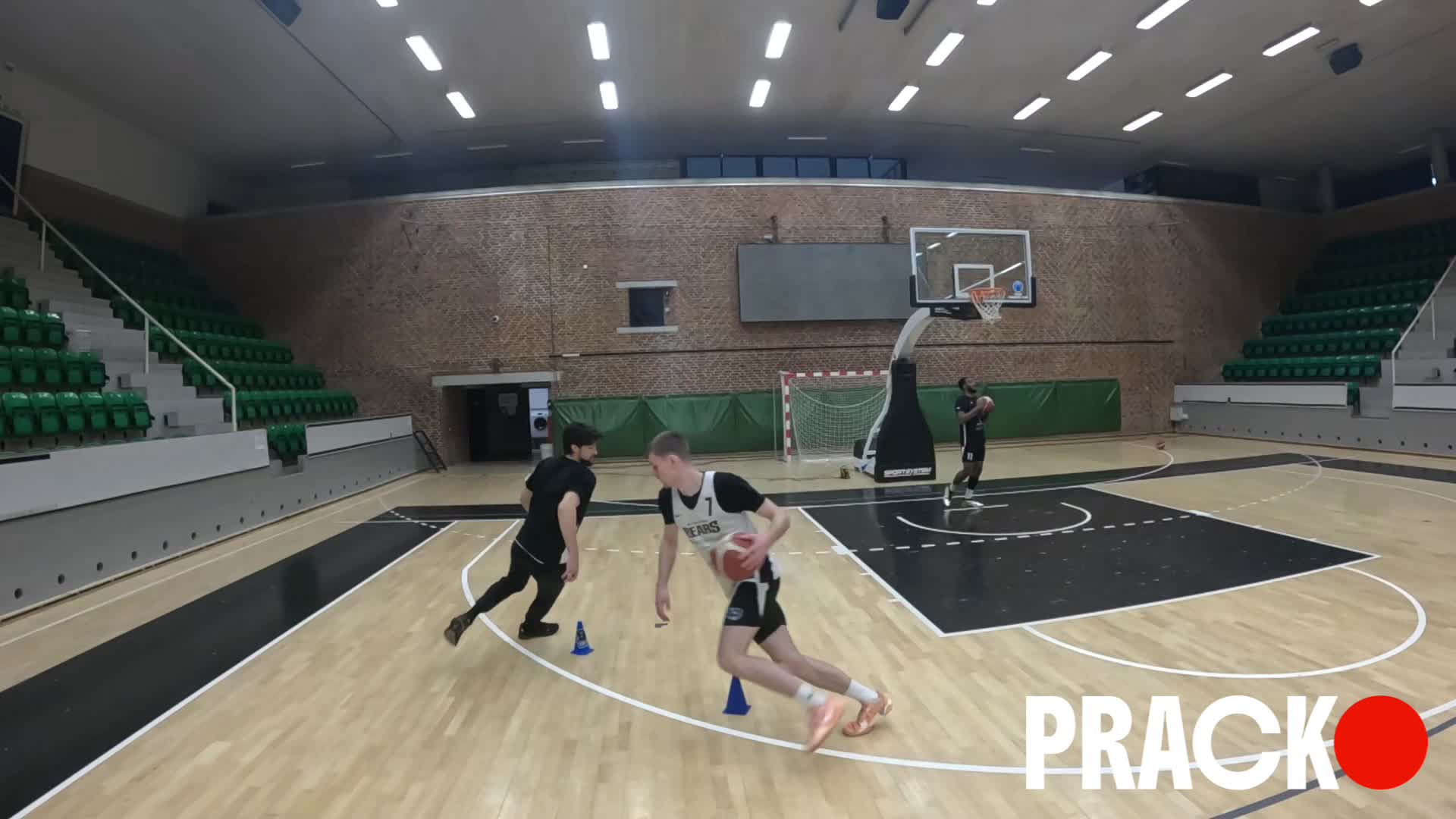
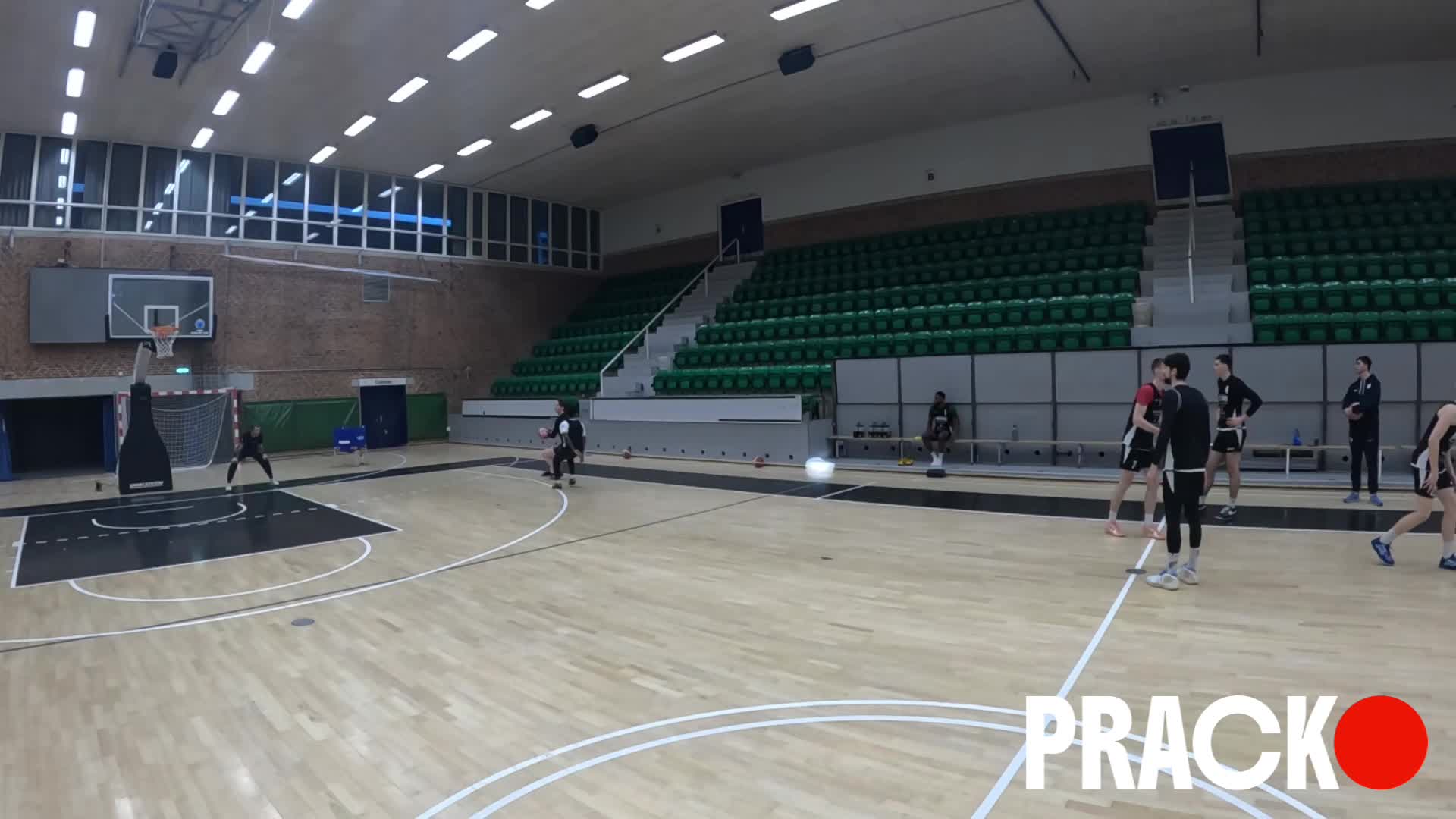
This is a randomized shooting drill that develops footwork variability, spatial awareness, and shot preparation under movement. By forcing players to move away from the ball before catching it, the drill creates unpredictable footwork and sightlines, similar to real game situations. Setup 1 player (or full team, each with a ball) 1 basketball per player 1 cone placed: a few feet inside the three-point line adjust distance based on skill level: closer = easier farther = more difficult How the Drill Works Ball Toss The player throws the ball high into the air. Cone Touch Immediately after tossing the ball, the player must: sprint to the cone, and touch it. Relocate & Catch After touching the cone, the player: tracks the ball, moves to catch it in space. Shot Attempt The player must: relocate behind the three-point line, and shoot wherever they catch the ball. Variations No-Bounce (Advanced) The ball cannot hit the ground. Requires a high toss, quick movement, and precise timing. 1–2 Bounce (Beginner/Intermediate) Allow one or two bounces before catching. Gives players more time to relocate and gather. Distance Adjustments Move the cone: farther inside → increases difficulty closer to arc → easier timing and spacing Key Training Focus Footwork variability Shot preparation under movement Tracking and locating the ball Changing sightlines before shooting Balance and body control Game Translation In games, players rarely shoot with perfect, repeatable footwork. This drill forces players to adapt to imperfect catches, different angles, and changing momentum, improving their ability to shoot in real situations. Coaching Emphasis Encourage players to: find balance quickly before shooting keep eyes up and track the ball early adjust feet naturally based on the catch Avoid rushing—control into the shot Emphasize different footwork patterns (1-2, hop, etc.) Recommended Usage Best for: individual shooting workouts team shooting competitions warm-ups with variability developing game-like shooting habits Effective for all positions and skill levels. Equipment Basketball Cone
Equipment:BasketballsCones
#movement shooting
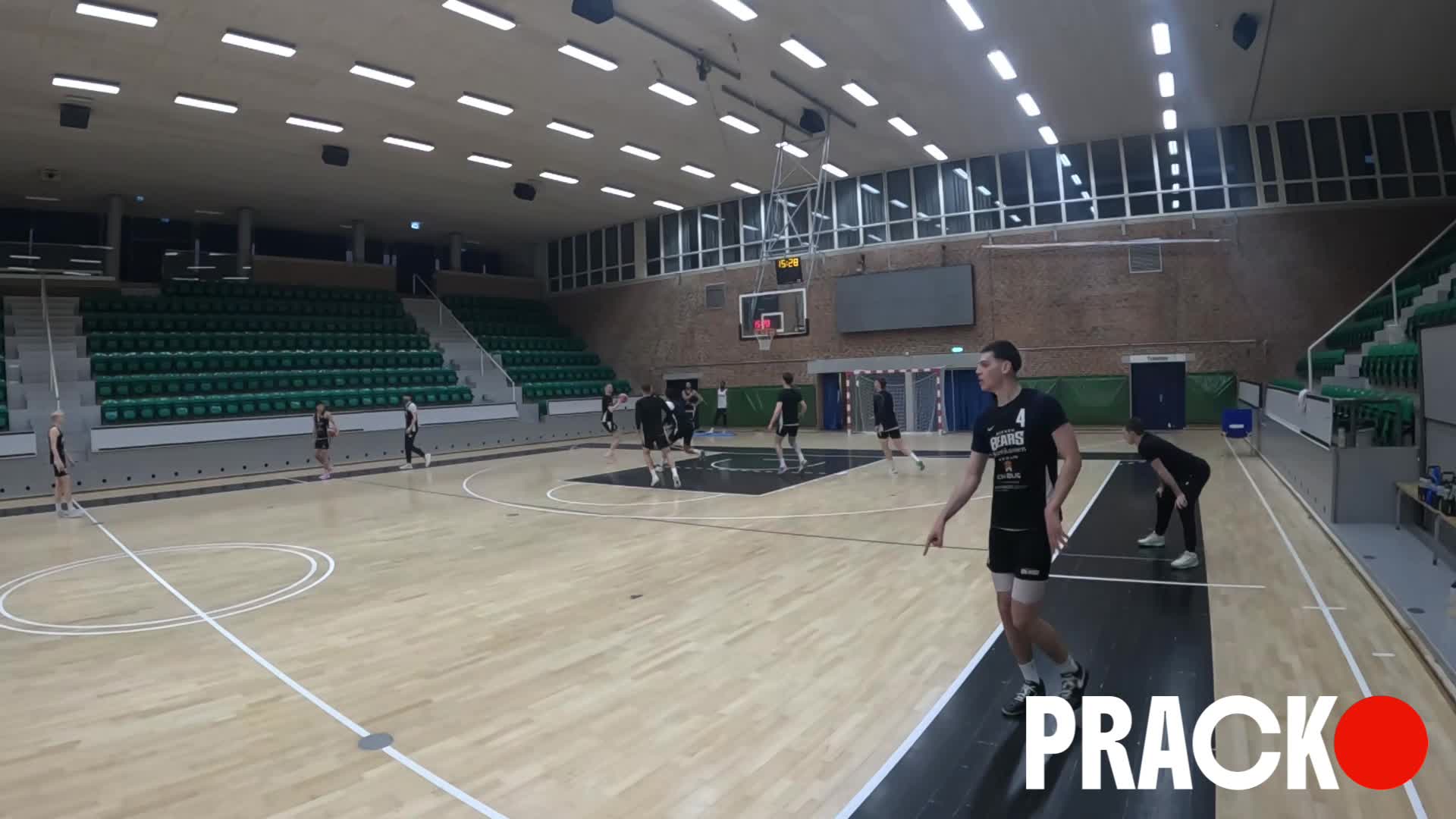
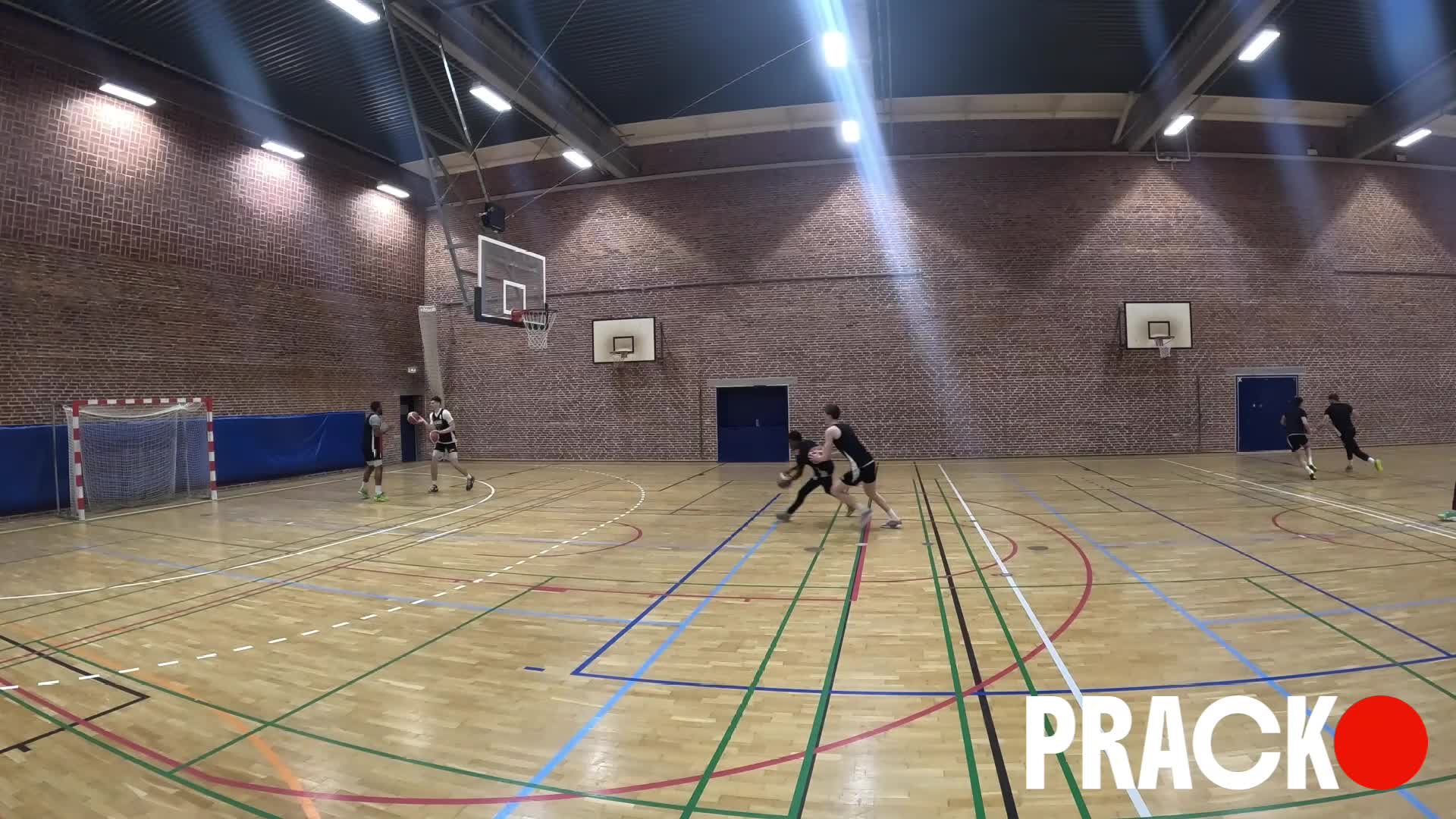
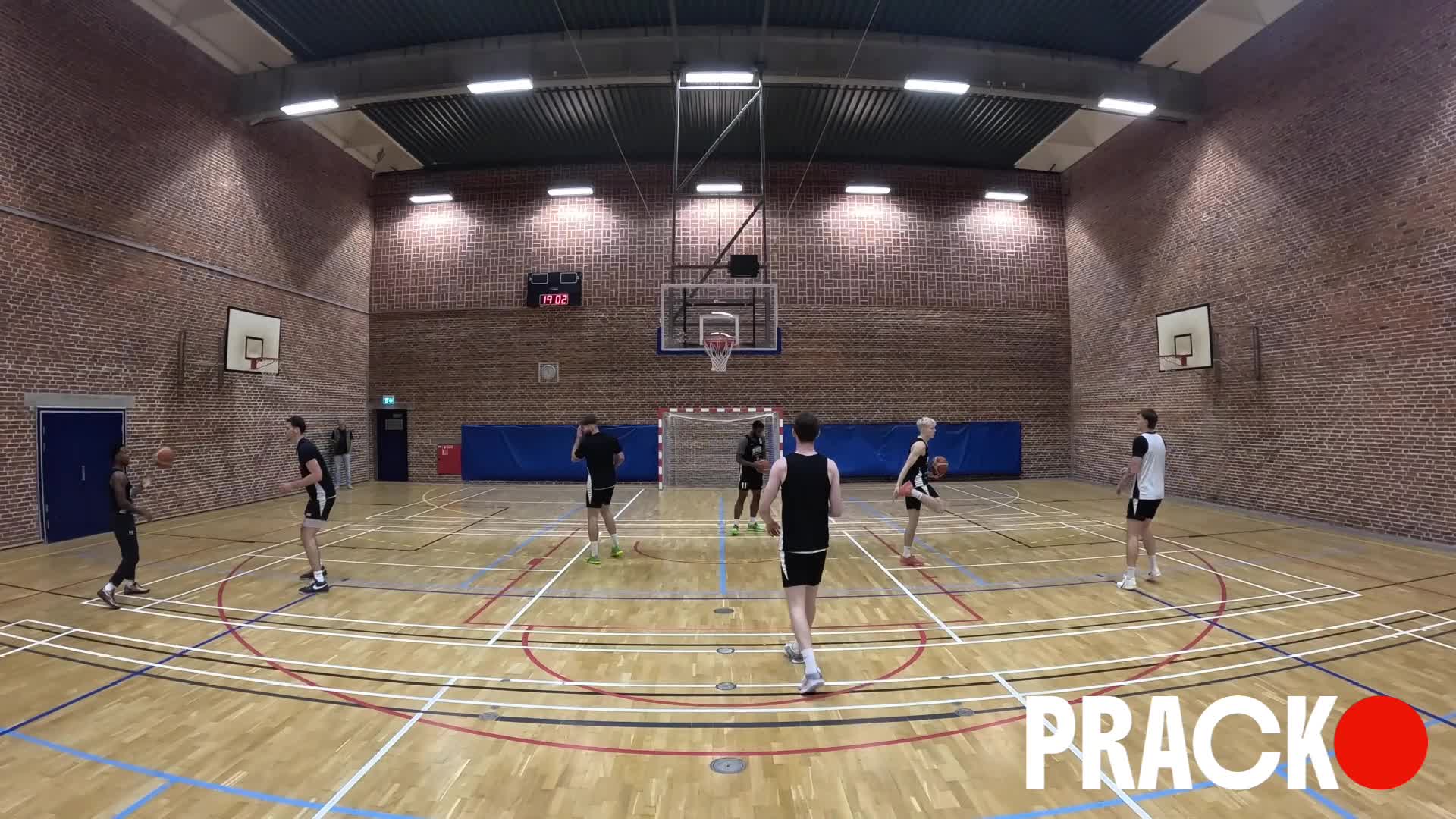
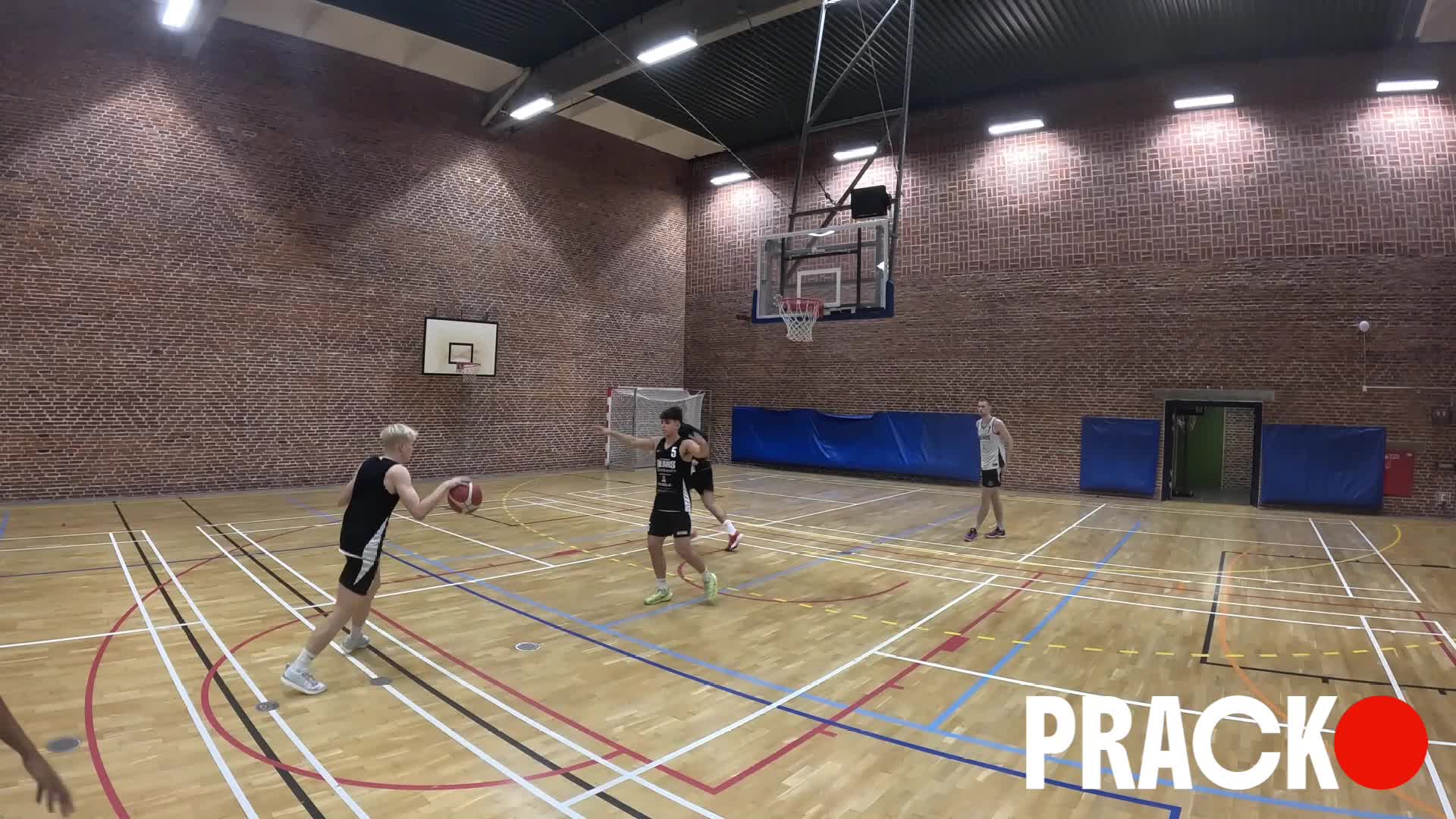
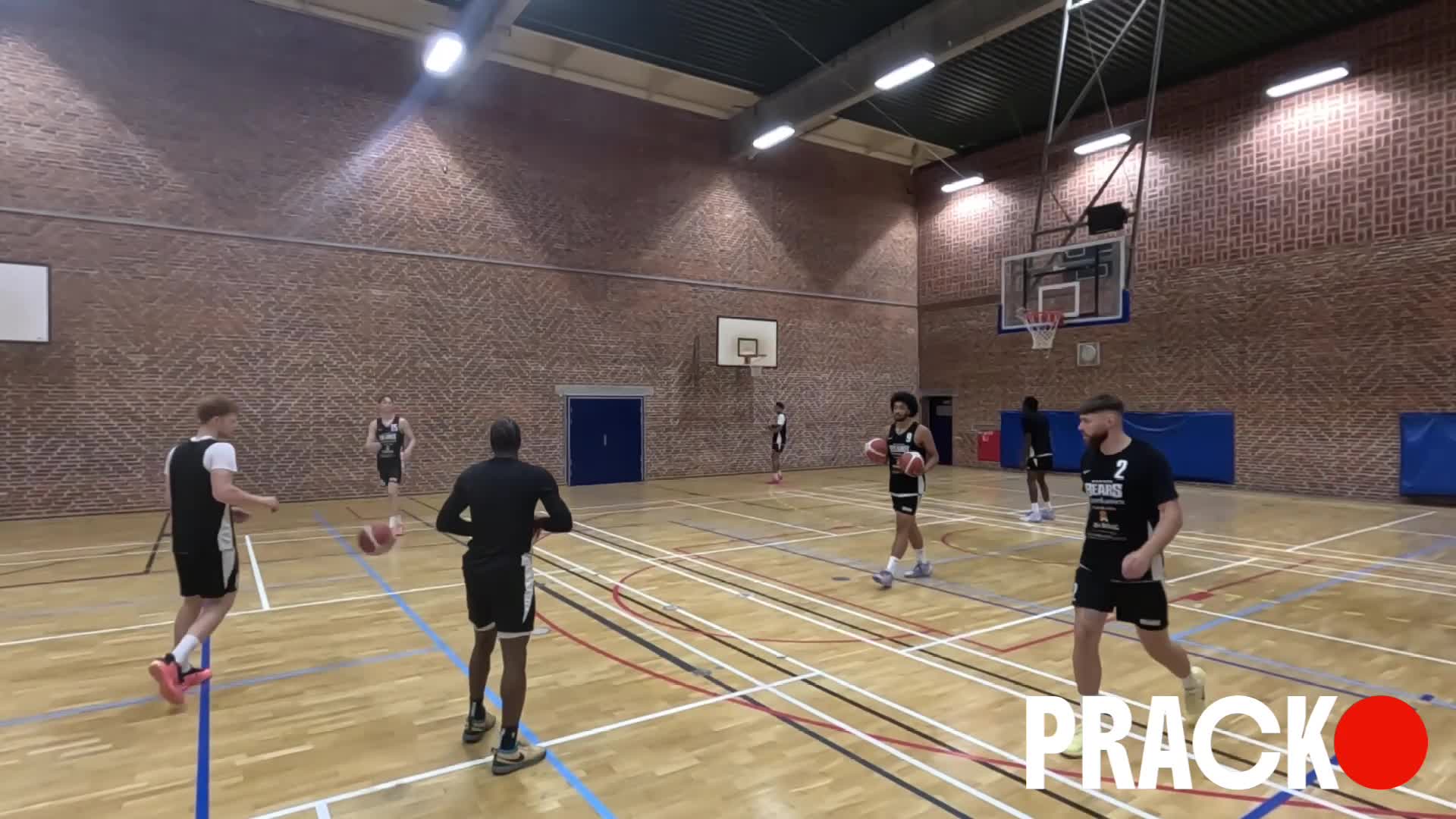
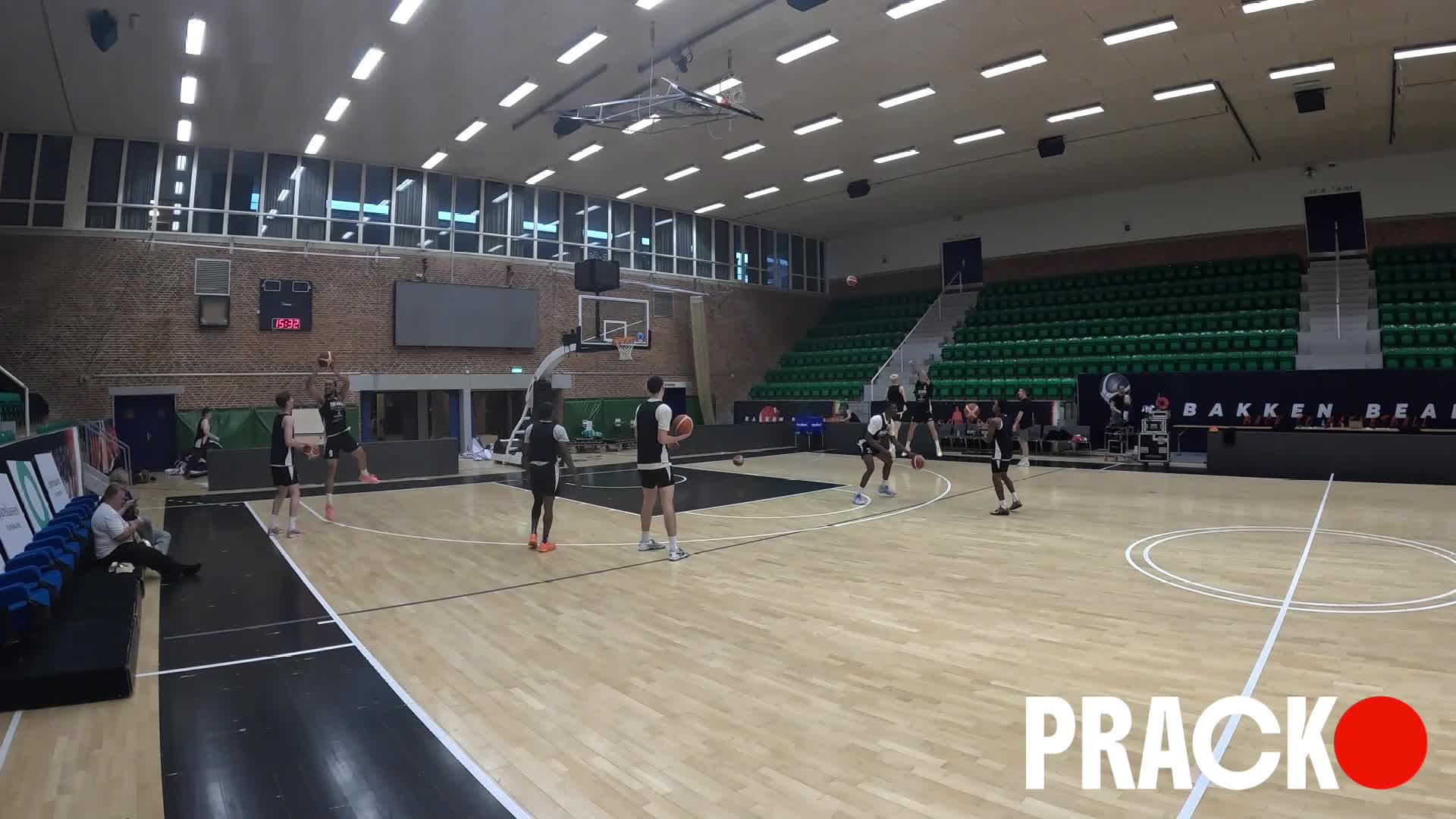
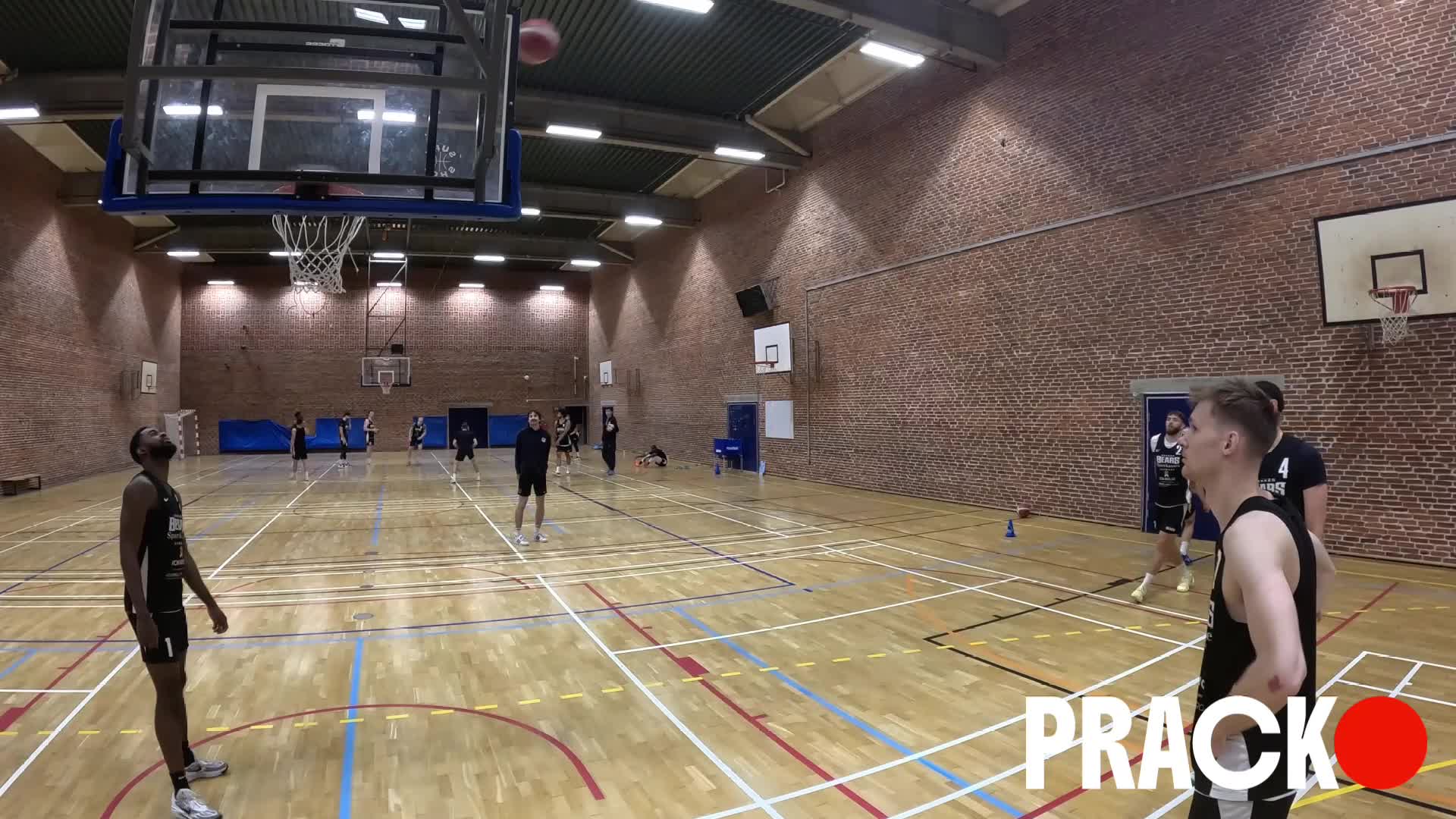
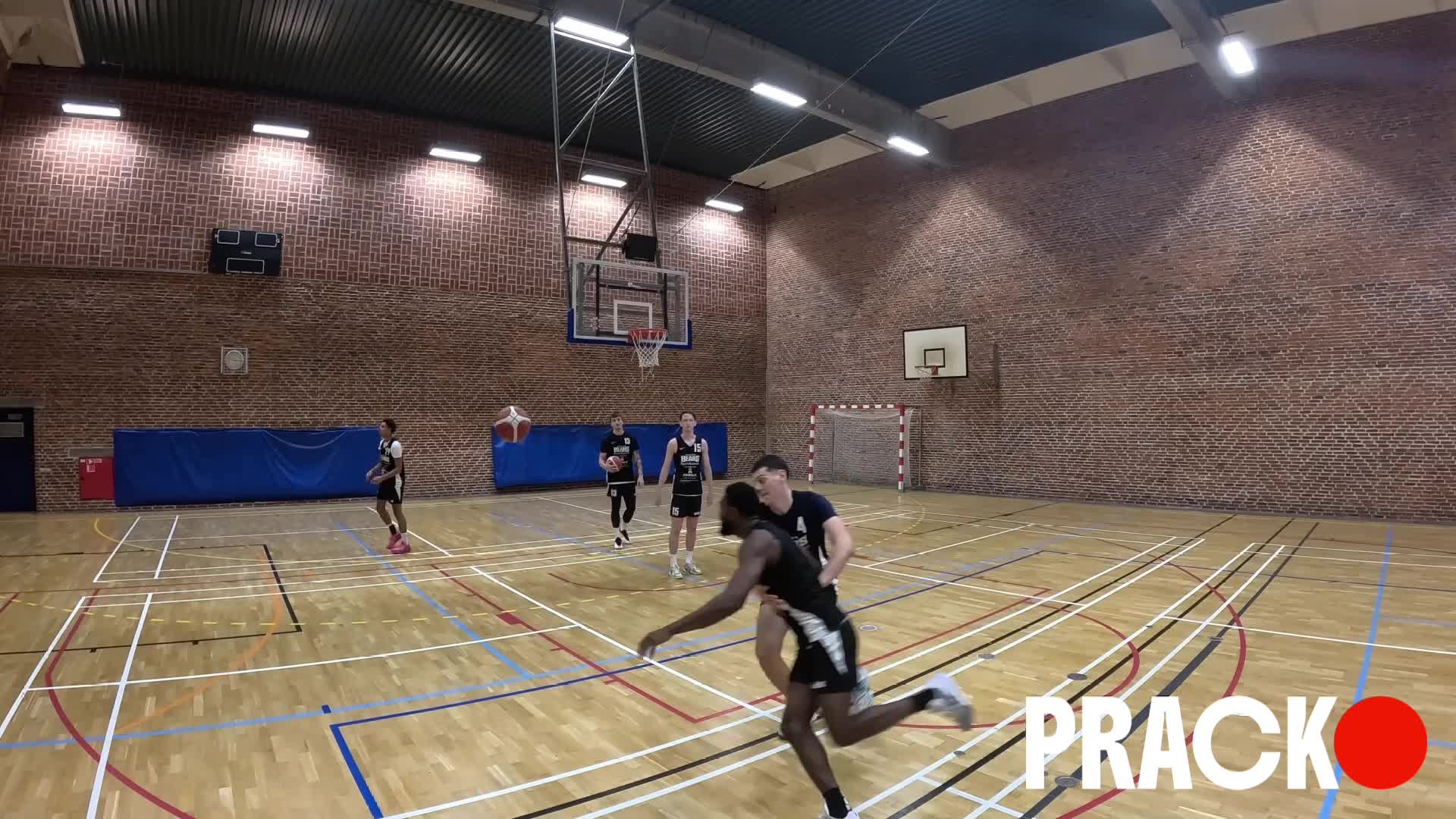
Off the Dribble Shooting: cone clear side pull ups thumbnail
Off the Dribble Shooting

Off the Dribble Shooting: cone clear side pull ups

MentalLevel 1PhysicalLevel 1Players2+

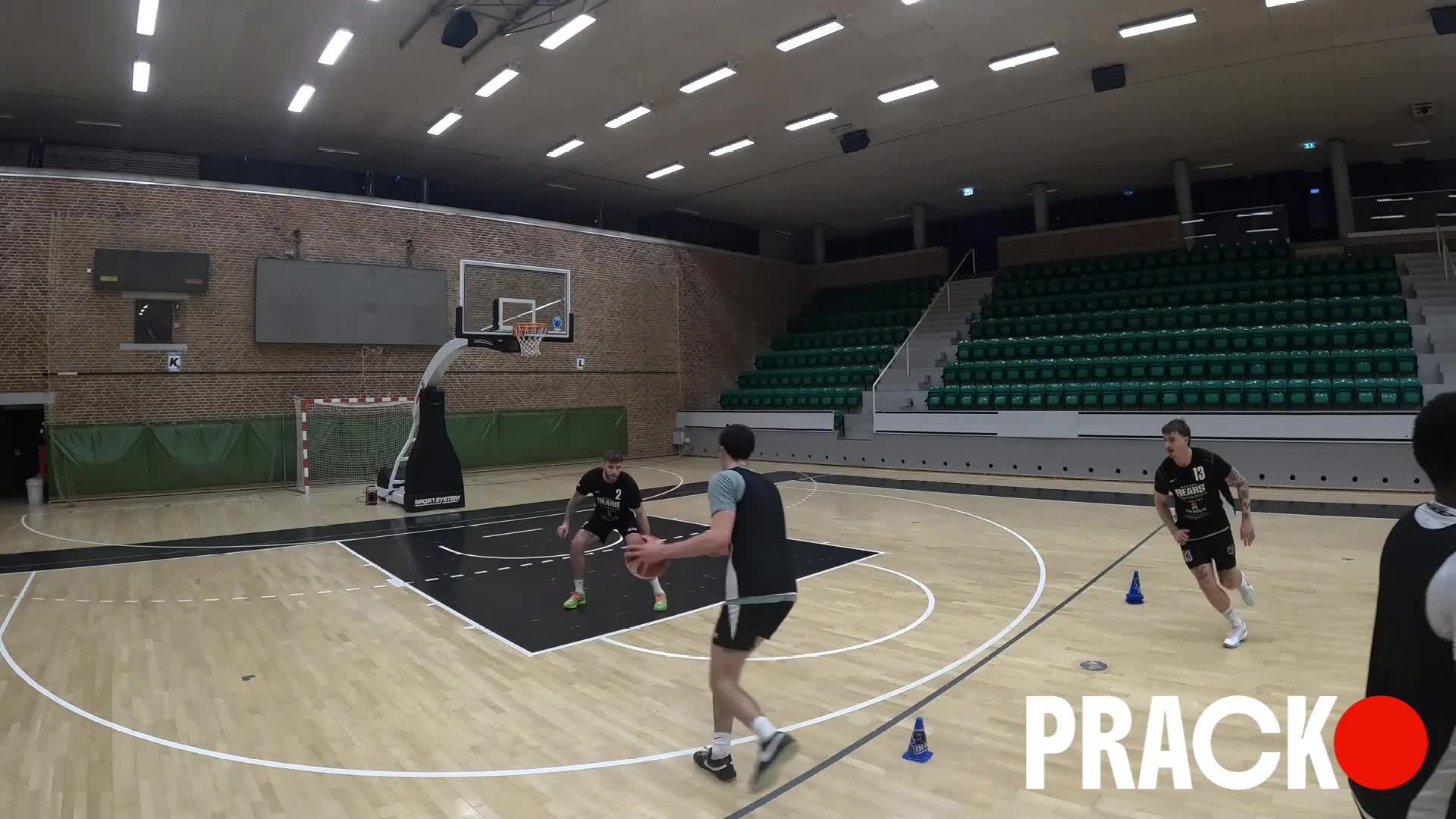
This drill trains off-the-dribble three-point shooting with lateral separation and side-angle closeout contests. The offensive player chooses a direction, clears a cone, and shoots, while the defender reacts by navigating the opposite cone to contest. Setup 2 players: one offensive player, one defender 1 basketball 2 cones placed outside the three-point line: spacing depends on skill level: wider = easier closer = more difficult Offensive player starts inside the three-point line facing the defender Defender starts outside the three-point line facing the basket How the Drill Works Live Dribble The offensive player begins with a live dribble, facing the defender. Choose Direction At any moment, the offensive player chooses a side (left or right cone). They attack and must go fully around that cone. Clear & Shoot After going around the cone, the offensive player must: clear past the cones, and shoot a three-pointer outside the opposite cone area They cannot shoot directly behind the cones—must create true separation. Defensive Reaction Once the offensive player commits to a direction: the defender must go around the opposite cone, then recover and contest the shot from the side. Shot Attempt Offense shoots off the dribble. Defense contests from a side angle. Reset & Rotate Switch roles and repeat. Key Training Focus Off-the-dribble three-point shooting Creating lateral separation Footwork into pull-up shooting Reaction-based decision making Defensive closeouts from non-traditional angles Game Translation This drill simulates situations where players must create space laterally (like in pick-and-roll or transition) and shoot while defenders recover from the side. Many real-game contests are not straight-on—this prepares players for side and trailing contests. Coaching Emphasis Offensive players should: commit decisively to a direction fully clear the cone before shooting get into a quick, balanced shooting motion Emphasize no drifting into the cone space Defenders should: react immediately to the move sprint around the cone and close out under control contest without fouling Stress game speed and rhythm Recommended Usage Best for: off-the-dribble shooting development guard and wing workouts reaction and decision-making drills defensive closeout training Effective for players who struggle to shoot off the dribble but are comfortable catch-and-shoot shooters. Equipment Basketball 2 cones

Equipment:BasketballsCones
#off the dribble shooting #shot contests #reaction
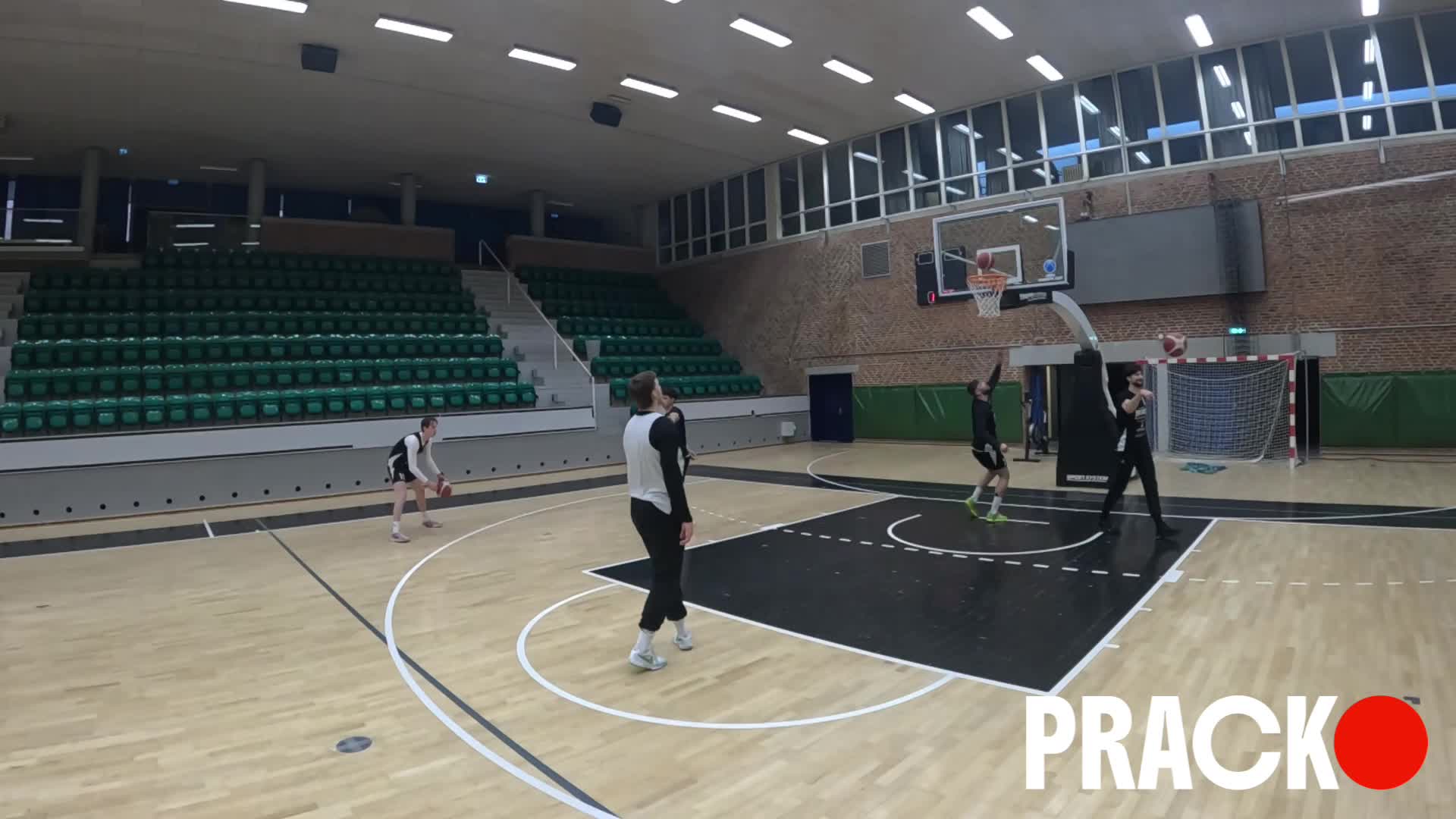
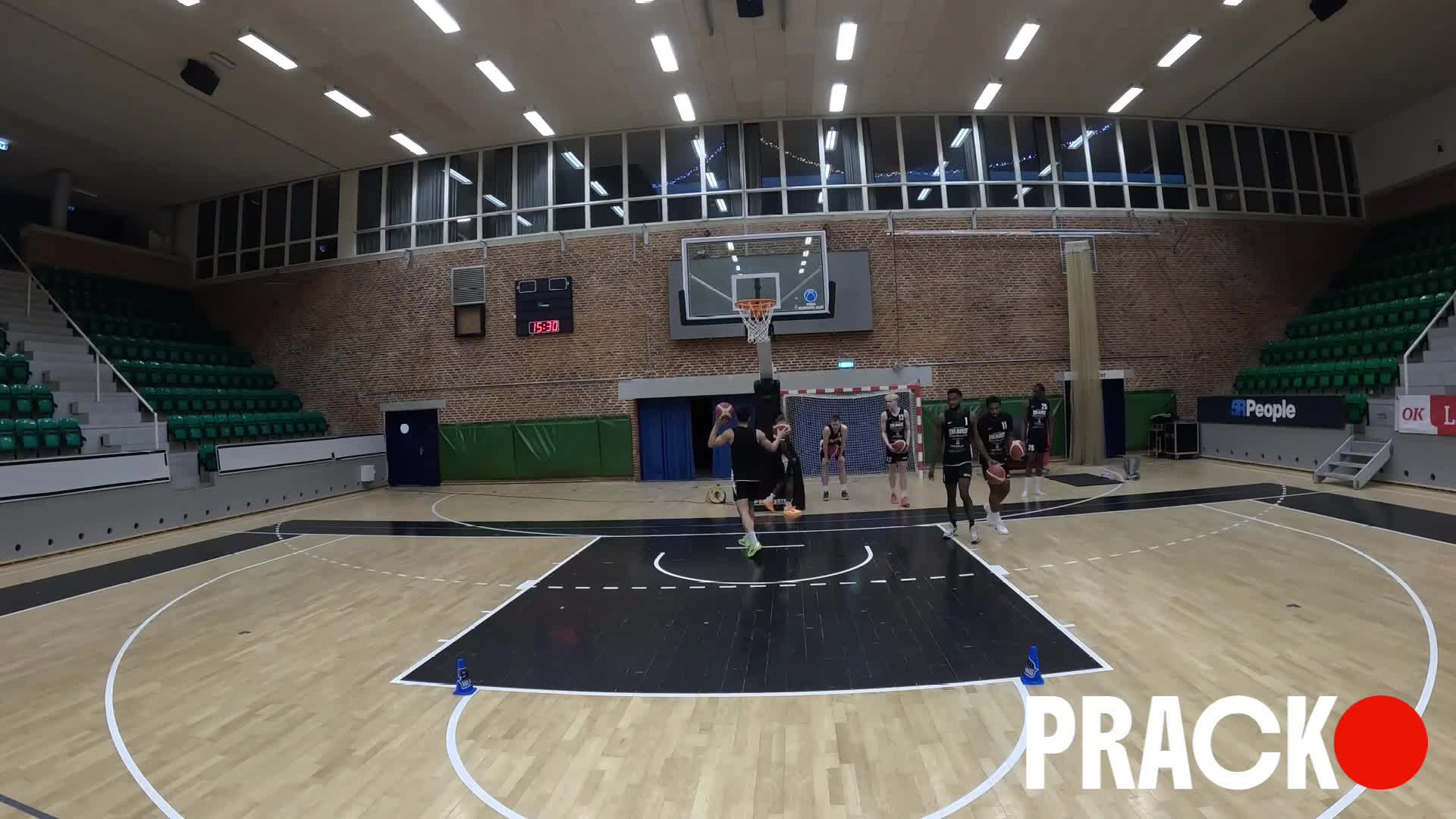
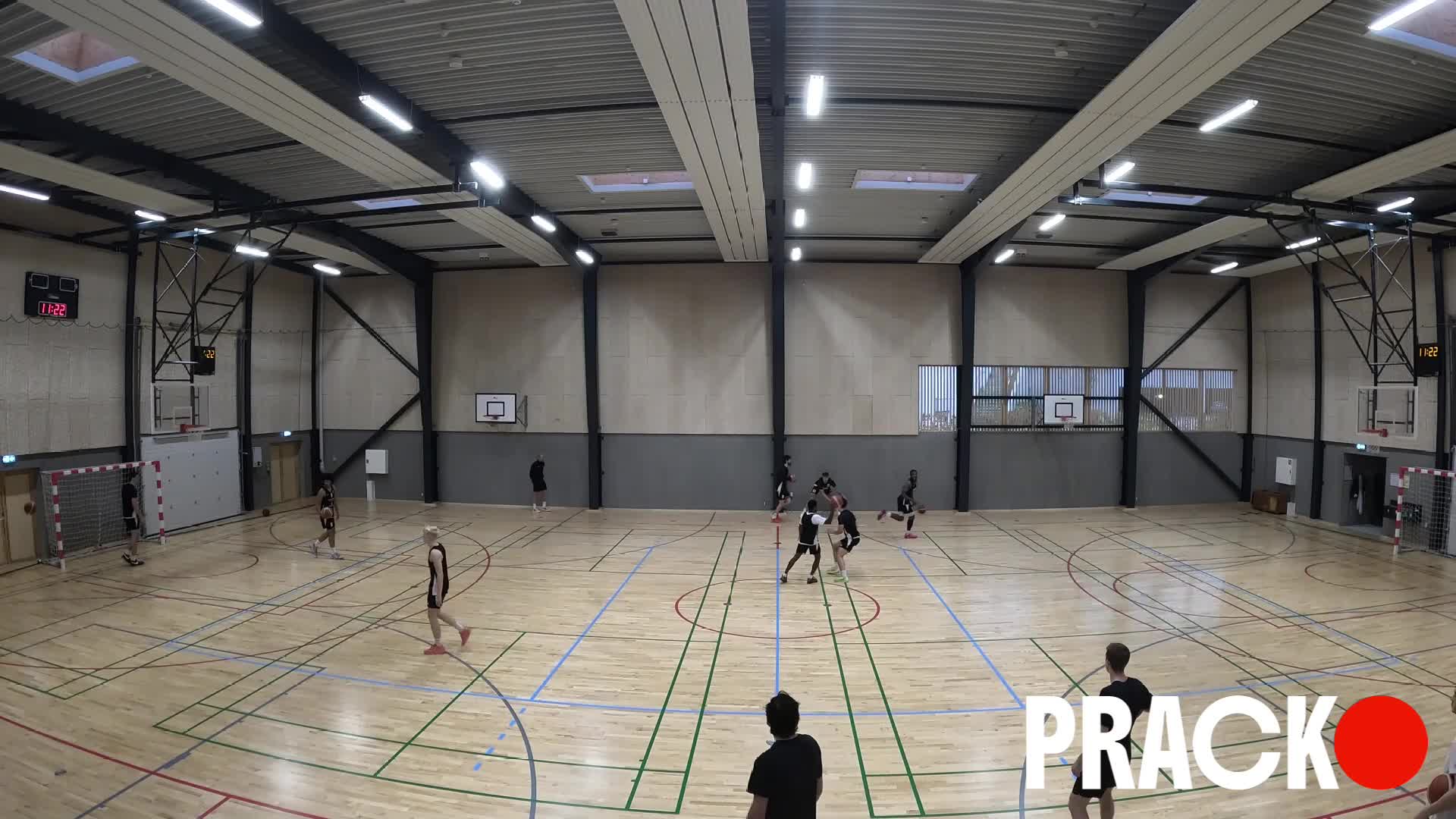
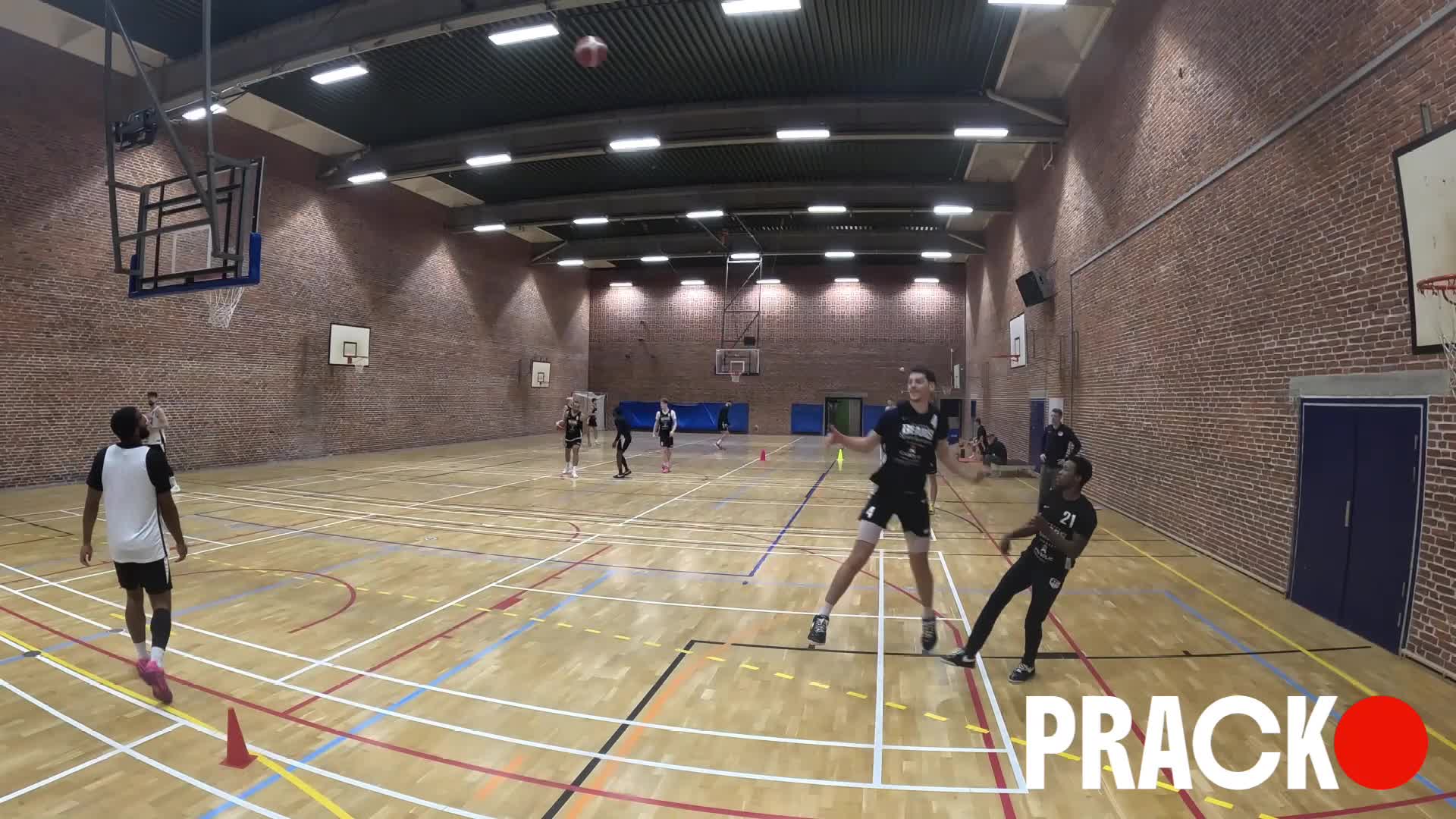
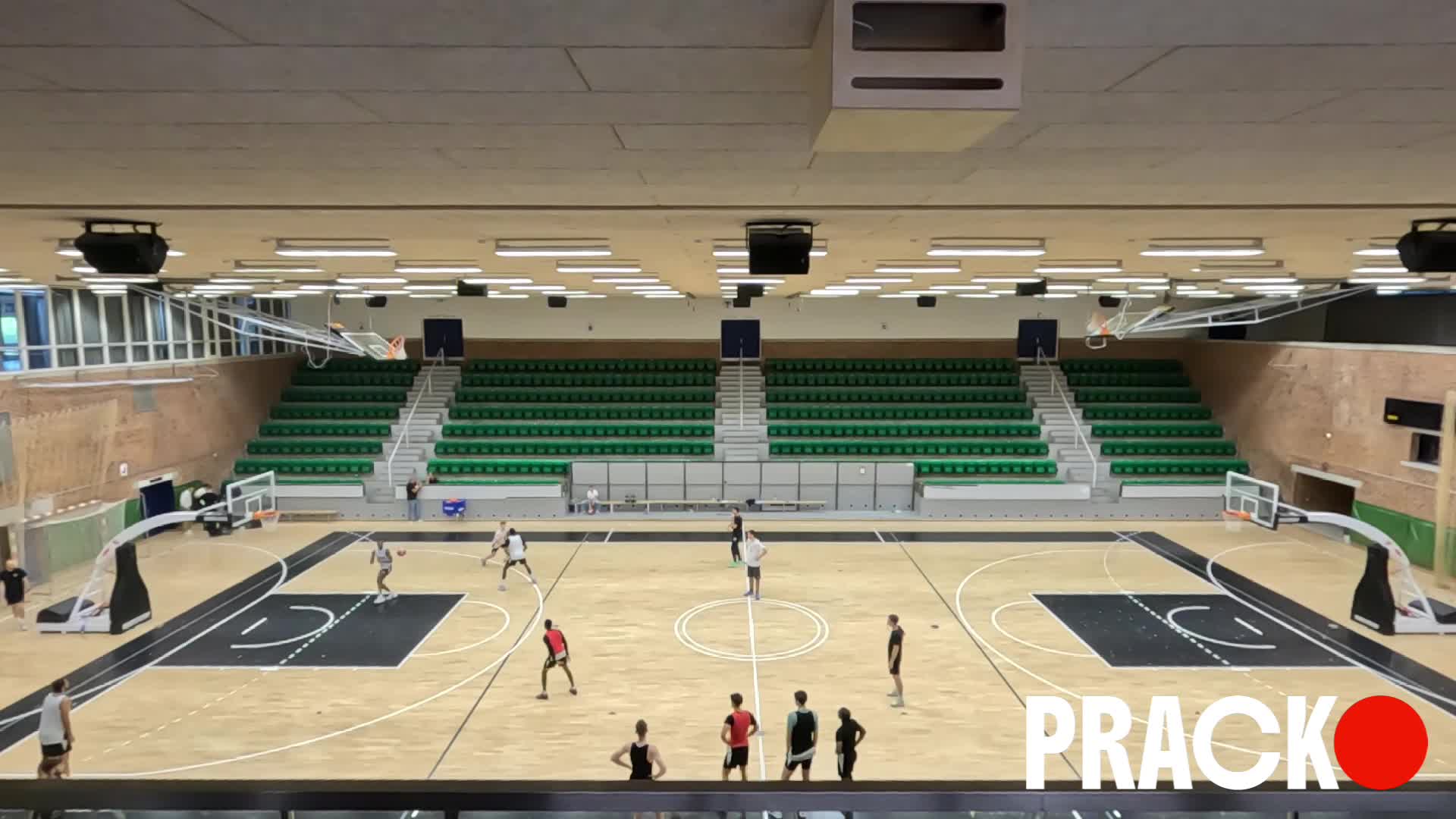
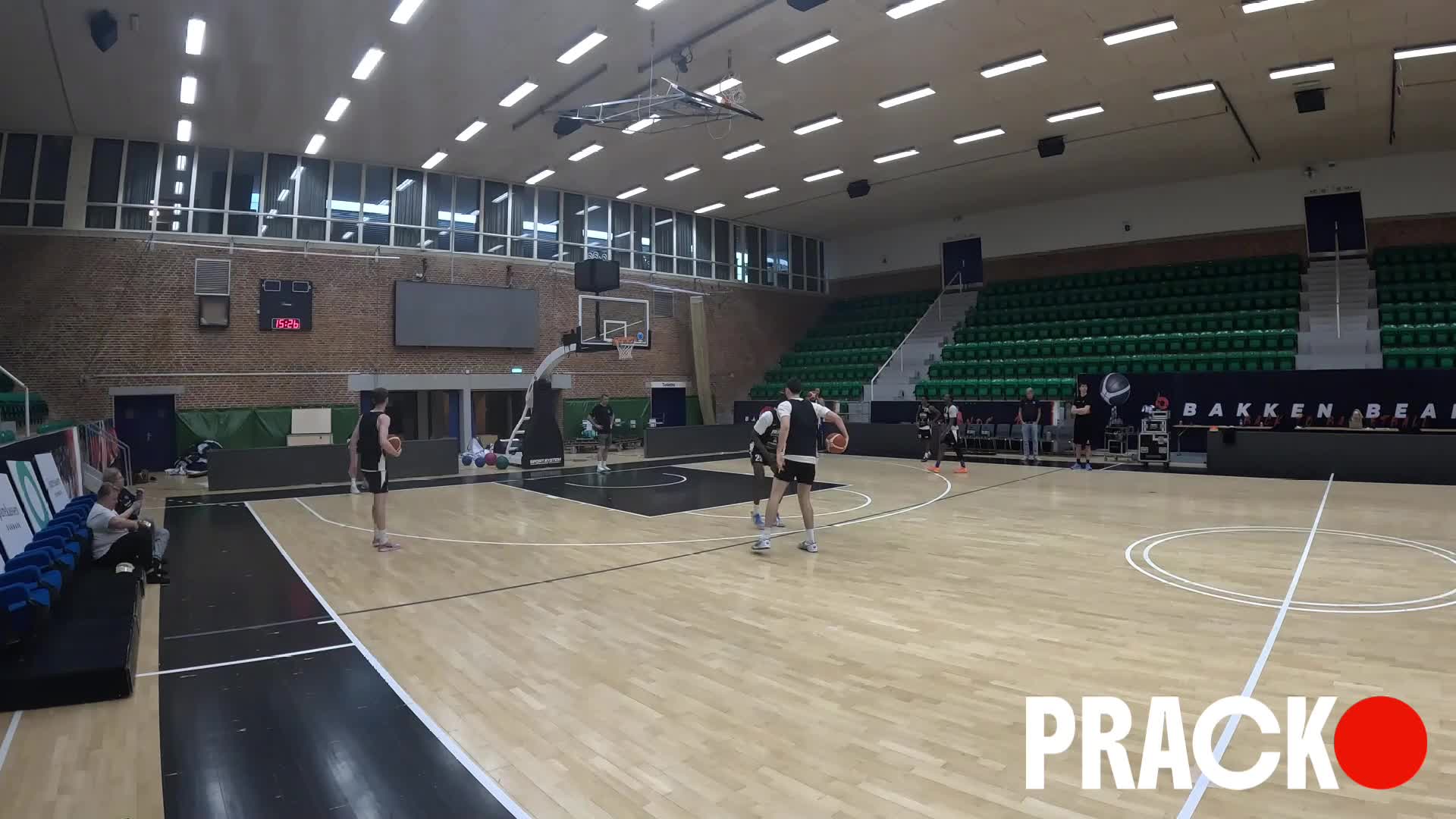
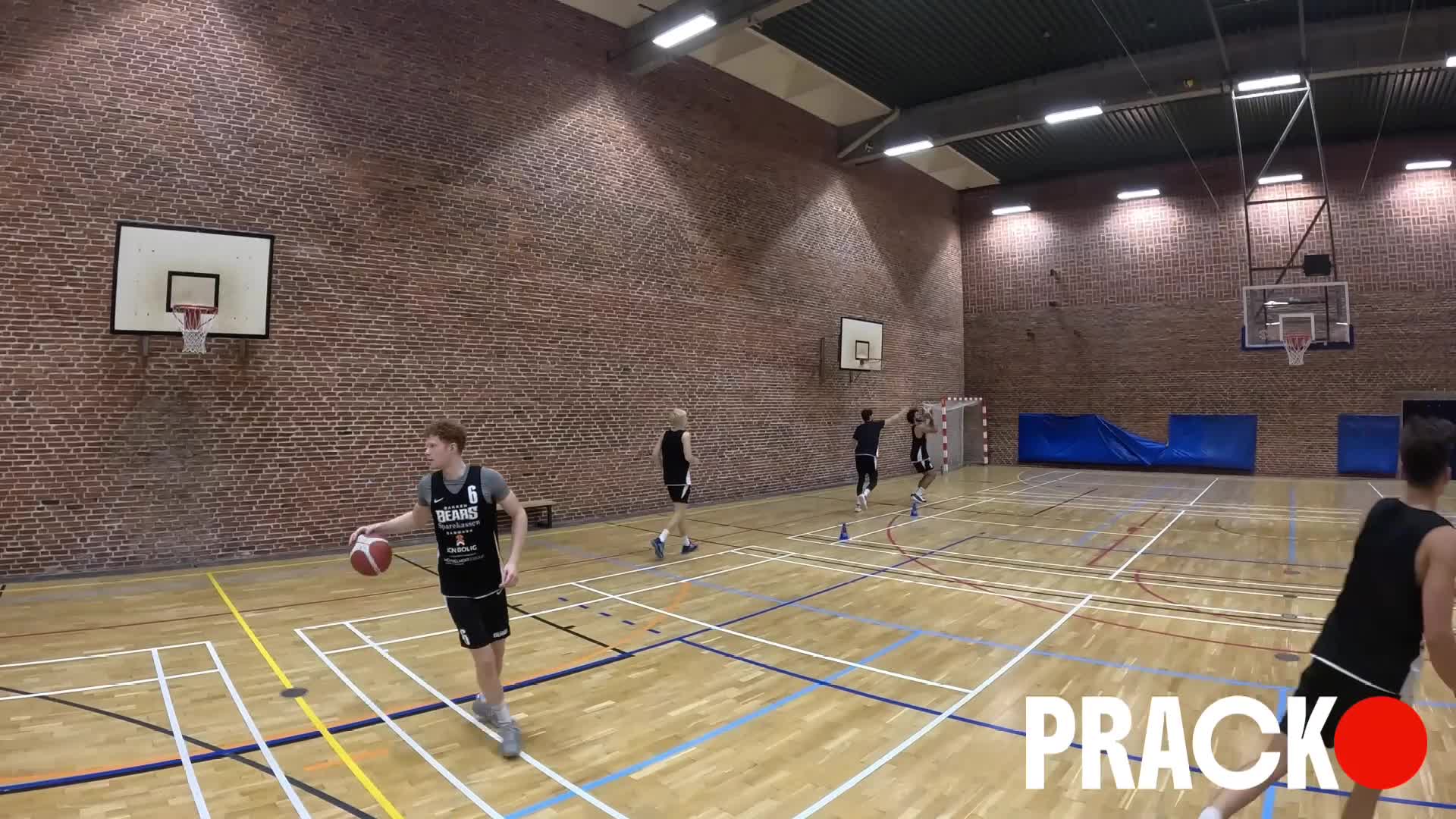
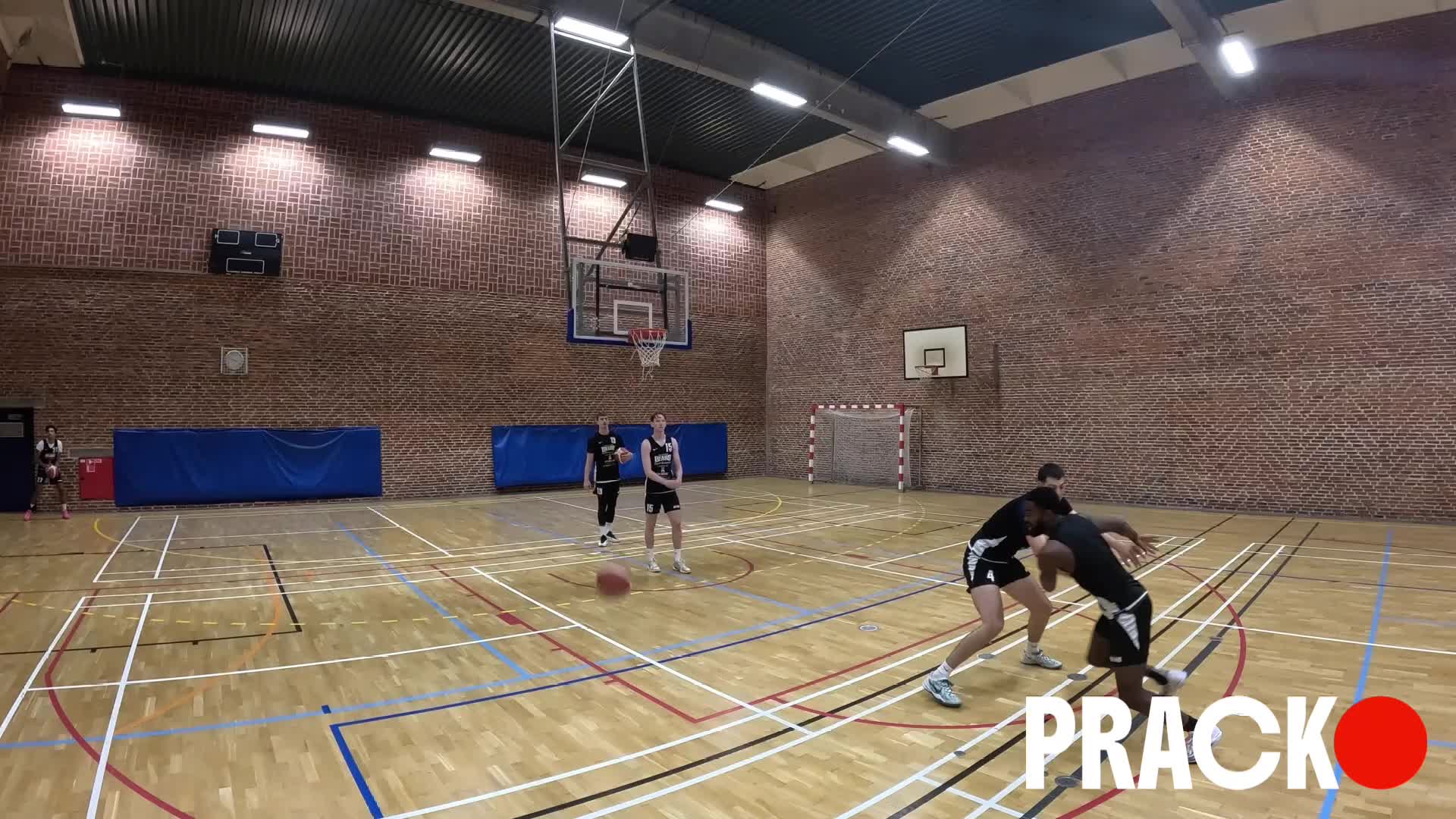
Contest Shooting: rearview double bounce thumbnail
Contest Shooting

Contest Shooting: rearview double bounce

MentalLevel 1PhysicalLevel 1Players2+

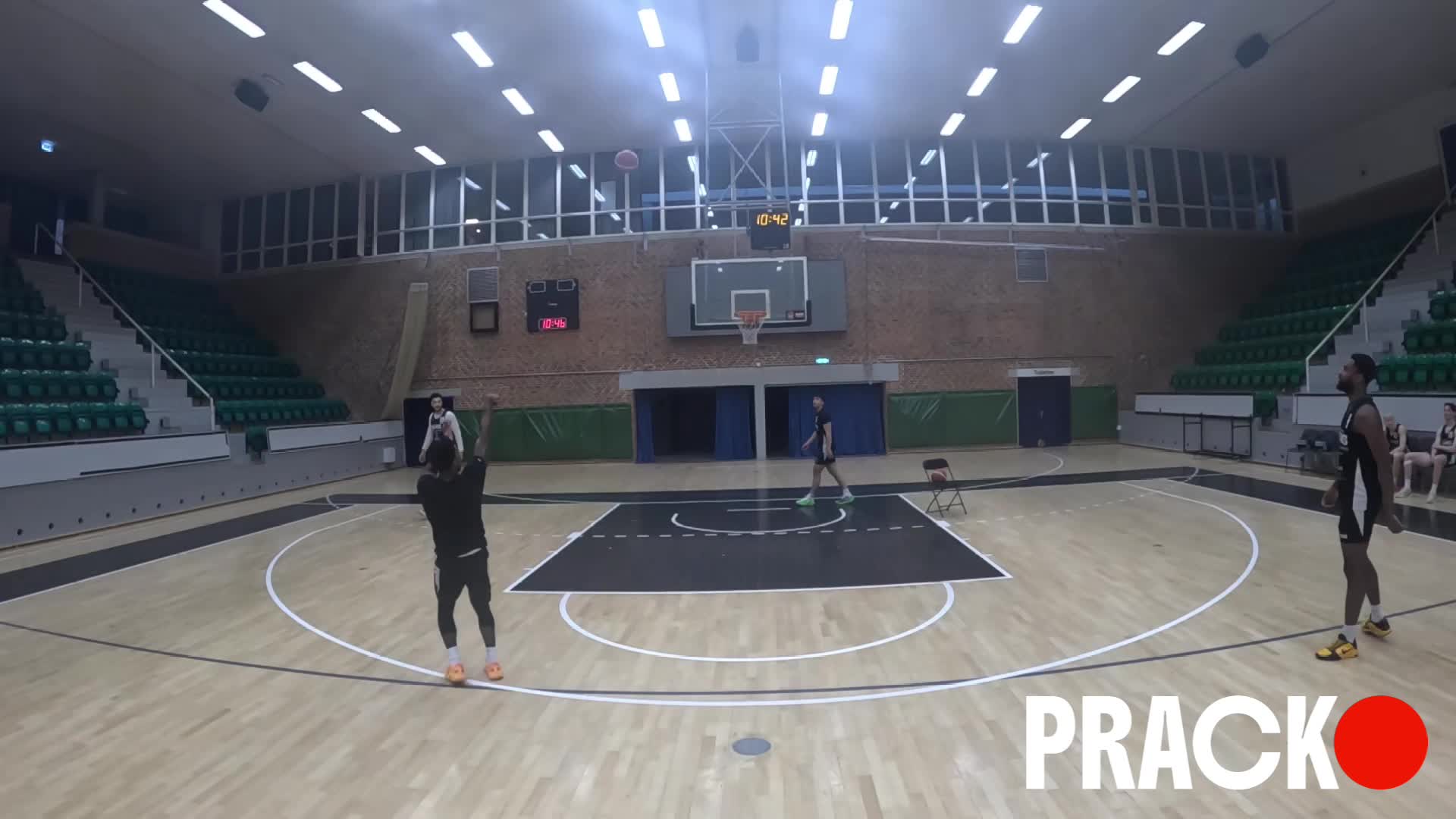
This drill trains players to shoot and defend against rear-view contests, a less common but critical game situation. The offense gains a slight advantage, while the defender must recover from behind and contest without fouling. Setup 2 players: Shooter (offense): starts ~5–6 feet in front of half court, facing the basket Chaser (defender): starts behind the shooter at half court with a ball 1 basketball Both players are aligned in a straight line toward the basket How the Drill Works Ball Throw The defender throws the ball over the shooter’s head toward the basket. The shooter cannot see the ball being released. Timing Constraint The shooter can move after the first bounce. The defender must wait until the second bounce before moving. Race to the Ball The shooter tracks the ball, retrieves it, and prepares to shoot. The defender sprints from behind to contest from the rear. Shot Attempt The shooter must finish the play with a shot (typically a jumper or layup). The defender attempts a rear-view contest (from behind, without fouling). Reset & Rotate Switch roles and repeat. Key Training Focus Shooting with a rear-view contest Tracking and locating the ball in transition Composure when a defender is closing from behind Defensive recovery and contest timing Finishing under pressure Game Translation This drill simulates transition situations where a defender is chasing from behind. Offensive players often rush or alter their shot unnecessarily in these situations—this drill teaches them to stay composed and finish properly. Defenders learn how to contest from behind without fouling. Coaching Emphasis Offensive players should: locate the ball quickly stay under control—don’t rush the shot finish confidently despite pressure from behind Defenders should: sprint at full speed avoid fouling on rear-view contests time their contest to disrupt without contact Emphasize game-speed execution Recommended Usage Best for: transition shooting drills finishing under pressure defensive recovery training practice warm-ups or competitive reps Effective for all positions, especially guards and wings. Equipment Basketball

Equipment:Basketballs
#movement shooting #shot contests #rearview #transition shooting
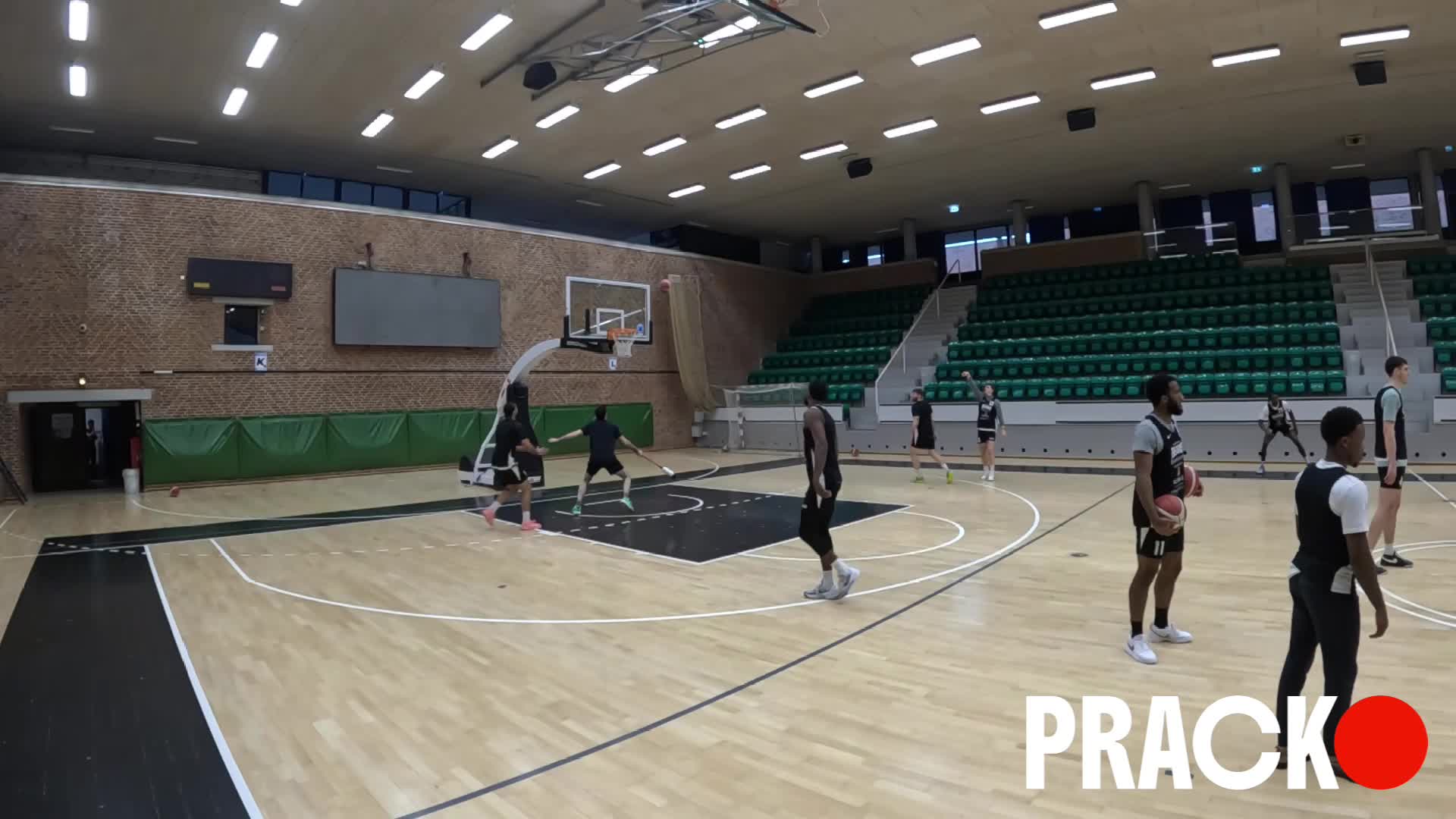
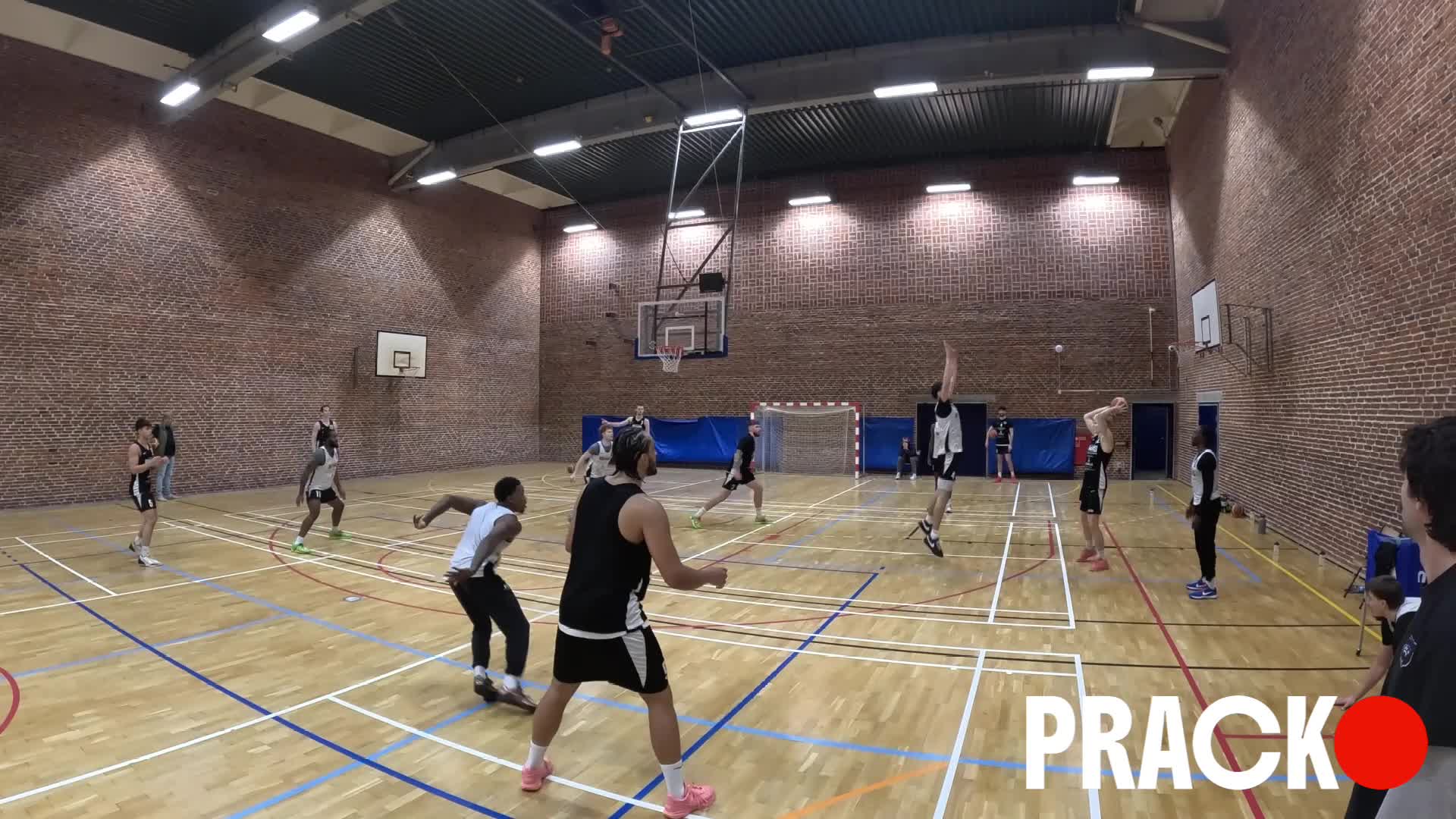
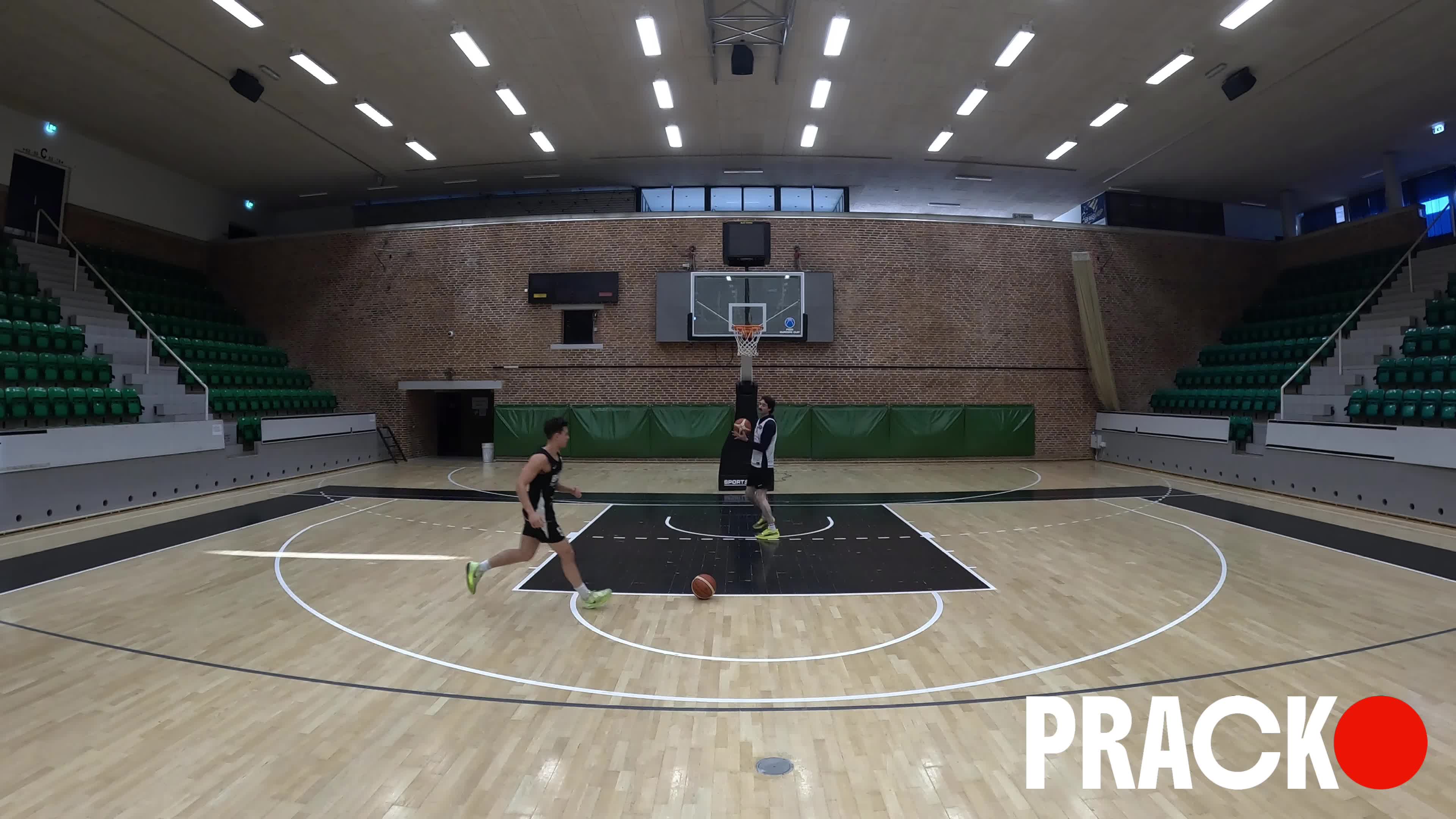
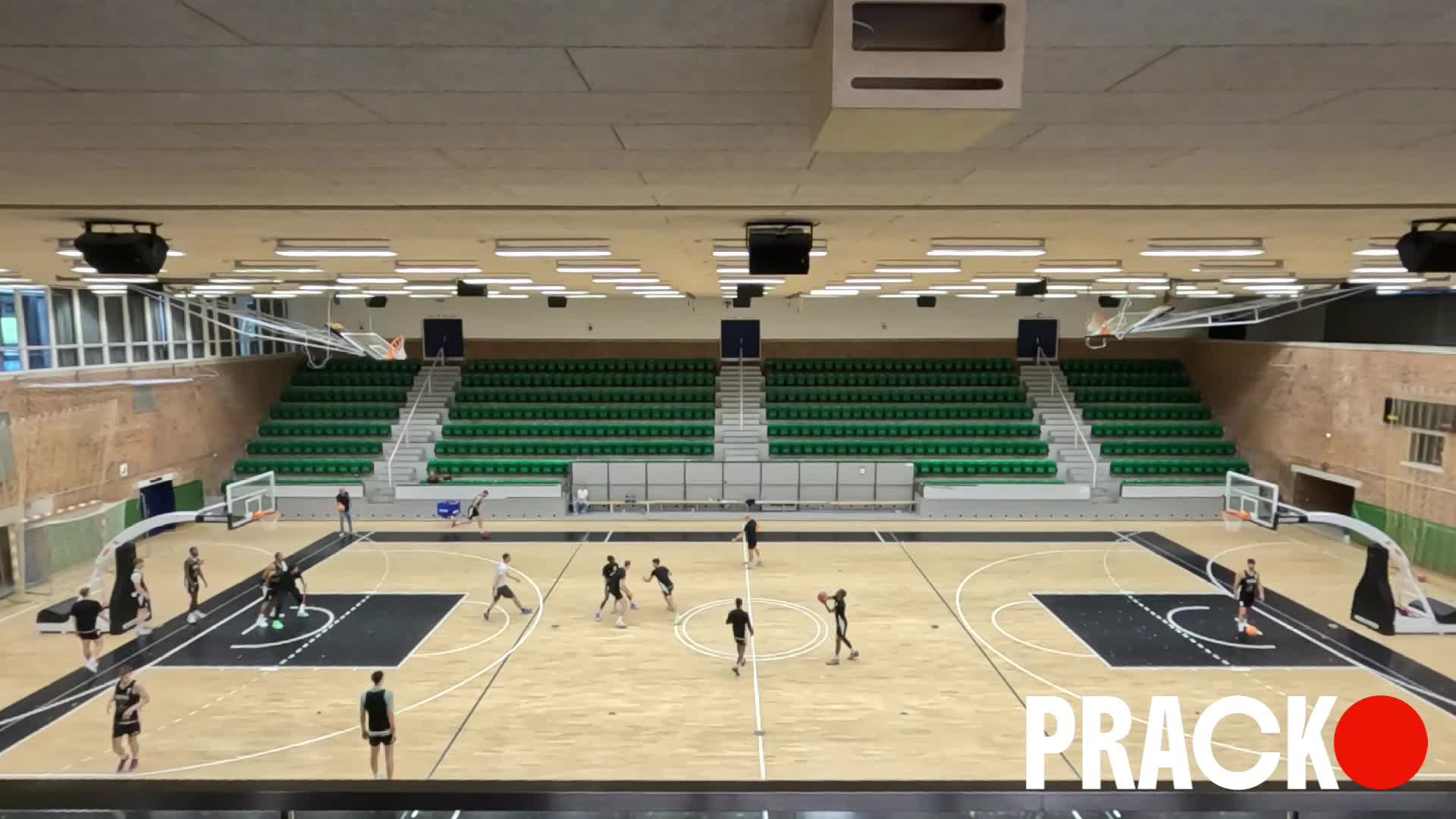
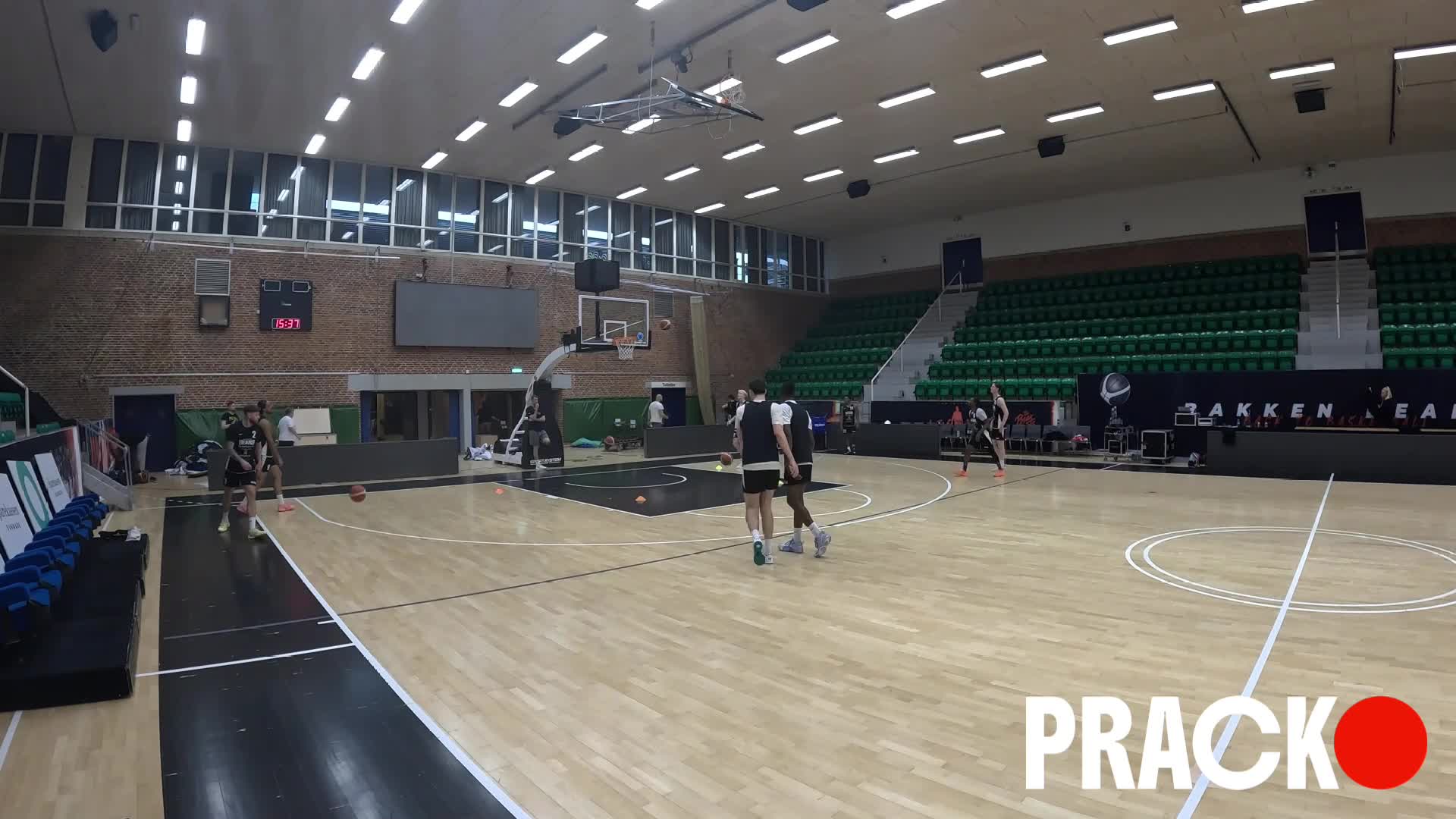
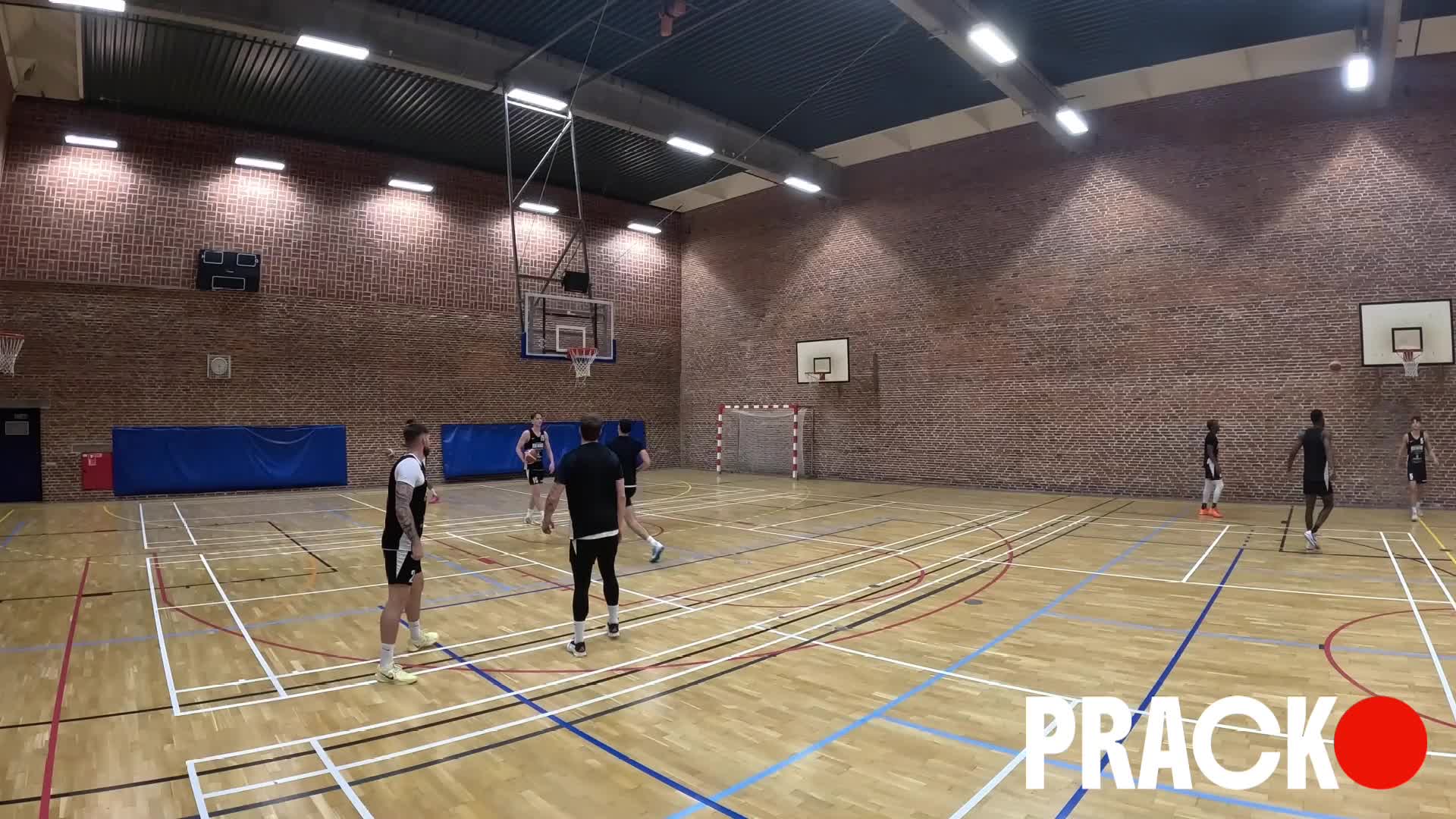
P/R Reads: ghost screen 3v2 thumbnail
Pick and Roll Reads

P/R Reads: ghost screen 3v2

MentalLevel 1PhysicalLevel 1Players5+

This drill teaches ghost screen actions into downhill drives and weakside reads in a 3-on-2 setting. The screener fakes the screen and pops, creating confusion and a driving lane. The ball handler then reads help to finish, hit the corner, or find the popper. Setup 3 offensive players: Ball handler at the top of the key Corner player in the right corner Ghost screener starting at the left block 2 defenders: Positioned to guard the right corner and right wing/pop Additional players line up to rotate; multiple groups can run on both ends. How the Drill Works Ghost Screen Action The screener runs from the left block toward the ball handler. They fake setting a screen (ghost) and immediately slip/pop to the right wing. Downhill Drive The ball handler attacks as if the defense messed up the switch, turning the corner into the paint. Help Rotation The low defender (corner defender) typically steps up to help at the rim. Offensive Reads (3 options) Finish at the basket if no help Kick to the corner if the low defender helps Hit the ghost pop (right wing) if the defense takes away the corner Play to a Shot Offense makes the correct read and gets a shot. Shooting Add-On / Continuity After the initial shot: players fill out and get additional shots (coach/lines can pass balls in), the passer can peel to the opposite corner to keep flow and spacing. Rotate & Repeat Rotate positions and run continuously from both sides. Key Training Focus Ghost screen timing and deception Downhill attacking off fake screens Weakside help reads (corner vs. pop) Decision making in 3-on-2 advantage Spacing and relocation Game Translation This mirrors modern offenses using ghost screens to create confusion in switch-heavy defenses. The action opens a lane for the ball handler and forces weakside defenders into difficult help-and-recover decisions. Coaching Emphasis Screener must sell the screen before slipping/popping. Ball handler should attack decisively—no hesitation. Emphasize reading the low man first. Corner and wing players must be shot-ready. Keep spacing tight and movements timed with the drive. Recommended Usage Best for: installing ghost screen actions transition/advantage drills team shooting with reads warm-up into live play Effective for guards and wings, but useful for all positions. Equipment Basketball

Equipment:Basketballs
#p/r passing #p/r reads #ghost screens
Scrimmage: continuous half court 3v2 thumbnail
Scrimmage

Scrimmage: continuous half court 3v2

MentalLevel 1PhysicalLevel 1Players5+

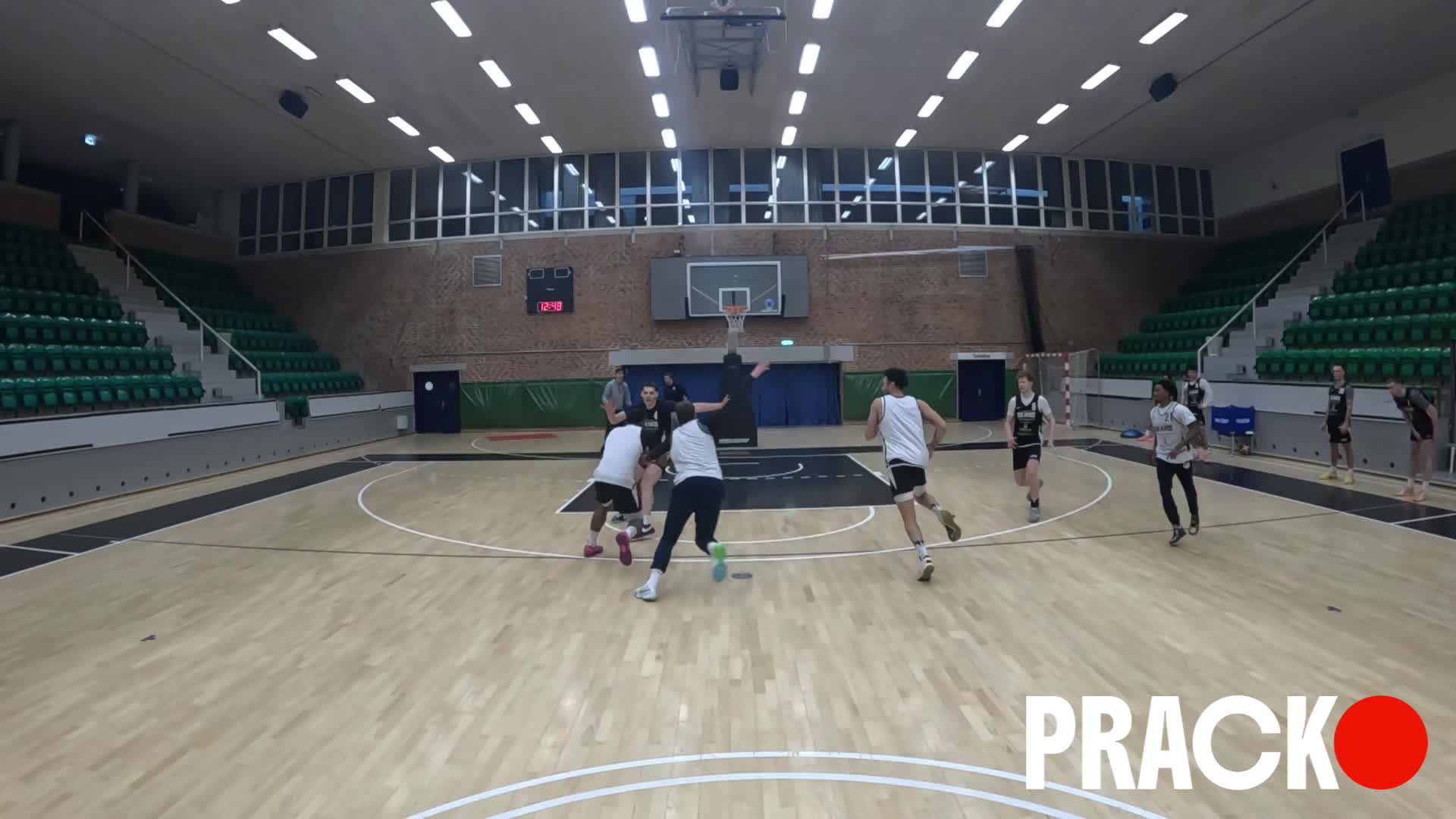
This is a classic continuous 3-on-2 transition drill that builds fast break decision-making, spacing, and conversion in advantage situations. It also transitions quickly into defense, creating a continuous flow up and down the court. Setup 5 players active at a time 3 offensive players at half court: 2 on the sidelines (wings) 1 in the middle with the ball 2 defensive players start under the basket Form 3 lines at half court (left wing, middle, right wing) Additional players wait in lines to rotate in How the Drill Works Start the Break The middle player dribbles the ball up the court. The two wing players run wide lanes. The offense attacks 3-on-2 against the two defenders. Play the Advantage Offense looks to: score quickly, make the correct read (pass vs. finish). Defense tries to: protect the basket, force a bad shot or turnover. Transition to Defense After the shot: the passer and shooter immediately become defenders. the third offensive player rotates out to the line. Next Group Goes The next three players in line immediately attack the other direction 3-on-2 against the new defenders. Drill continues non-stop. Key Training Focus Fast break spacing (wide lanes + middle push) Decision making in advantage situations Passing vs. finishing reads Transition from offense to defense Conditioning and pace Game Translation This drill replicates live fast break situations where teams have a numbers advantage. Players learn to make quick decisions and convert efficiently while also preparing to transition immediately into defense. Coaching Emphasis Offensive players should: run wide and fill lanes properly make quick, decisive reads avoid over-dribbling Encourage one-more passes when appropriate Defenders should: protect the rim first communicate and split the two Emphasize continuous pace and energy Recommended Usage Best for: transition offense training practice warm-ups conditioning drills team flow and tempo building Effective for all ages and skill levels. Equipment Basketball

Equipment:Basketballs
#transition defense #transition offense #transition passing #finishing #spacing and cutting
Contest Shooting: exchange ball quick shooting thumbnail
Contest Shooting

Contest Shooting: exchange ball quick shooting

MentalLevel 1PhysicalLevel 1Players2+

This drill emphasizes quick shot preparation and catch-and-shoot speed under pressure. The ball exchange creates a slight delay for the defender, forcing them into a live closeout while the offensive player must shoot immediately off the catch. Setup 2 players: one offensive player, one defender 2 basketballs (one per player) Offensive player starts behind the three-point line Defender starts 5–6 feet inside the three-point line, facing the offense How the Drill Works Initiation (Ball Exchange) The defender starts the drill by throwing a bounce pass to the offensive player. As the offensive player receives the bounce pass, they immediately: throw a chest pass back to the defender (exchanging balls). Live Closeout As soon as the passes are exchanged: the offensive player now has the ball and is ready to shoot, the defender must catch the chest pass and sprint into a closeout. Shot Attempt The offensive player must: catch and shoot the three-pointer immediately. The defender attempts to: contest or block the shot. Reset & Rotate Switch roles and repeat. Key Training Focus Catch-and-shoot speed Shot preparation and readiness Eliminating hesitation (no unnecessary shot fakes) Shooting under pressure Defensive closeout timing Game Translation This drill simulates receiving a pass with a defender recovering late. Players must recognize the advantage and get the shot off quickly before the closeout arrives, rather than hesitating or turning down open looks. Coaching Emphasis Offensive players should: be shot-ready before the catch go straight into the shot—no dip, no hesitation Emphasize quick footwork into the shot Defenders should: sprint into a controlled closeout contest without fouling Stress game speed and decisiveness Recommended Usage Best for: shooting workouts perimeter skill development confidence building for quick releases teaching players not to pass up open shots Effective for guards and wings, but useful for all positions. Equipment 2 basketballs

Equipment:Basketballs
#shot contests #movement shooting #catch and shoot
Finishing: tennis ball drop reaction thumbnail
Finishing

Finishing: tennis ball drop reaction

MentalLevel 1PhysicalLevel 1Players2+

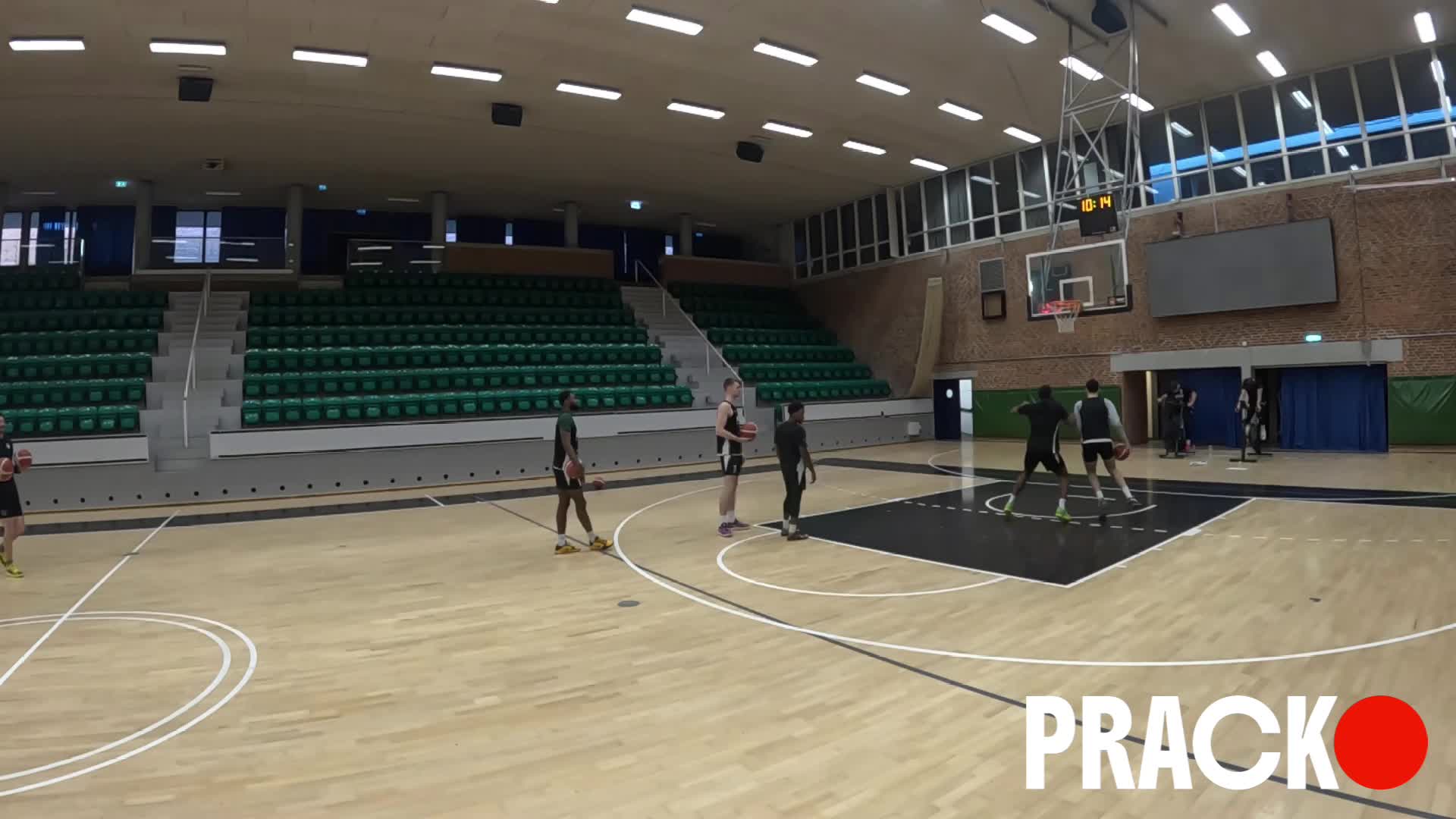
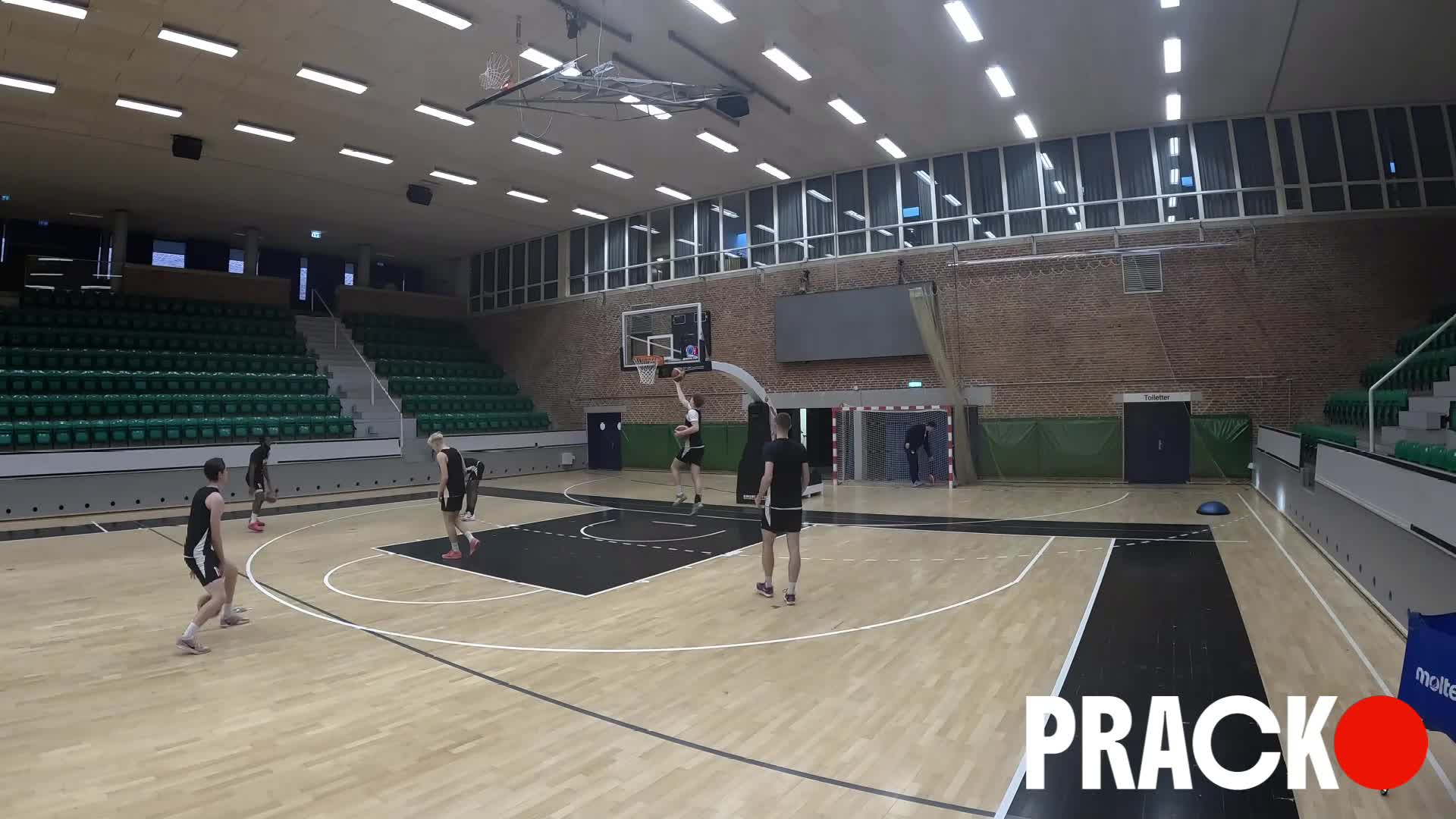
This drill builds reaction speed, first-step explosiveness, and finishing ability. The ball handler must read a random visual cue (tennis ball drop), attack instantly, and finish at the rim. Setup 2 players per group Ball handler: outside the three-point line with a basketball Feeder/reactor: a few feet inside the three-point line, holding a tennis ball behind their back Optional: multiple groups around the court How the Drill Works The ball handler starts with a live dribble outside the arc. The feeder stands inside the arc with a tennis ball hidden behind their back. At any moment, the feeder: raises their arms, and drops the tennis ball (left or right side). As soon as the ball is dropped, the drill is live. The ball handler must: react immediately to the side of the drop, attack that side, pick up the tennis ball before it bounces twice, then finish at the basket. Switch roles after each rep. Key Training Focus Reaction time and visual processing First-step quickness Ball handling into attack Finishing at the rim Coordination (handling two tasks at once) Game Translation This simulates reacting to unpredictable game cues (defender movement, loose balls, openings). Players learn to process information quickly and explode into an attack, then finish under control. Coaching Emphasis React immediately—no hesitation after the drop Stay low and ready in a live dribble stance Attack with purpose and speed Secure the tennis ball cleanly before finishing Finish under control at the rim Recommended Usage Best for: warm-ups reaction training guard/wing development improving first-step explosiveness Effective for all positions and skill levels. Equipment Basketball Tennis ball

Equipment:Tennis BallBasketballs
#reaction #coordination #finishing
Passing: jump exchange cluster passing thumbnail
Passing

Passing: jump exchange cluster passing

MentalLevel 1PhysicalLevel 1Players3+

This is a high-coordination passing and warm-up drill that challenges players to process multiple tasks at once. Players must jump before catching, pass on time, and manage multiple balls simultaneously, improving rhythm, timing, and hand-eye coordination. Setup 3–6 players per group One ball per player, plus one extra ball Players stand in a small circle or cluster Each player starts holding one ball The extra ball is the “live” ball being passed around How the Drill Works Phase 1: Jump Catch & Pass One ball (the extra ball) is passed randomly between players. Before catching the incoming ball, the receiving player must: jump off the ground, then catch the ball in the air or upon landing. After catching, the player must: quickly pass the ball to another teammate. Players must manage: holding their own ball, catching and passing the live ball, switching hand positions if needed. Phase 2: Full Ball Exchange (Advanced) Continue passing the live ball as in Phase 1. New rule: whenever a pass is made: the receiving player must pass their own ball at the same time. This creates a continuous exchange of balls in the air: you catch the incoming ball, while your own ball is being passed to someone else. The group maintains constant movement and rhythm without dropping balls. Key Training Focus Hand-eye coordination Timing and rhythm Multi-task processing Passing accuracy Quick decision making Communication Game Translation This drill improves a player’s ability to process multiple actions at once, similar to reading the floor while handling the ball and reacting to teammates and defenders. It also sharpens passing under pressure and quick reactions. Coaching Emphasis Players must jump before every catch (no cheating the movement). Emphasize quick, accurate passes. Keep the drill continuous and fluid. Encourage players to stay engaged and aware of all balls in play. Communication helps maintain rhythm and avoid collisions. Recommended Usage Best used for: pre-practice warm-ups coordination training passing skill development team energy and engagement Effective for all ages and skill levels. Equipment 1 basketball per player + 1 extra ball

Equipment:Basketballs
#tight space passing #coordination
Off the Dribble Shooting: opposite touch cone race thumbnail
Off the Dribble Shooting

Off the Dribble Shooting: opposite touch cone race

MentalLevel 1PhysicalLevel 1Players2+

This drill develops off-the-dribble shot creation and closeout timing. The offensive player must execute a designated move, create separation to the outside of a cone, and shoot, while the defender reacts by touching the opposite cone before contesting. Setup 2 players: one offensive player, one defender 1 basketball 2 cones placed on or just behind the three-point line: spaced 5–6 feet apart Offensive player starts behind the cones with the ball Defender starts facing the offensive player How the Drill Works Live Dribble + Assigned Move The offensive player begins with a live dribble. The coach calls out a specific move (e.g., between-the-legs, behind-the-back, spin). Attack Direction The offensive player executes the move and attacks left or right. They must get outside the cone in that direction to create space. Defensive Constraint As soon as the offensive player commits to a direction: the defender must touch the opposite cone (opposite of where the offense is going), then recover to contest the shot. Shot Attempt The offensive player rises into a pull-up three-pointer after clearing the cone. The defender closes out and contests. Reset & Rotate Players switch roles and repeat. Key Training Focus Off-the-dribble shot creation Separation using dribble moves Footwork into pull-up shooting Reading and reacting to defender positioning Defensive reaction and recovery closeouts Game Translation This drill simulates situations where a player creates separation with a move and must quickly get into a shot before the defender recovers. It also trains defenders to react to offensive moves and recover from disadvantage into a contest. Coaching Emphasis Offensive players should: execute moves with purpose and pace get cleanly outside the cone before shooting transition quickly into their shooting pocket Defenders should: react immediately to the offensive move sprint from the cone into a controlled closeout avoid overcommitting or fouling Emphasize game speed and decisiveness Recommended Usage Best for: perimeter skill development guard and wing workouts shooting under pressure closeout reaction training Effective for guards and wings, but adaptable for all positions. Equipment Basketball 2 cones

Equipment:BasketballsCones
#off the dribble shooting #closeout defense
Rebounding: tag up to zig zag thumbnail
Rebounding

Rebounding: tag up to zig zag

MentalLevel 1PhysicalLevel 1Players2+

This drill combines rebounding fundamentals (box out + crash), transition mindset (tag-up), and full-court on-ball defense. Players fight for the rebound, then instantly transition into a 1v1 race to half court. Setup 2 players per rep: one offense, one defense 1 coach/feeder with a basketball Start with both players behind the three-point line (same side) Coach stands near the basket How the Drill Works Simulated Shot The coach throws or shoots the ball off the rim (intentional miss). Rebound Battle The offensive player crashes for the rebound. The defensive player boxes out, makes contact, and pursues the ball. Secure the Rebound If the defender secures it → they become offense. If the offensive player gets it → they stay offense. Tag-Up Transition The player who does not get the rebound immediately becomes defense (this is the “tag-up” concept). No pause—instant transition. Full-Court 1v1 to Half Court The rebounder (now offense) must dribble to half court. The defender must stop or delay them from reaching half court. Play ends once: offense reaches half court, or defense forces a stop/turnover. Rotate Next pair steps in. Players switch roles each rep. Key Training Focus Boxing out (contact, leverage, positioning) Offensive rebounding effort and timing Tag-up transition mindset (offense → defense instantly) Ball security after rebound Full-court on-ball defense Competing through multiple efforts Game Translation This drill simulates real game sequences where players must: fight for rebounds, immediately transition roles, and defend or advance the ball in the open floor. The tag-up concept is critical—players who crash the glass must be ready to defend immediately if possession changes. Coaching Emphasis Defenders must make first contact and hold the box out. Offensive players should pursue rebounds aggressively. Emphasize quick outlet instincts or push dribbles after securing the rebound. Defender must sprint, angle, and contain—no reaching. Encourage physicality and competitiveness throughout. Recommended Usage Best for: rebounding segments transition defense training conditioning through competition teaching tag-up habits Effective for all positions and team units. Equipment Basketball

Equipment:Basketballs
#tag up #box out #defensive rebounding #offensive rebounding #on ball defense #full court press
P/R Reads: corner step up 2v2 thumbnail
Pick and Roll Reads

P/R Reads: corner step up 2v2

MentalLevel 1PhysicalLevel 1Players4+

This drill trains a corner step-up ball screen into live 2-on-2 play. It emphasizes creating an advantage by forcing the on-ball defender over the screen, opening the pocket pass or turn-the-corner drive. Setup 4 players: 2 offense, 2 defense 1 basketball Offensive spacing (left side): Ball handler on the left wing Screener in the left corner Defenders are matched up on each offensive player How the Drill Works Initiation The ball handler starts on the left wing with the ball. The corner player (teammate) lifts from the corner to set a step-up screen for the ball handler. Screen Action The screener sets the screen on the low side angle (to influence the defender over the top). The ball handler uses the screen and attacks. Live 2-on-2 Play From the screen, play becomes live: Ball handler options: turn the corner and score hit the pocket pass to the roller Screener options: roll hard to the basket slip the screen if the defense anticipates or switches early Defensive Reads Defense can: switch go over/under hedge or contain (based on coaching emphasis) Finish Play continues until a shot or stop. Rotate players and repeat. Key Training Focus Step-up screen positioning and angle Forcing defenders over the screen Pocket pass timing and accuracy Rolling vs. slipping reads Creating and attacking 2-on-1 advantages Game Translation This mirrors modern offenses that use corner step-up screens to create mismatches and confusion—especially against teams that switch frequently. Proper screening angles and timing can force defensive errors and open up the roll or driving lane. Coaching Emphasis Screener should: set the screen on the low side to force over-the-top coverage be ready to slip if the defense switches early Ball handler should: attack decisively off the screen read the defender’s path immediately Emphasize creating a 2-on-1 advantage after the screen Encourage physical, well-timed screens Recommended Usage Best for: pick-and-roll skill development guard + big or guard + guard actions teaching screening angles and reads live 2-on-2 competitive play Effective for all positions, especially teams running modern pick-and-roll heavy systems. Equipment Basketball

Equipment:Basketballs
#p/r passing #p/r reads #step up
P/R Defense: 3v3 Bonn Drill thumbnail
Pick and Roll Defense

P/R Defense: 3v3 Bonn Drill

MentalLevel 1PhysicalLevel 1Players6+

This is a progression of the Bonn Drill, expanding from 2v2 to 3v3 to incorporate weakside responsibilities. It trains closeouts, defensive communication, and pick-and-roll coverage while adding an extra offensive player to simulate more game-like spacing and rotations. Setup 6 players total: 3 offense, 3 defense. 2 basketballs (one to initiate the drill). Defensive players: Two start on the blocks One starts as the weakside defender (opposite wing or corner) Offensive players: Two on the wings (behind the three-point line, elbow-extended) One on the weakside corner or wing How the Drill Works Initiation (Cross Pass + Closeouts) One defender on the block starts with the ball and passes across the lane to the other defender. As the pass is made, both defenders: cross paths in the paint, sprint out to close out on the two wing offensive players. Ball Movement + Matchups The offensive player who receives the ball swings it to the opposite wing. The weakside offensive player maintains spacing (corner or wing). Defenders must: communicate matchups, identify who they are guarding after the cross. Pick-and-Roll Action After the swing pass, the offense flows directly into a pick-and-roll on the wing. The third offensive player (weakside) stays spaced for: tagging reads kick-out opportunities. Live 3-on-3 Play The defense must: execute the assigned pick-and-roll coverage (switch, drop, hedge, etc.), communicate through the action, account for the weakside offensive player. The offense plays live to: create a scoring opportunity, read both on-ball and weakside defenders. Finish & Reset Play continues until a shot or stop. Rotate players and repeat. Key Training Focus Sprinting into controlled closeouts Defensive communication during cross-match situations Pick-and-roll coverage execution (3-on-3) Weakside positioning and help defense Offensive spacing and decision-making Game Translation This drill simulates early defensive rotation into pick-and-roll coverage, where defenders must quickly match up after a scramble and then immediately defend a ball screen. The addition of a third offensive player introduces real weakside responsibilities, making it closer to game conditions. Coaching Emphasis Defenders must sprint, then break down under control on closeouts. Emphasize early, loud communication during cross-match situations. Ensure defenders understand their pick-and-roll coverage responsibilities. Weakside defender must be active and ready to help/tag. Offensive players should maintain proper spacing and quick ball movement. Recommended Usage Best used for: team defensive concepts pick-and-roll coverage installation closeout + rotation drills game-like 3-on-3 segments Effective for all positions, especially in team defensive systems. Equipment Basketball

Equipment:Basketballs
#p/r ball handler defense #p/r screener defense #p/r reads
Closeout Reads: back tap live 1v2 thumbnail
Closeout Reads

Closeout Reads: back tap live 1v2

MentalLevel 1PhysicalLevel 1Players3+

This drill is a progression of the Back-Tap 1-on-2 concept, now allowing the offensive player to score from anywhere (three, pull-up, or finish). It emphasizes quick pickup decisions, reading two defenders, and attacking closeouts after a chaotic start. Setup 3 players: Offensive player (outside the three-point line with a ball) Perimeter defender (in front of the offense, outside the arc, holding a ball) Rim defender (under the basket, holding a ball) Both defenders hold basketballs (constraint for safe contests and no hand-checking). How the Drill Works Activation (Back Tap) The offensive player lightly taps the ball off the back of the perimeter defender. As soon as the ball contacts the defender’s back, the drill is live. Immediate Decision The offensive player recovers the ball and can choose to: Shoot a three-pointer immediately, or Attack off the dribble (pull-up jumper or drive to the basket). Defensive Reaction The perimeter defender must turn quickly and locate the ball, then: close out to contest a shot, or recover to cut off the drive. The rim defender reads the play and: steps up on drives, or prepares to rebound or contest at the rim. Live Play Play continues until the offensive player: shoots (three or midrange), or finishes at the basket. Constraints Defenders keep their basketballs in hand: may use them to contest vertically or apply body pressure, cannot swipe or reach with free hands. Rotate Switch roles and repeat. Key Training Focus Quick decision making (shoot vs. drive) Reading closeouts after delayed defensive reaction Shooting under pressure Attacking closeouts into pull-ups or finishes Finishing vs. help defense Defensive reaction speed and closeout technique Game Translation This drill simulates situations where a defender is momentarily out of position, forcing them to recover quickly. The offensive player must recognize whether they have an immediate shot or should attack the recovering defense. Coaching Emphasis Offensive players should read immediately after the tap—no hesitation. Emphasize shot readiness for quick catch-and-shoot opportunities. Attack aggressively if the defender is late. Defenders must locate the ball quickly and close out under control. Encourage proper closeout mechanics (high hands, balanced stance). Recommended Usage Best used for: shooting under pressure closeout decision-making drills finishing vs. help defense competitive small-group work Effective for guards and wings, but applicable to all positions. Equipment 3 basketballs

Equipment:Basketballs
#closeout reads #finishing #movement shooting #closeout defense #rim protection
Ball Handling: dual-ball roll & command thumbnail
Ball Handling

Ball Handling: dual-ball roll & command

MentalLevel 1PhysicalLevel 1Players2+

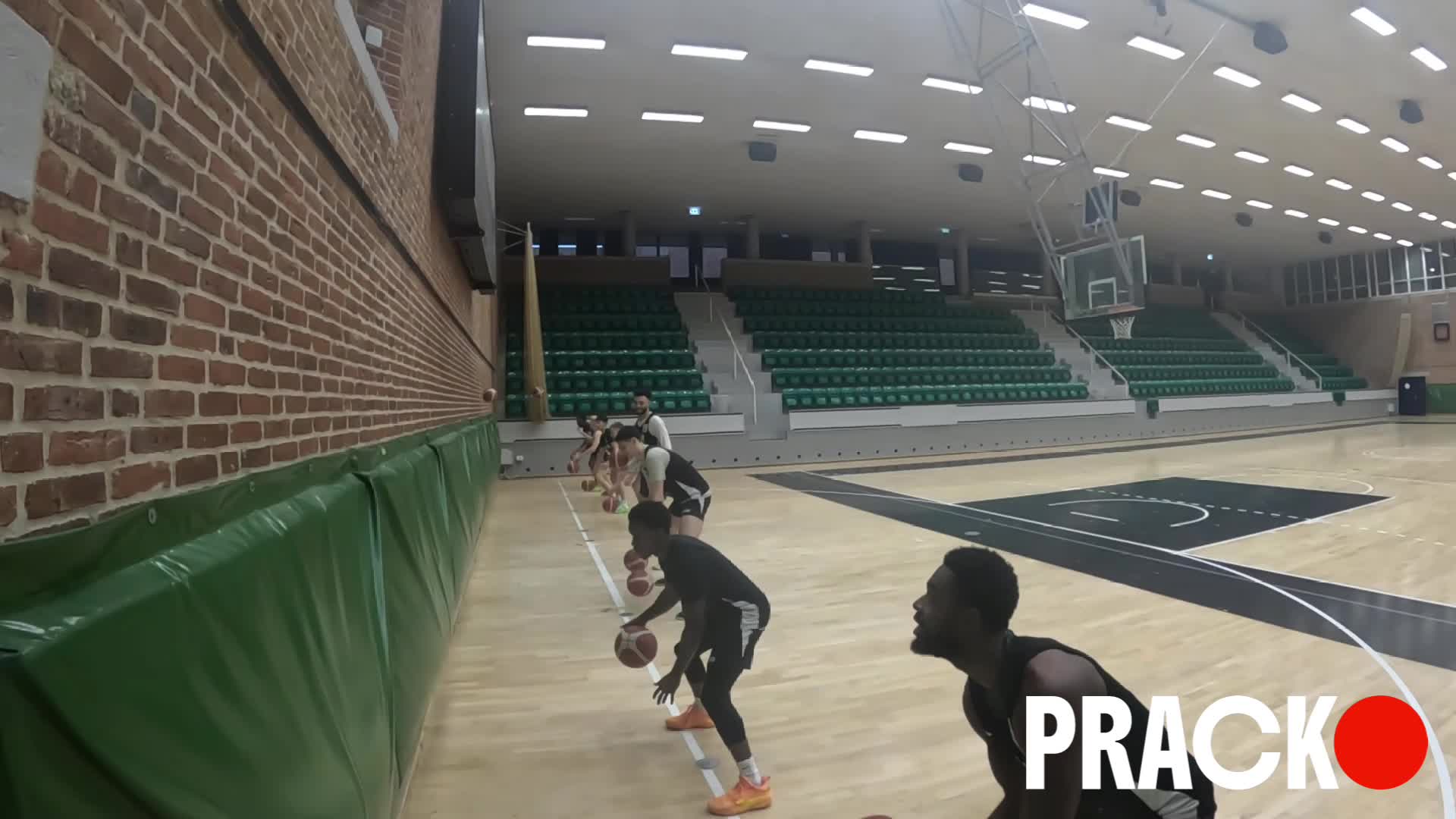
This drill builds low, controlled ball handling and multi-task coordination by requiring the player to dribble one ball while rolling a second ball and react to partner commands. It reinforces staying low, keeping vision up, and executing moves under cognitive load. Setup 2 players per group (can scale to full team along the sideline). 2 basketballs per group: 1 for dribbling 1 for rolling on the floor Start on the sideline (work sideline-to-sideline). One player is the handler, the other is the caller/partner. How the Drill Works The handler begins dribbling one ball while rolling the second ball forward with the opposite hand. The player moves laterally or up the court (sideline-to-sideline or baseline-to-baseline). The partner gives live commands at any time (e.g., “crossover,” “between,” “behind,” “spin”). On the command, the handler must: execute the dribble move, and maintain control of the rolling ball at the same time. Continue moving while repeating commands until reaching the other sideline. Switch roles and repeat. Optional Progressions Require a hand switch after every command. Add speed changes (slow → burst). Add direction changes (forward/backward/zigzag). Limit vision (eyes up only—no looking down). Key Training Focus Low, compact dribbling stance Hand-eye coordination (multi-tasking) Executing moves on command Maintaining eyes up / court vision Rhythm and control under fatigue Game Translation Players must handle the ball while processing multiple cues (defenders, teammates, spacing). This drill mimics that by forcing simultaneous control and decision-making, improving comfort when operating low and under pressure. Coaching Emphasis Stay low and balanced throughout (hips down, chest up). Keep eyes up—avoid staring at the ball. Execute moves cleanly and on time with the command. Control the roll with the off-hand—don’t lose the second ball. Maintain consistent dribble rhythm. Recommended Usage Best for: warm-ups ball handling development coordination training guard/wing skill work (useful for all positions) Great for players who: dribble too upright struggle to keep vision up need better control under cognitive load Equipment 2 basketballs per pair

Equipment:Basketballs
#ball handling
Finishing: back tap 1v2 finishes thumbnail
Finishing

Finishing: back tap 1v2 finishes

MentalLevel 1PhysicalLevel 1Players3+

This drill creates a chaotic 1-on-2 finishing scenario where the offensive player starts with a slight advantage and must read two recovering defenders. It emphasizes composure at the rim, finishing through traffic, and decision making against early/late help. Setup 3 players: Ball handler (offense): outside the three-point line, facing the basket, with a ball Perimeter defender: in front of the ball handler (outside the arc), facing the basket, holding a ball Rim defender: under the basket, holding a ball One ball with the offense; both defenders hold a ball (constraint for safe contests). How the Drill Works Activation (Back Tap) The offensive player lightly tosses the ball off the back of the perimeter defender. As soon as the ball contacts the defender’s back, the drill is live. Attack The offensive player recovers the ball and drives immediately toward the basket. Defensive Reaction The perimeter defender turns and chases to contest from behind/side. The rim defender steps up to protect the basket. Finish Constraint The offensive player must finish inside the restricted area (floater just outside the circle is optional). No pull-up jump shots—the focus is finishing at/near the rim. Defensive Constraint Defenders keep their basketballs in hand: may use the ball to contest vertically or apply body contact, no hand swipes (reduces fouling risk). End & Rotate Play through the finish (make/miss). Rotate roles and repeat. Key Training Focus Finishing vs. two defenders (early/late help) Composure and pace control at the rim Shot selection in traffic (euro, step-through, floaters) Finishing with both hands and off one/two feet Reading defender angles and timing Game Translation Replicates drives where a player beats the initial defender and encounters help at the rim while a second defender recovers. Players must read space, use counters, and finish through contact without rushing. Coaching Emphasis Attack decisively, then slow down to read the second defender. Use two-foot gathers, fakes, and counters (euro/step-through) to create angles. Finish through or around contact—don’t avoid it. Keep the ball protected and finish high and controlled. Defenders: contest with verticality, use body positioning, avoid fouling. Recommended Usage Best for: finishing development in traffic advantage/disadvantage scenarios (1-on-2) pre-practice warm-up or competitive segment Effective for all positions and levels. Equipment 3 basketballs

Equipment:Basketballs
#rim protection #contact finishing #finishing #2 foot finishing
Spacing and Cutting: slot drive & relocate shooting drill thumbnail
Spacing and Cutting

Spacing and Cutting: slot drive & relocate shooting drill

MentalLevel 1PhysicalLevel 1Players3+

This drill emphasizes controlled drives, paint stops, relocation, and one-more passing. The driver attacks from the wing to the block, exchanges balls on a chair/cone, reverse pivots, and triggers two quick kick-out threes through proper spacing and timing. Setup 3–4 players per group (3 active, 1 rotating). Place a chair/cone on the right block with a basketball on top. Player positions: Right wing (starts with ball) Opposite wing (no ball) Opposite corner (no ball) Extra players line up to rotate in. Multiple groups can run on both sides. How the Drill Works Initiate Drive The right-wing player drives toward the right block (toward the chair/cone). Relocation (Off-Ball Movement) As the drive begins: The opposite wing relocates (“pulls behind”) to the right wing (driver’s original spot). The opposite corner lifts to the opposite wing. Paint Stop & Ball Exchange At the block, the driver must stop under control: Jump stop or outside foot → inside foot stop. The driver places their ball on the chair/cone and picks up the ball from the chair/cone (ball exchange). Reverse Pivot & First Pass The driver executes a reverse pivot to face out. Pass to the player who pulled behind (now at the right wing). One-More Pass & First Shot The receiving player immediately swings the ball to the opposite wing. The opposite wing player catches and shoots a three. Second Pass & Second Shot The driver (with the exchanged ball) passes to the player behind (the same-side receiver). That player shoots the second three. Reset & Rotate Rebound: Return one ball to the chair/cone, Return the other to the starting wing. Players rotate spots and repeat. Key Training Focus Controlled paint stops (two-foot finishes/stops) Reverse pivot mechanics Drive-and-kick + one-more passing Off-ball relocation (“pull behind” and lift) Catch-and-shoot readiness Playing with pace while staying under control Game Translation Replicates a wing/slot drive where help is drawn and teammates must relocate into vision windows. The driver must stop on balance, pivot, and make the correct read to create a one-more pass for a higher-quality shot. Coaching Emphasis Driver must arrive under control (no one-foot lunges). Emphasize quick, clean ball exchange and immediate reverse pivot. “Pull behind” should be timed with the drive—arrive on the catch. One-more pass should be fast and on time. Shooters must be shot-ready (feet set, hands ready). Maintain spacing and communication throughout. Recommended Usage Best for: team shooting with reads drive-and-kick habits spacing and relocation concepts building pace with control Effective for guards, wings, and bigs in team offense. Equipment 2 basketballs Chair or cone

Equipment:Basketballschair
#spacing and cutting #pull behind shots #drive and kick #spray passes
Passing: 2v1 chair grabs shooting game thumbnail
Passing

Passing: 2v1 chair grabs shooting game

MentalLevel 1PhysicalLevel 1Players3+

This drill combines drive-and-kick passing, quick decision making, and high-speed catch-and-shoot three-point shooting. The offensive player drives, makes a first read, then immediately finds a second option, creating rapid ball movement and multiple shots. Setup 3–4 players per group (3 active, 1 waiting/rotating). One chair, cone, or object placed under the basket with a basketball on top. Player positions: Left corner (starts with ball) Right wing (no ball) Right corner (no ball) Additional players line up to rotate in. Multiple groups can compete on separate baskets. How the Drill Works The player in the left corner starts with the ball. They drive toward the basket, attacking the chair under the rim. As they reach the chair, they: pass their original ball to either: the right wing, or the right corner. Immediately after passing, the driver: picks up the ball from the chair, and delivers a second pass to the other perimeter player (the one who didn’t receive the first pass). Both perimeter players: catch and shoot a three-pointer as soon as they receive the ball. After the shots: players rebound, one ball is placed back on the chair, the other ball is returned to the starting position, all players rotate spots. Rotation Driver → moves to a perimeter spot Shooters → rotate through positions Next player enters from the line Key Training Focus Drive-and-kick passing One-more passing reads Catch-and-shoot three-point shooting Playing with pace and urgency Transitioning from drive to pass quickly Shooting under time pressure Game Translation This drill simulates situations where a player drives into the paint, draws help defense, and must make quick decisions to find open shooters. The second pass represents the “one-more” pass often needed to create a wide-open shot. Coaching Emphasis Drivers should attack under control and stop on balance. Emphasize quick, accurate passes to both shooters. Shooters must be ready to catch and shoot immediately. Encourage game-speed movement and urgency. Players should communicate and move efficiently during rotations. Recommended Usage Best used for: team shooting drills competitive practice segments developing drive-and-kick decision making improving shooting speed under pressure This drill is especially effective for teams that: shoot too slowly in games struggle with drive-and-kick reads need more game-like shooting reps Equipment 2 basketballs Chair or cone to hold a ball

Equipment:Basketballschair
#spray passes #catch and shoot
Pick and Roll Reads: drag rescreen vs under team reads thumbnail
Pick and Roll Reads

Pick and Roll Reads: drag rescreen vs under team reads

MentalLevel 1PhysicalLevel 1Players6+

This team drill trains recognition and execution against under coverage on the first drag screen in semi-transition. The ball handler reads the under, then flows into a rescreen to create a new advantage, leading to shots for the ball handler, roller, or weakside players. Setup 4 offensive players + 4 defenders: Ball handler (strong-side wing, advancing the ball) Trail big (arriving into the drag screen) Opposite wing Opposite corner Match up defenders on each offensive player. Additional players line up behind each spot (wing, corner, top) with basketballs for follow-up shots. How the Drill Works Initial Drag Screen (Semi-Transition) Ball handler brings the ball up the strong-side wing. Trail big arrives and sets a drag screen. Under Coverage Constraint The on-ball defender is required to go under the first screen. First Read Ball handler reads the under: Shoot if open behind the screen, or Reject/hold and call for a rescreen. Rescreen Action Screener quickly repositions and sets a second screen (rescreen). Ball handler uses the rescreen to create an advantage. Play the Advantage Options include: Pull-up or downhill drive Pocket pass to the rolling big Spray pass to opposite wing/corner Offense continues until a shot is created. Team Shooting Add-On After the first shot is taken: Players in the lines pass balls to the on-court players so each gets a shot. Ensures multiple reps and touches for everyone. Reset and Rotate Rotate groups and repeat from both sides. Key Training Focus Recognizing under coverage in pick-and-roll Executing rescreens quickly and effectively Ball handler decision-making (shoot vs. rescreen) Pocket passing and spray reads Weakside spacing and readiness Transitioning from semi-transition into half-court offense Game Translation This drill replicates secondary break drag screens where defenses go under to take away drives. Offenses must punish this by shooting or creating confusion with a rescreen, leading to better driving lanes or open perimeter shots. Coaching Emphasis Ball handler must read the defender going under immediately. Encourage quick, tight rescreens—no delay. Maintain proper spacing on the weakside for spray passes. Screener should roll hard after the rescreen. Emphasize decisive actions—no over-dribbling. Off-ball players must be shot-ready. Recommended Usage Best used for: installing pick-and-roll counters team offensive execution vs specific coverages semi-transition offense practice segments combining reads + shooting reps Effective for guards, wings, and bigs in team systems. Equipment Basketballs

Equipment:Basketballs
#p/r reads #p/r passing #movement shooting
Closeout Defense: blind turn 1v2 contests thumbnail
Closeout Defense

Closeout Defense: blind turn 1v2 contests

MentalLevel 1PhysicalLevel 1Players3+

This drill trains advantage decision-making (2-on-1) and defensive closeout reads. Offensive players must quickly locate the ball, read a single defender, and decide shoot vs. one-more pass. The defender practices splitting two, stunting, and closing out to force a miss. Setup 3 players: two offensive, one defender. 1 basketball (starts with the defender). Offensive spacing on the same side: one player in the corner one player on the wing Defender starts under the basket, facing the offensive players. Constraint: both offensive players start with their backs to the basket/defender. How the Drill Works Start / Blind Turn The defender alerts the offense, then throws the ball (high, low, to either player). On the cue, both offensive players turn, locate the ball, and react. Catch Decision The player who receives the pass must immediately decide: Option A — Shoot if open on the catch. Option B — One-More Pass to the teammate for a better shot. One-Pass Limit The offense is limited to one pass total between them (catch → optional one-more → shot). Defense (1 vs 2) The defender must split two and choose how to disrupt: sprint to contest the catch, stunt/fake at one and recover to the other, jump the passing lane on the one-more pass. Finish the Possession Play continues until a shot (make or miss). Rotate roles and repeat. Key Training Focus Quick ball location and readiness on the catch Shoot vs. pass decision-making (one-more concept) Reading closeouts and defender positioning Playing 2-on-1 advantage offensively Defensive split-the-difference, stunts, and closeouts Game Translation Replicates kick-out situations where one defender must guard two shooters. Offense learns to punish closeouts with the extra pass, while defense learns to buy time and disrupt with stunts and smart closeouts. Coaching Emphasis Offense: Be shot-ready immediately on the turn. Make decisive reads—no hesitation. Use a quick one-more when the defender commits. Defense: Stay active with hands and feet. Use stunts and fakes to freeze the offense. Close out under control—no fly-bys. Both: Emphasize communication and game pace. Recommended Usage Best for: team shooting with decisions advantage/disadvantage scenarios (2-on-1) closeout reads and ball movement Effective for guards and wings, and adaptable for all positions. Equipment Basketball

Equipment:Basketballs
#closeout defense #closeout reads #catch and shoot #shot contests
Dribble Drive: weak-hand zigzag 1-on-1 (No-Hands Defense) thumbnail
Dribble Drive

Dribble Drive: weak-hand zigzag 1-on-1 (No-Hands Defense)

MentalLevel 1PhysicalLevel 1Players2+

This drill develops weak-hand ball handling and finishing while training defenders to play on-ball defense without using their hands. The offensive player must attack using only their off-hand, while the defender slides, cuts off angles, and contests with a ball held overhead. Setup Two players: one offensive player and one defender. Two basketballs: one for the offensive player one for the defender (held overhead) Start from full court or half court (longer distance = harder for offense). Both players face the basket. How the Drill Works The offensive player begins with the ball and must use only their weak hand: no touching the ball with the strong hand (dribble, gather, finish). The defender starts with a basketball held above their head at all times. The offensive player attacks toward the basket, attempting to zigzag and beat the defender. The defender: slides laterally to cut off driving angles, cannot use their hands (must keep the ball overhead), relies on footwork, positioning, and body control. The offensive player continues advancing, using only the weak hand to: change direction, protect the ball, create an advantage. The possession ends when: the offensive player scores, or the defender stops the drive. Players switch roles and repeat. Key Training Focus Weak-hand ball handling Driving and finishing with the off-hand Change of direction with limited control On-ball defensive footwork Defensive positioning without reaching Finishing under pressure Game Translation This drill simulates situations where players are forced to use their non-dominant hand to attack, while defenders must stay disciplined and avoid fouling. It builds confidence attacking in either direction and reinforces defensive fundamentals without relying on reaching. Coaching Emphasis Offensive players must fully commit to using only the weak hand. Encourage creativity in changing speeds and directions. Maintain control and protect the ball while zigzagging. Defenders should focus on: staying low and balanced, cutting off angles, avoiding fouls by keeping hands out of the play. Finish under control at the rim. Recommended Usage This drill works well for: ball handling development defensive skill work conditioning segments competitive 1-on-1 play It is effective for all positions, especially guards and wings developing weak-hand confidence. Equipment 2 basketballs

Equipment:Basketballs
#on ball defense #finishing #ball handling #transition defense #full court press
Contest Shooting: figure 8 roll starts thumbnail
Contest Shooting

Contest Shooting: figure 8 roll starts

MentalLevel 1PhysicalLevel 1Players2+

This drill trains non-traditional shot preparation and quick shooting decisions under pressure. The offensive player rolls the ball in a figure-eight pattern and can shoot at any moment, forcing the defender to react and close out based on the pickup. Setup Two players: one offensive player and one defender. One basketball. The offensive player starts outside the three-point line with the ball. The defender starts 2–3 steps inside the three-point line. The defender does not have a ball. How the Drill Works The offensive player begins by rolling the ball in a figure-eight pattern around their legs. The ball is continuously rolled between and around both legs while the player stays in place or maintains slight movement. At any moment, the offensive player can: pick up the ball with two hands, and immediately go into a three-point shot. The defender must: watch the offensive player closely, react as soon as the offensive player places two hands on the ball, sprint out to contest the shot. The offensive player must shoot immediately upon pickup—no delays. After the shot, players reset and switch roles. Key Training Focus Quick pickup into shooting motion Shooting under time and defensive pressure Reading defensive closeouts Hand-eye coordination and control Game Translation This drill simulates situations where players must shoot from imperfect or unexpected ball pickups, rather than clean catch-and-shoot opportunities. In games, players often receive the ball in awkward positions or must quickly adjust before shooting under pressure. Coaching Emphasis Offensive players should be ready to shoot at any moment. Emphasize a quick, smooth transition from pickup to shot. Encourage balance even from unconventional setups. Defenders should react instantly to the two-hand pickup cue. Closeouts should be controlled and under control—no wild fouls. Recommended Usage This drill works well for: shooting development adding variability to shooting workouts guard and wing training competitive shooting segments It is especially useful for players who: rely too heavily on perfect catch-and-shoot situations struggle shooting under pressure or from imperfect setups Equipment Basketball

Equipment:Basketballs
#closeout defense #closeout reads #shot contests #off the dribble shooting
Closeout Defense: X-out 2v2 thumbnail
Closeout Defense

Closeout Defense: X-out 2v2

MentalLevel 1PhysicalLevel 1Players4+

This team drill develops help defense, X-out rotations, and closeout execution after a baseline drive. Defenders must make multiple efforts—first to stop the drive, then to rotate and contest perimeter passes—while the offense practices quick ball movement and attacking closeouts. Setup 2 offensive players (not including a coach or feeder) and 2 defenders: Ball handler/feeder on the wing (coach or player with ball) Opposite wing (offense) Opposite corner (offense) 2 defenders: One guarding the opposite wing One guarding the opposite corner (low man) Start with the ball on the wing. How the Drill Works Baseline Drive The wing ball handler drives baseline. The low defender (corner defender) steps up to help and stop the drive. Kick-Out (First Pass) The feeder/coach now passes to either the opposite wing or corner. The weakside wing defender (not helping) is in the X position and must take the first pass (sprint and close out to the receiver). Second Pass (X-Out) The ball is quickly reversed to the other perimeter player. The help defender (who stopped the drive) must now rotate out and close out to the second pass. Finish Options Choose one of the following based on coaching emphasis: Continuous reps: pass back to the feeder and repeat the sequence. Live 2-on-2 on second pass: offense attacks the closeout after the X-out. Live 2-on-2 on first pass: if the X defender is late, play live immediately. Rotate roles and repeat. Key Training Focus Help defense on baseline drives X-out rotations (“help the helper”) Closeout technique and timing Multiple defensive efforts Communication on rotations Offensive ball reversal and attacking closeouts Game Translation This drill simulates a common scenario where a baseline drive forces help, leading to a kick-out and quick ball reversal. Defenders must rotate twice—first to stop the drive, then to recover to shooters—mirroring real game situations that require help the helper principles. Coaching Emphasis Low man must commit early to stop the drive under control. The X defender takes the first pass with urgency and proper closeout technique. The helper sprints to the second pass—no pauses between efforts. Emphasize communication (“I got first!”, “X-out!”, “one more!”). Closeouts should be controlled (choppy steps, high hands)—no wild fly-bys. Offense should move the ball quickly to stress rotations. Recommended Usage Best used for: team defensive systems (no-middle, middle, pack-line, etc.) practicing help-the-helper concepts improving closeouts and rotations conditioning through multiple-effort defense Effective for all positions and team units. Equipment Basketball Optional cones (for spacing/starting spots)

Equipment:Basketballs
#closeout defense #closeout reads
Closeout Defense: 1v1 toss and toss back ball closeout thumbnail
Closeout Defense

Closeout Defense: 1v1 toss and toss back ball closeout

MentalLevel 1PhysicalLevel 1Players2+

This drill develops reading closeouts, attacking off the catch, and finishing through contact while also training defenders to close out and guard without using their hands. The two-ball constraint forces both players to rely on footwork, positioning, and decision making. Setup Two players: Offensive player (outside the three-point line with a ball) Defender (starts 1–2 steps inside the three-point line with a ball) The offensive player can move anywhere behind the three-point line. The defender stays inside the arc, maintaining a live dribble with one ball. The defender uses their free hand to pass a second ball back and forth with the offensive player. How the Drill Works The defender begins: dribbling one ball (live dribble), and passing a second ball back and forth with the offensive player. The offensive player moves along the perimeter, receiving and returning the pass. The defender mirrors the offensive player laterally inside the arc while maintaining both actions. At any point (coach’s call, after a set number of passes, or randomly), the drill becomes live. The offensive player immediately chooses: Option 1 — Shoot Catch and shoot the three-pointer. Option 2 — Attack Attack the closeout off the dribble and drive to the basket. The defender reacts by: closing out to contest the shot, or sliding to cut off the drive. Defensive constraint: The defender must keep their ball in their hands at all times. They cannot use their hands to reach or steal—only footwork and body positioning. They can use their body (with the ball) to apply legal contact and disrupt the drive. Play continues until a shot or finish is completed, then players rotate roles. Key Training Focus Reading closeouts (shoot vs. drive) Catch-and-shoot decision making Attacking off the catch Finishing through contact Defensive closeout technique Guarding without using hands (footwork and positioning) Ball handling under constraint Game Translation This drill simulates common game situations where a player receives the ball on the perimeter and must quickly decide whether to shoot or attack a closing defender. It also trains defenders to close out under control and defend without fouling, using proper footwork instead of reaching. Coaching Emphasis Offensive players should read the defender’s distance before catching. Emphasize quick, decisive actions—no hesitation on the catch. Attack aggressively if the defender is closing out hard. Defenders must stay balanced and use controlled closeout footwork. No reaching—defenders should rely on positioning and lateral movement. Maintain control of both balls throughout the drill. Recommended Usage This drill works well for: perimeter skill development closeout decision-making training guard and wing workouts defensive footwork training It is especially effective for guards and wings, but can be adapted for all positions. Equipment 2 basketballs

Equipment:Basketballs
#closeout reads #closeout defense #movement shooting #catch and shoot
Finishing: cut the corner race thumbnail
Finishing

Finishing: cut the corner race

MentalLevel 1PhysicalLevel 1Players2+

This drill develops finishing with a slight advantage while reading a recovering defender. The offensive player navigates around two cones and must adjust to the defender’s angle as they “cut the corner,” then finish at the rim with control. Setup Two players per group: one offensive player and one defender. One basketball. Place two cones on each elbow. The offensive player starts on the baseline, just outside the lane line, behind the basket, facing one elbow cone. The defender starts directly behind the offensive player. Multiple groups can run simultaneously on both sides. How the Drill Works The offensive player begins on the baseline with the ball and can start at any time. The offensive player attacks by going: around the first cone (same-side elbow), then around the second cone (opposite elbow). After clearing the second cone, the offensive player attacks the basket on that side. The defender reacts: Must go around the first cone, trailing the play. At the second cone, the defender can choose where to cut the corner: cut early to meet the offensive player sooner, or cut late and recover from behind. The offensive player reads the defender’s angle and must: adjust speed, use a finishing move (e.g., euro step, step-through, change of direction), and score at the rim. No pull-up jump shots—finish at the basket (floaters optional based on coaching preference). Players switch roles after each rep. Key Training Focus Finishing with advantage vs. recovery defense Reading defensive angles Change of pace and deceleration Using counters (euro step, step-through, pivots) Body control and balance at the rim Defensive positioning and verticality Game Translation This drill simulates situations where a player has an advantage attacking the basket, but a defender recovers from an angle—similar to help defense or rotating defenders. The offensive player must avoid rushing and instead read the defender to finish effectively. Coaching Emphasis Offensive players should avoid rushing the finish. Emphasize reading where the defender is coming from. Encourage use of pace changes and counter moves. Finish under control with balance and strong footwork. Defenders should focus on: cutting angles effectively, getting in front, contesting without fouling (verticality). Recommended Usage Best used for: finishing development team skill work advantage/disadvantage scenarios teaching patience at the rim Effective for guards, wings, and bigs at all levels. Equipment Basketball 2 cones

Equipment:BasketballsCones
#finishing #rim protection
Pick and Roll Reads: single-side tag PnR read (Shake-Up → Stampede) thumbnail
Pick and Roll Reads

Pick and Roll Reads: single-side tag PnR read (Shake-Up → Stampede)

MentalLevel 1PhysicalLevel 1Players4+

This team drill trains single-side tag reads in pick-and-roll, focusing on the shake-up pass to the weakside wing and the decision to shoot vs. stampede drive. Players learn to react to the tag on the roller, create a passing window, and make quick reads against a live closeout. Setup 4–5 players: Ball handler (right wing) Corner player (right corner → shaker) Opposite corner player (left corner) Wing defender (on the shaker) Rim defender (coach or player under the basket; can use pad/contest stick) One basketball. Cones optional (to mark elbow/spacing). Start on the right side; repeat on the left for symmetry. How the Drill Works Initiation (Simulated PnR) Ball handler on the right wing dribbles toward the middle with the left hand, simulating a left-side pick-and-roll. This action represents the defense tagging the roller on the backside. Shake-Up Movement The player in the right corner lifts (“shake-up”) to the wing to create a clear passing angle. The defender on the shaker must touch the right elbow with a foot before closing out (delayed closeout constraint). Ball handler delivers the shake pass to the lifting wing. Wing Decision (Catch Read) The wing makes a pre-catch or immediate post-catch decision: Option A — Catch-and-Shoot 3 Option B — Stampede Drive Run through the catch (meet the ball) and attack with momentum (left hand on this side). Finish / 2-on-1 Read If the wing drives, they play 2-on-1 vs. the rim defender: Score at the rim, or Drop-off / kick to the opposite corner player (who times a cut/space) for a finish. If the wing shoots, the opposite corner player crashes the glass for a rebound and finish. Reset & Switch Sides Rotate positions. Repeat the same sequence on the left side (mirror actions). Key Training Focus Single-side tag recognition Shake-up timing and spacing Catch-and-shoot vs. stampede decision making Attacking closeouts 2-on-1 finishing reads at the rim Weakside cutting and offensive rebounding Game Translation In pick-and-roll, when the defense tags the roller from the weakside, the shake pass creates an advantage on the perimeter. The receiver must quickly decide to shoot vs. attack the closeout, then make a second read at the rim (score or pass). This drill replicates those exact reads. Coaching Emphasis Shaker must arrive on time into the passer’s vision window. Ball handler delivers the shake pass on time and on target. Wing reads the closeout early (pre-catch if possible). On stampede drives: meet the ball, don’t wait for it. Emphasize decisive actions—no hesitation on the catch. Opposite corner player times cut vs. space vs. crash based on the wing’s decision. Rim defender provides realistic contest (use pad/contest stick if needed). Recommended Usage Best used for: team offense installation (pick-and-roll packages) wing decision-making reps shooting + closeout reads finishing vs. help Effective for wings, guards, and bigs learning spacing and reads in PnR systems. Equipment Basketball Cones (optional) Pad / BOSU / contest stick (optional for rim defender)

Equipment:BasketballsContest Stick
#p/r reads #2v1 #stampede #ss tag #shake pass #shake up shots
Ball Handling: wall tennis ball handling thumbnail
Ball Handling

Ball Handling: wall tennis ball handling

MentalLevel 1PhysicalLevel 1Players2+

This drill combines ball handling, hand-eye coordination, and reaction skills by having players dribble while playing a “tennis-style” passing game off a wall. Players must control their dribble while catching and throwing a second ball, forcing them to operate without looking down and process multiple actions at once. Setup Two players and three basketballs. Each player has one ball for dribbling. One additional ball is used for the wall exchange (“tennis ball”). Use a wall as the playing surface. Designate a target area on the wall: the ball must hit within a defined vertical range (like clearing a net) and within a horizontal boundary (like staying in bounds in tennis). How the Drill Works Both players begin facing the wall, each dribbling their own basketball. One player starts with the third ball. The starting player throws the ball against the wall, aiming for the designated target area. The second player must: catch the ball off the wall, control their dribble at the same time, then throw the ball back against the wall to the first player. Players continue going back and forth, maintaining: continuous dribble control accurate throws to the target area. The rally continues until one player makes a mistake, such as: losing control of their dribble, failing to catch the ball cleanly, missing the target area on the wall. The round ends, and players reset or compete for points. Progressions Basic Version Players maintain their dribble with the same hand throughout the rally. Advanced Version Each time a player throws the ball against the wall, they must switch dribbling hands, using moves such as: crossover between-the-legs behind-the-back This adds a higher level of coordination and difficulty. Key Training Focus Ball handling under distraction Hand-eye coordination Multi-tasking while dribbling Passing accuracy and touch Reaction time Maintaining vision without looking down Game Translation This drill improves a player’s ability to handle the ball while processing other actions, such as reading defenders or making decisions. Players who struggle with “tunnel vision” (looking down while dribbling) develop better awareness and control. Coaching Emphasis Players should keep their eyes up at all times. Emphasize controlled, consistent dribbles. Focus on accurate throws that hit the correct target area on the wall. Encourage quick reactions when catching and returning the ball. Maintain rhythm and balance throughout the drill. Recommended Usage This drill works well for: ball handling development guard and wing training coordination training competitive warm-ups It is especially useful for players who struggle to dribble while making decisions or keeping their head up. Equipment 3 basketballs Wall Cones or markers (optional for defining target area)

Equipment:Basketballs
#ball handling #tight space passing
Ball Handling: dribble tag thumbnail
Ball Handling

Ball Handling: dribble tag

MentalLevel 1PhysicalLevel 1Players2+

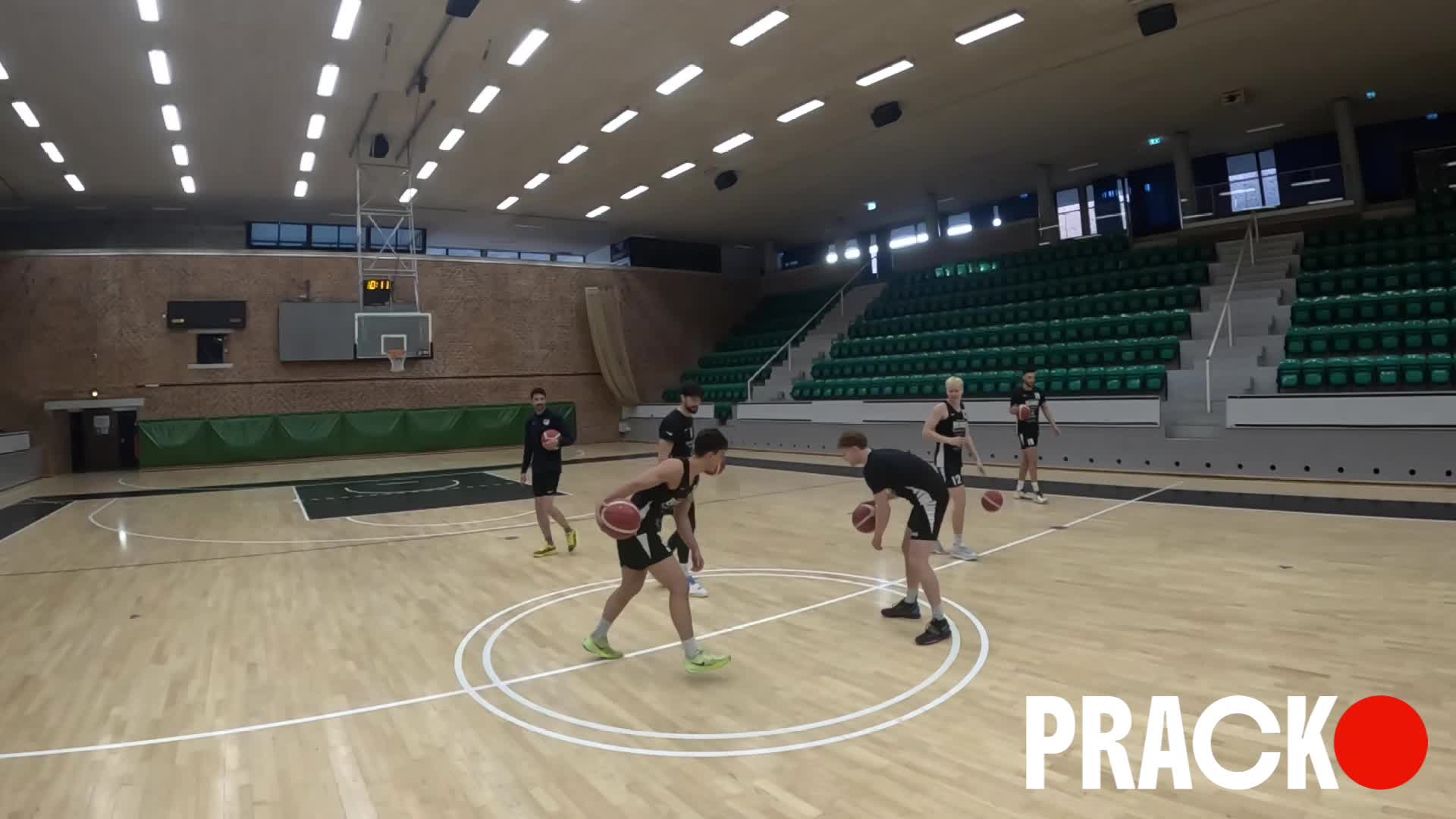
Dribble Tag is a competitive ball-handling game where players dribble in a confined space while trying to protect their own basketball and knock other players’ balls out of bounds. The drill builds ball protection skills, defensive instincts, and quick reactions in a fun, high-energy environment. Setup Each player has one basketball. All players begin inside a designated playing area, such as: the lane the center jump circle a small area marked with cones. The size of the area can be adjusted depending on the number of players. How the Drill Works All players begin dribbling their basketball inside the designated area. Players attempt to knock other players’ basketballs out of the playing area while protecting their own. Players must maintain their dribble at all times while moving and defending. If a player's basketball: leaves the designated area, or the player steps outside the area, that player is eliminated from the round. The game continues until only one player remains, who wins the round. Drill Progression As players are eliminated, the coach can reduce the size of the playing area to increase difficulty and speed up the game. Examples: Start with the full lane. Reduce to the free throw circle. Reduce to a smaller area marked with cones. Key Training Focus Ball protection under pressure Dribbling in tight spaces Defensive hand activity Quick reactions and awareness Competitive instincts Game Translation This drill simulates situations where players must handle the ball in traffic while defenders attempt to poke the ball away. It helps players develop better control and awareness when dribbling in crowded areas during games. Coaching Emphasis Players should keep their eyes up while dribbling. Emphasize low, controlled dribbles to maintain possession. Encourage players to use their body to shield the ball. Defensively, players should focus on quick taps and active hands rather than fouling. Recommended Usage This drill works well as: a practice warm-up a team competition game a ball handling development drill It is effective for all ages, skill levels, and positions, from youth players to advanced teams. Equipment One basketball per player Cones (optional for marking boundaries)

Equipment:Basketballs
#ball handling #on ball defense
Finishing: hip shade deceleration drill thumbnail
Finishing

Finishing: hip shade deceleration drill

MentalLevel 1PhysicalLevel 1Players2+

This drill teaches offensive players how to attack a defender who is shading them in one direction and then use deceleration to counter the defender’s momentum. The offensive player must either beat the defender quickly to the basket or slow down and change direction using moves such as euro steps, slow steps, or step-through finishes. Setup Two players per group: one offensive player and one defender. One basketball. Players begin about 12–15 feet from the basket (inside the three-point line). The defender starts slightly in front of the offensive player and positioned on the offensive player’s hip, shading them toward one direction. Both players face the basket. How the Drill Works The offensive player begins with the ball while the defender shades them toward one direction. The offensive player starts the rep by attacking toward the direction the defender is forcing them. As the offensive player drives, they read the defender’s momentum. The offensive player has two primary options: Option 1: Beat the Defender to the Basket Attack quickly and finish before the defender can recover. Option 2: Decelerate and Counter Slow down or stop suddenly. Allow the defender’s momentum to carry past the play. Counter with a finishing move such as: euro step slow step step-through pivot finish. The offensive player finishes at the basket. Players switch roles after each repetition. Key Training Focus Deceleration and pace control Finishing against defensive pressure Using defender momentum against them Euro steps and step-through finishes Reading defensive positioning Game Translation This drill replicates situations where an offensive player attacks a defender but is cut off near the basket. Instead of picking up the dribble or forcing a difficult shot, skilled players slow down and use the defender’s momentum against them to create a new angle for finishing. Coaching Emphasis Encourage players to change speeds during the drive. Players should stay balanced when decelerating. Emphasize controlled footwork when performing euro steps or step-throughs. Offensive players should read the defender’s body position before deciding how to finish. Avoid rushing finishes; patience often creates better scoring angles. Recommended Usage This drill works well during: finishing skill development guard and wing workouts attacking closeouts pace and footwork training It is particularly useful for players who tend to rush drives or pick up their dribble when defenders cut them off. Equipment Basketball

Equipment:Basketballs
#finishing #deceleration #eurostep
Finishing: 2v1 snake reads thumbnail
Finishing

Finishing: 2v1 snake reads

MentalLevel 1PhysicalLevel 1Players3+

This drill trains offensive players to manage and read 2-on-1 situations with patience. The ball handler must control their pace and wait for their teammate to join the play, while the defender plays a cat-and-mouse game between the ball and the passing lane. Setup Three players per group: two offensive players and one defender. One basketball. Place two cones in the slot areas near the elbows. Two offensive players line up behind each cone. The defender starts underneath the basket with the ball. How the Drill Works The defender begins the drill by passing the ball to either offensive player standing behind one of the cones. The player who receives the pass becomes the ball handler. The ball handler must attack around the outside of the cone in front of them. The second offensive player must run around the same cone that the ball handler used before joining the play. This creates a brief 1-on-1 situation before the second offensive player arrives. The ball handler must control their pace and delay their attack long enough for the teammate to catch up. Once the second offensive player joins the play, the offense now plays 2-on-1 against the defender. The defender attempts to disrupt the play by using cat-and-mouse defensive tactics, including: faking at the ball handler jumping into passing lanes attempting steals. The offensive players must read the defender and decide whether to finish at the rim or pass to the teammate. Players rotate roles after each repetition. Key Training Focus Patience in 2-on-1 situations Reading defenders in advantage scenarios Pace control when attacking the basket Decision making between scoring and passing Offensive spacing during advantage situations Defensive deception and passing lane reads Game Translation This drill mirrors situations such as pick-and-roll snake dribbles or transition 2-on-1 advantages where the ball handler must slow down and wait for a teammate to join the play. The defender attempts to manipulate the offense by faking toward the ball or the pass, forcing the offense to make quick reads. Coaching Emphasis Encourage the ball handler to control their pace rather than rushing the attack. Offensive players should maintain spacing and communicate during the advantage situation. Emphasize reading the defender’s body language before committing to a pass or finish. Defenders should actively use fakes to simulate realistic decision pressure. Recommended Usage This drill works well for: transition offense development pick-and-roll read training advantage decision-making drills defensive anticipation training It is effective for guards, wings, and bigs who need to improve their decision making in 2-on-1 situations. Equipment Basketball 2 cones

Equipment:Basketballs
#finishing #2v1 #p/r reads #transition offense
Off the Dribble Shooting: 3 taps live close thumbnail
Off the Dribble Shooting

Off the Dribble Shooting: 3 taps live close

MentalLevel 1PhysicalLevel 1Players2+

This drill develops the ability to shoot three-pointers off the dribble under defensive pressure. The offensive player must control the ball with low dribbles and quickly gather into a shot while a defender closes out from the paint after the third dribble. Setup Players work in groups of two. One player is the offensive player with the ball. One player is the defender. The defender starts with one foot inside the restricted area. The offensive player begins outside the three-point line with a live dribble. Multiple groups can run simultaneously around the perimeter. How the Drill Works The offensive player begins dribbling outside the three-point line. The defender remains in the restricted area and cannot leave early. The offensive player takes three low dribbles ("three taps") while attacking or setting up their shot. As soon as the third dribble hits the floor, the defender is allowed to sprint out to contest. The offensive player must quickly: gather the ball into their shooting pocket rise into a three-point shot off the dribble. The defender closes out and attempts to contest the shot without fouling. After the shot, players switch roles and repeat. Key Training Focus Off-the-dribble three-point shooting Low, controlled dribbles Quick shot pocket mechanics Shooting under defensive pressure Defensive closeouts from help position Timing defensive contests Game Translation This drill simulates situations where players create space off the dribble and must quickly rise into a three-point shot while defenders rotate from help positions. It also trains defenders to recognize offensive rhythm and close out effectively to contest perimeter shots. Coaching Emphasis Offensive players should keep their dribbles low and controlled. Emphasize a quick transition from dribble to shooting pocket. Players can vary the rhythm of the three dribbles to create deception. Defenders should sprint into a controlled closeout without leaving their feet early. Stress proper defensive technique to contest without fouling. Recommended Usage This drill works well during: perimeter shooting segments guard and wing skill development offensive creation drills defensive closeout training It is particularly useful for guards and wings who take pull-up three-pointers during games. Equipment Basketball

Equipment:Basketballs
#off the dribble shooting #shot contests
Ball Handling: scrambled eggs thumbnail
Ball Handling

Ball Handling: scrambled eggs

MentalLevel 1PhysicalLevel 1Players1+

Scrambled Eggs is a coordination-heavy ball handling warm-up that combines between-the-legs dribbling, footwork rhythm, and hand-eye coordination. Players walk forward while continuously dribbling the ball backward between their legs and performing additional hand-touch patterns to challenge their focus and coordination. Setup One player with one basketball (can be done individually or with the whole team). Players begin on the baseline or sideline and move down the court. The drill is performed while walking forward across the court and back. How the Drill Works The player begins walking forward with the basketball. The ball is dribbled between the legs backward on every step. Each step should match a dribble so the player maintains a steady rhythm: step → between-the-legs dribble step → between-the-legs dribble After each dribble, the player briefly touches a designated body target with the same hand that just dribbled the ball. The first variation is: dribble between the legs touch the same-side hip with the dribbling hand repeat continuously down the court. The player continues walking forward while maintaining the rhythm of: step between-the-legs dribble hand touch. Once reaching the opposite end of the court, the player returns using the same pattern. Drill Progressions The drill becomes progressively more difficult by changing the body target that must be touched after each dribble. Examples include: Touch the same-side hip Touch the chest Touch the head Touch the opposite hip Alternate between multiple targets in sequence (hip → chest → head) Each variation increases the mental processing and coordination required while maintaining ball control. Key Training Focus Ball handling coordination Rhythm and footwork timing Hand-eye coordination Mental focus under complex movement Weak-hand and strong-hand control Game Translation While the exact movement is not used directly in games, the drill improves a player’s ability to control the basketball while performing multiple tasks at once. This type of coordination training improves overall ball handling comfort and awareness when handling the ball under pressure. Coaching Emphasis Encourage players to maintain a steady rhythm between steps and dribbles. Players should keep their eyes up rather than watching the ball. Focus on clean, controlled dribbles rather than speed at first. Increase speed as coordination improves. Emphasize maintaining balance and posture while moving. Recommended Usage This drill works well as: a pre-practice warm-up a ball handling coordination drill a mental focus exercise a team warm-up activity Because of its difficulty and challenge, it also works well as a fun competitive challenge within a team setting. Equipment Basketball

Equipment:Basketballs
#ball handling #coordination
Finishing: shoulder to shoulder spear throw or bump off thumbnail
Finishing

Finishing: shoulder to shoulder spear throw or bump off

MentalLevel 1PhysicalLevel 1Players2+

This drill teaches players to finish at the basket while reading different types of defensive recovery. The offensive player attacks around a cone and must react to the defender’s decision to either cut them off in the lane or chase from behind. The defender uses a second basketball to simulate contact or a shot block attempt. Setup Two players per group: one offensive player and one defender. Both players begin holding a basketball. Place one cone on the wing at the three-point line. Players stand shoulder to shoulder behind the cone. The inside player (closer to the middle of the court) is the offensive player. The outside player (closer to the sideline) is the defender. Teams can run the drill simultaneously on both wings. How the Drill Works Both players begin next to the cone with a basketball. The offensive player starts the rep whenever they choose. The offensive player attacks the basket by driving around the cone. The defender reacts and chooses one of two defensive paths. Defensive Option 1: Cut-Off in the Lane The defender goes underneath the cone and meets the offensive player in the lane. The defender can use their basketball to bump or push the offensive player off balance (without throwing the ball). The offensive player must finish through physical contact, often using: two-foot finishes power gathers pivots or shot fakes. Defensive Option 2: Chase From Behind The defender goes around the cone in the same direction as the offensive player and trails the drive. As the offensive player attempts to finish, the defender can use their basketball to strike or disrupt the offensive player's ball during the shot attempt. The offensive player must use deception and timing, such as: hesitation finishes ball fakes changes of speed. The offensive player attempts to score at the basket while reacting to the defender’s chosen path. Players switch roles after each repetition. Key Training Focus Reading defensive recovery angles Finishing through physical contact Finishing against chase-down contests Two-foot finishing and balance Deception and pace changes near the rim Body control during drives Game Translation This drill simulates situations where a player beats their primary defender but must still deal with either a recovering defender cutting them off or a trailing defender attempting a chase-down block. Offensive players must recognize the defender’s angle and adjust their finishing technique accordingly. Coaching Emphasis Encourage players to read the defender’s path immediately after the drive begins. Emphasize strong gathers and balance when finishing through contact. Players should use fakes and pace changes when defenders trail from behind. Maintain control of the ball during the finish. Offensive players should stay aggressive and finish with confidence. Recommended Usage This drill works well for: finishing skill development guard and wing finishing finishing against shot blockers teaching players to adjust finishes under defensive pressure It is effective for all positions, especially guards attacking bigger defenders and wings finishing in traffic. Equipment Basketballs (two per group) Cone

Equipment:BasketballsCones
#2 foot finishing #contact finishing #finishing
Play Execution: 5v0 circle rebound to offensive flow thumbnail
Play Execution

Play Execution: 5v0 circle rebound to offensive flow

MentalLevel 1PhysicalLevel 1Players4+

This drill adds variability to traditional 5-on-0 play execution by forcing players to start offensive actions from unpredictable positions. Players circle around the free throw line while a coach shoots the ball. Once the rebound is secured, the team must quickly organize themselves and flow into their offense from whatever alignment naturally forms. Setup Five offensive players and one coach. Players begin in a circle around the free throw line area. The coach stands near the basket with a basketball. Optional: split the team into two groups of five, using both baskets to keep the drill continuous. How the Drill Works The five players form a circle around the free throw line and begin jogging continuously in that circle. The coach shoots the ball toward the basket. When the ball hits the rim or backboard, the players react to secure the rebound. The player who rebounds the ball must decide whether to: push the ball up the floor themselves, or outlet the ball to a teammate. Once possession is established, the team immediately flows into a half-court offensive set or play. Because players began in random positions within the circle, they must quickly identify their offensive roles and spacing. Players move into proper positions and execute the team’s offensive action. After the possession or sequence is completed, the next group begins. Continuous Variation Run two groups at opposite baskets. Players can: complete one trip down the floor, or run the offense and then return to start another repetition. This keeps the drill continuous and maintains practice tempo. Key Training Focus Quick offensive organization Recognizing offensive spacing Transitioning into half-court offense Communication among teammates Decision making after rebounds Running plays from different starting alignments Game Translation In games, teams rarely begin offensive possessions in perfectly scripted positions. Rebounds, defensive rotations, substitutions, and transition situations often force players to quickly identify their roles and spacing before running offensive actions. This drill simulates those moments by creating unpredictable starting positions before initiating the offense. Coaching Emphasis Players must communicate quickly to organize spacing. Encourage players to recognize where they are on the floor and move into the correct offensive alignment. Emphasize running offensive actions with pace and clarity, even when starting from unusual positions. Players should react naturally to the rebound rather than pre-determining who will push the ball. Recommended Usage This drill works well for: installing or reviewing offensive plays improving team offensive organization preparing teams to run sets under game-like variability helping players understand multiple offensive roles It is especially useful for teams that struggle to quickly find their spots in offensive sets or adjust when lineups change. Equipment Basketball

Equipment:Basketballs
#transition offense #play execution
Passing: weak hand 2v1 keep away thumbnail
Passing

Passing: weak hand 2v1 keep away

MentalLevel 1PhysicalLevel 1Players3+

This small-space drill trains weak-hand ball control, quick decision making, and dribble handoffs. Two offensive players attempt to keep possession against one defender while only using their weak hand for passing, dribbling, and handoffs. Setup Three players per group: two offensive players and one defender. One basketball per group. Players operate inside the center jump circle at half court. If a circle is not available, cones can be used to create a small square or circle space. Optional: rotate a fourth player in to keep the drill continuous. How the Drill Works Two offensive players position themselves inside the circle while the defender plays between them. One offensive player begins with the ball. The offensive players must only use their weak hand for: passing dribbling dribble handoffs. The offensive players attempt to maintain possession by passing or using dribble handoffs to keep the ball away from the defender. The player with the ball cannot hold the ball for more than five seconds. If the defender heavily denies a pass, the ball handler can dribble toward their teammate and perform a dribble handoff using their weak hand. Offensive players should move, reposition, and create passing angles to avoid the defender. If the defender steals the ball, deflects the pass, or forces the ball handler to hold the ball for more than five seconds, the defender wins the round. Players rotate roles after each possession. Advanced Variation For advanced players, enforce a stricter rule: Offensive players cannot touch the ball with their strong hand at all. Catching, passing, dribbling, and handoffs must all be completed using the weak hand. Key Training Focus Weak-hand ball control Quick decision making Passing under pressure Dribble handoff execution Creating space in tight areas Off-ball movement to get open Game Translation This drill simulates situations where offensive players must make quick decisions under defensive pressure in tight spaces. Dribble handoffs and quick passes are common solutions when defenders deny passing lanes. Practicing these actions with the weak hand improves overall ball security and offensive versatility. Coaching Emphasis Encourage constant movement from offensive players to create passing angles. Emphasize using the body to shield the ball during dribble handoffs. Players should make quick decisions and avoid holding the ball. Stress accurate weak-hand passing and controlled dribbling. Defenders should play aggressively to simulate real defensive pressure. Recommended Usage This drill works well as: a dynamic team warm-up a decision-making drill a conditioning circuit a dribble handoff skill development drill It is effective for all positions and skill levels, especially for teams that run dribble handoff actions frequently. Equipment Basketball Cones (optional for marking space)

Equipment:BasketballsCones
#tight space passing #dribble hand off reads #conditioning #on ball defense
Passing: one more pass team shooting drill thumbnail
Passing

Passing: one more pass team shooting drill

MentalLevel 1PhysicalLevel 1Players3+

This is a team shooting drill designed to emphasize one-more passing and catch-and-shoot three-point shooting. Players rotate through passing, rebounding, and shooting roles while reinforcing the habit of making the extra pass to create a better shot. Setup Split the team into two groups, with one group at each basket. Three active positions are used in the drill: Corner shooter Wing passer Rebounder under the basket The remaining players line up behind the corner shooter. One basketball starts with the wing passer and one with the rebounder if needed. Starting Positions One player under the basket (rebounder). One player on the wing with the ball (passer). One player in the corner without the ball (shooter). The rest of the players line up behind the corner shooting spot. How the Drill Works The wing passer passes the ball to the corner shooter. The corner player takes a catch-and-shoot three-pointer. After shooting, the player follows their shot and becomes the rebounder. The rebounder secures the rebound and passes the ball to the wing. The rebounder then follows their pass to the wing position. The wing player now passes the ball to the next player stepping into the corner from the line. After making the pass, the wing player moves to the end of the corner line. Players continue rotating through the three positions: shooter → rebounder → wing passer → end of the shooting line. The drill continues until the team reaches a target number of made shots. Progressions Reverse Direction After completing the drill from one side, reverse the action: The shot now comes from the wing. The pass comes from the corner. Additional Spots You can run the drill from multiple shooting locations: corner to wing wing to corner wing to wing both corners Passing Defender Variation A coach can stand between the wing and corner to simulate a defender in the passing lane. The coach can raise their hands high or low to force players to adjust their pass: pass around the defender throw bounce passes or overhead passes read the passing lane before delivering the pass Key Training Focus Catch-and-shoot three-point shooting One-more passing Ball movement and spacing Rebounding and outlet passing Quick decision making Team communication Game Translation This drill replicates common offensive situations where the ball is driven into the paint and kicked out to the perimeter. Often the first perimeter player receives the pass while a defender closes out, leaving the next player open. Players must recognize this and make the one-more pass to create a higher-quality shot. Coaching Emphasis Encourage players to move the ball quickly and decisively. Emphasize the value of the extra pass to the open shooter. Shooters should be ready with proper footwork for catch-and-shoot attempts. Rebounders should secure the ball quickly and deliver accurate outlet passes. Stress unselfish play and good communication among teammates. Recommended Usage This drill works well during: team shooting segments offensive skill development pre-practice or warm-up shooting ball movement and spacing drills It is effective for all positions and helps teams improve their ability to move the ball and find the best shot. Equipment Basketballs (1–2 per basket depending on group size)

Equipment:BasketballsContest Stick
#swing passes #catch and shoot #team shooting
Finishing: outside lane finish to cut finish continuous circuit thumbnail
Finishing

Finishing: outside lane finish to cut finish continuous circuit

MentalLevel 1PhysicalLevel 1Players1+

This is a continuous conditioning and finishing drill designed to simulate scoring while fatigued. The player attacks from the top of the key, finishes outside the lane over a defender, sprints to the opposite side of the court, and immediately finishes again before resetting to repeat the sequence. Setup One player and one coach (can rotate two players if needed). The player begins at the top of the key. Place a cone near the 15-foot area in the left corner on the opposite side of the basket. The coach stands near the basket with a basketball. Optional equipment: BOSU ball or body pad to simulate contact during finishing. How the Drill Works The player begins at the top of the key. The coach passes the ball to the player to start the drill. The player attacks toward the right elbow. The player makes a move at the elbow, such as: in-and-out dribble crossover double move (crossover into between-the-legs) After the move, the player drives down the right side of the lane. The player finishes with a touch shot outside the lane over the coach, such as: running hook floater touch finish off one or two feet. Immediately after the shot, the player sprints under the basket and continues to the cone located in the left corner area (around 15 feet). The player runs around the cone, then turns back toward the basket. The coach delivers a second pass. The player finishes again at the basket, either: through contact (coach using BOSU ball or body pad), or with a soft touch finish. After the second finish, the player backpedals to the top of the key. The drill immediately restarts when the coach passes the ball again. The drill runs continuously for approximately 30 seconds or for a set number of repetitions. Key Training Focus Finishing while fatigued Conditioning during skill work Touch finishes outside the lane Finishing through contact Change-of-direction dribble attacks Maintaining control and balance during high-intensity sequences Game Translation In games, players often need to finish scoring opportunities after multiple efforts and while fatigued. This drill replicates situations where a player must attack, finish, transition quickly into another action, and score again while under physical and conditioning stress. Coaching Emphasis Encourage strong, decisive moves at the elbow before attacking the basket. Emphasize controlled touch on floaters and running hooks. Players should sprint with urgency between actions to simulate game intensity. Maintain proper balance and technique when finishing while tired. Encourage players to embrace contact and maintain body control through the finish. Recommended Usage This drill works well for: conditioning-based skill workouts individual skill sessions return-to-play or rehabilitation workouts finishing development It is effective for guards, wings, and post players since it develops both finishing skill and conditioning. Equipment Basketball Cone BOSU ball or body pad (optional)
Equipment:ConesBody PadBasketballs
#conditioning #finishing #floater #2 foot finishing #contact finishing
Rebounding: no-ground team shooting & rebounding drill thumbnail
Static Shooting

Rebounding: no-ground team shooting & rebounding drill

MentalLevel 1PhysicalLevel 1Players3+

This is a team shooting drill that combines catch-and-shoot three-point shooting, rebounding, and communication. Players must complete a sequence of made three-pointers from five perimeter spots while ensuring the ball never touches the ground during the entire drill. Setup Groups of 3–6 players per basket. Use one ball for three players or two balls if there are four to six players. Players rotate through five perimeter shooting spots: Corner Wing Top of the key Opposite wing Opposite corner Non-shooting players position themselves around the paint and perimeter to rebound and pass the ball back out. How the Drill Works A shooter begins at the first spot (corner) and receives a pass for a catch-and-shoot three-pointer. After the shot is taken, teammates must rebound the ball before it hits the ground. The rebounder immediately passes the ball back out to the next shooter without allowing the ball to bounce. The next shooter attempts a catch-and-shoot three from the next spot in the sequence. The ball cannot touch the ground at any time, including: after a missed shot, after a made shot, during passes between players. Each player must make one three-pointer from each of the five spots. If the ball touches the ground at any point, the shooter or shooters responsible must restart their five-shot sequence from the beginning. The drill continues until every player in the group successfully makes one shot from all five spots. Key Training Focus Catch-and-shoot three-point shooting Offensive and defensive rebounding awareness Communication among teammates Tracking the flight of the basketball Quick passing and ball movement Anticipating rebounds from different shot locations Game Translation This drill helps players develop a better understanding of how the ball rebounds off the rim after perimeter shots. In games where teams shoot a high number of three-pointers, rebounding often depends on recognizing the ball’s flight and reacting quickly. The drill also reinforces the importance of communication when multiple players are pursuing the same rebound. Coaching Emphasis Players must communicate clearly when pursuing rebounds. Emphasize locating the ball early as it leaves the shooter’s hands. Encourage players to stay active and on their toes, ready to react to long rebounds. Rebounders should make quick outlet passes back to shooters. Stress that the ball cannot hit the ground at any point during the drill. Recommended Usage This drill works well as: a team shooting warm-up a practice-ending competition a rebounding and communication drill It is effective for players of all positions and skill levels and is especially useful for teams that struggle with rebounding or communication. Equipment Basketballs (1–2 per group depending on player count)

#catch and shoot #defensive rebounding #offensive rebounding #communication #team building
Finishing: back pressure 2 feet finishing game thumbnail
Finishing

Finishing: back pressure 2 feet finishing game

MentalLevel 1PhysicalLevel 1Players2+

This drill creates a slight offensive advantage while forcing the defender to recover from behind. The offensive player attacks the basket from about 15 feet while the defender starts with their back to the ball, creating a situation where the offensive player must finish effectively with a defender recovering from behind. Setup Two players per group: one offensive player and one defender. One basketball per group. Players start approximately 15 feet from the basket (inside the three-point line). Both players begin facing the basket. The offensive player places the basketball on the defender’s back at the start of the drill. How the Drill Works The offensive player and defender both face the basket. The offensive player places the basketball on the defender’s back. The offensive player can start the drill at any moment by taking the ball and attacking the basket. The offensive player can attack either direction. Once the drill begins, the defender immediately turns and attempts to stop the offensive player. The offensive player’s goal is to score inside the restricted area. The defender attempts to recover and contest or block the shot from behind. Players continue the possession until the offensive player either scores or the defender stops the play. Players then switch roles and repeat. Key Training Focus Finishing through back pressure Scoring in tight spaces Two-foot finishing mechanics Maintaining control under defensive pressure Ball protection while attacking the basket Using pivots, fakes, and step-through finishes Game Translation This drill simulates situations where an offensive player beats their defender but the defender is still close behind and able to contest from the rear. These scenarios occur frequently in games when there is no immediate help defense rotating, but the trailing defender can still impact the finish. Players must stay composed, use strong footwork, and finish effectively despite defensive pressure. Coaching Emphasis Encourage players to finish off two feet whenever possible. Emphasize strong gathers and balance before finishing. Use shot fakes, pivots, and step-through moves to create space near the basket. Protect the ball when attacking against trailing defenders. Smaller players should avoid rushing finishes that can easily be blocked. Bigger players should stay low with their dribble and protect the ball from steals. Recommended Usage This drill works well during finishing segments focused on: scoring in the paint finishing against shot blockers tight space ball handling two-foot finishing techniques It is especially useful for: smaller guards who struggle finishing against taller defenders bigger players who need to improve ball control and finishing around the basket Equipment Basketball

Equipment:Basketballs
#finishing #2 foot finishing
Finishing Circuit: screen and roll vs bosu finishing circuit thumbnail
Finishing

Finishing Circuit: screen and roll vs bosu finishing circuit

MentalLevel 1PhysicalLevel 1Players1+

This drill combines screen-and-roll finishing, defensive movement, and conditioning into a continuous sequence. The player simulates setting a screen and rolling to the basket, locates a pass, and finishes against contact from a coach using a BOSU ball or body pad before transitioning into defensive movement and another finishing opportunity. Setup One player and one coach (can rotate multiple players through the drill). The player begins in one corner of the court. Place a cone on the wing to simulate the screening location. The coach stands near the paint with: a basketball a BOSU ball (used to safely simulate defensive contact). The BOSU ball allows the coach to apply pressure and contact without risking injury. How the Drill Works The player begins in the corner and sprints to the wing cone. At the cone, the player simulates setting a ball screen, opening their hips toward the basket as if rolling after the screen. The player then rolls toward the basket. As the player rolls, the coach throws a pass somewhere in the rolling area. The pass can be: a bounce pass a high pass an off-target pass requiring adjustment. The player must locate the ball, catch it, gather, and finish at the basket. The coach uses the BOSU ball to apply contact and simulate a defender contesting the finish. After finishing the play, the player immediately sprints to the opposite corner. The player performs a defensive closeout to the corner, imagining an offensive player with the ball. After closing out, the player slides laterally along the three-point line toward the top of the key. When the player reaches the top of the key, they turn toward the basket. The coach delivers another pass for a second finishing opportunity. The player can: finish without contact (conditioning version), or finish again against contact from the coach with the BOSU ball. The sequence then ends or repeats depending on the workout structure. Key Training Focus Screen-and-roll footwork and timing Catching passes while rolling Finishing through contact at the rim Locating off-target passes Conditioning under fatigue Defensive closeouts and lateral movement Maintaining focus while tired Game Translation This drill simulates common game situations where players set a screen, roll to the basket, and must finish through contact while fatigued. It also mirrors the reality of recovering defensively after offensive actions and then quickly transitioning back into offense. Many players struggle finishing around the basket when tired or when defenders apply physical pressure. This drill builds comfort finishing in those situations. Coaching Emphasis Players should open their hips quickly when simulating the roll to replicate real screen-and-roll movement. Emphasize locating the ball quickly after the coach throws the pass. Encourage strong gathers and balanced finishes through contact. Players should embrace contact rather than avoiding it. Defensive closeouts should be controlled with proper footwork before sliding laterally. Maintain intensity throughout the drill since fatigue is part of the training stimulus. Recommended Usage This drill works well as a conditioning and finishing circuit, especially for: forwards centers wings involved in screening actions It is useful for players who tend to rush finishes, avoid contact, or struggle finishing when fatigued. Equipment Basketball Cone BOSU ball Body Pad
Equipment:BasketballsBody PadCones
#finishing #conditioning #circuit #p/r screener finishing
Ball Handling: dual ball change hands finishing thumbnail
Ball Handling

Ball Handling: dual ball change hands finishing

MentalLevel 1PhysicalLevel 1Players1+

This drill challenges players to handle the ball, switch hands, read a defender, and finish at the rim while managing two balls simultaneously. The added complexity forces players to process multiple tasks at once, improving change-of-direction decision making and comfort attacking defenders after being cut off on drives. Setup One player and one coach. The player starts at the top of the key. Place one cone just outside the three-point line in front of the player. The player begins with: one basketball being dribbled one ball held in the opposite hand (can be a large training ball for advanced players or a smaller ball for beginners). The coach positions themselves near the cone or slightly inside the three-point line to simulate a defender. How the Drill Works The player begins at the top of the key while dribbling one basketball and holding the second ball in the opposite hand. The player attacks the cone using any dribble move (crossover, between-the-legs, hesitation, etc.). As the player switches dribble hands, they must also switch the ball they are holding to the opposite hand. The player should never be dribbling and holding the ball in the same hand. As the player approaches the coach, the coach provides defensive pressure or attempts to steal the ball. The player must read the defender and change direction if necessary while continuing to switch the held ball between hands. After beating the defender, the player attacks the rim and finishes with any move: euro step spin move power finish extended layup The drill resets and repeats from the top. Optional Closeout Variation Instead of starting with the ball, the coach tosses the ball to the player to simulate a closeout situation. The player catches the pass, attacks the closeout, changes direction if cut off, and finishes at the rim while continuing the dual-ball switching pattern. Key Training Focus Change-of-direction ball handling Hand coordination and control Reading defensive pressure Attacking the basket after being cut off Multi-tasking under pressure Driving and finishing off live reads Game Translation This drill prepares players for situations where they drive toward the basket but encounter defensive help or resistance. Players must stay composed, change directions, and continue attacking without picking up their dribble. The dual-ball constraint forces players to maintain control while processing defensive cues. Coaching Emphasis Players must switch the held ball every time they change dribble hands. Never hold and dribble the ball with the same hand simultaneously. Encourage players to stay low and maintain control during direction changes. Emphasize reading the defender before committing to the drive. Players should remain aggressive and continue attacking the basket after direction changes. Recommended Usage Best used during skill development sessions focused on: guard and wing development advanced ball handling attacking off the dribble finishing after defensive resistance This drill is especially useful for straight-line drivers who need to develop better change-of-direction skills when attacking the basket. Equipment Basketball Second training ball (large or small) Cone Contest stick (optional for coach)
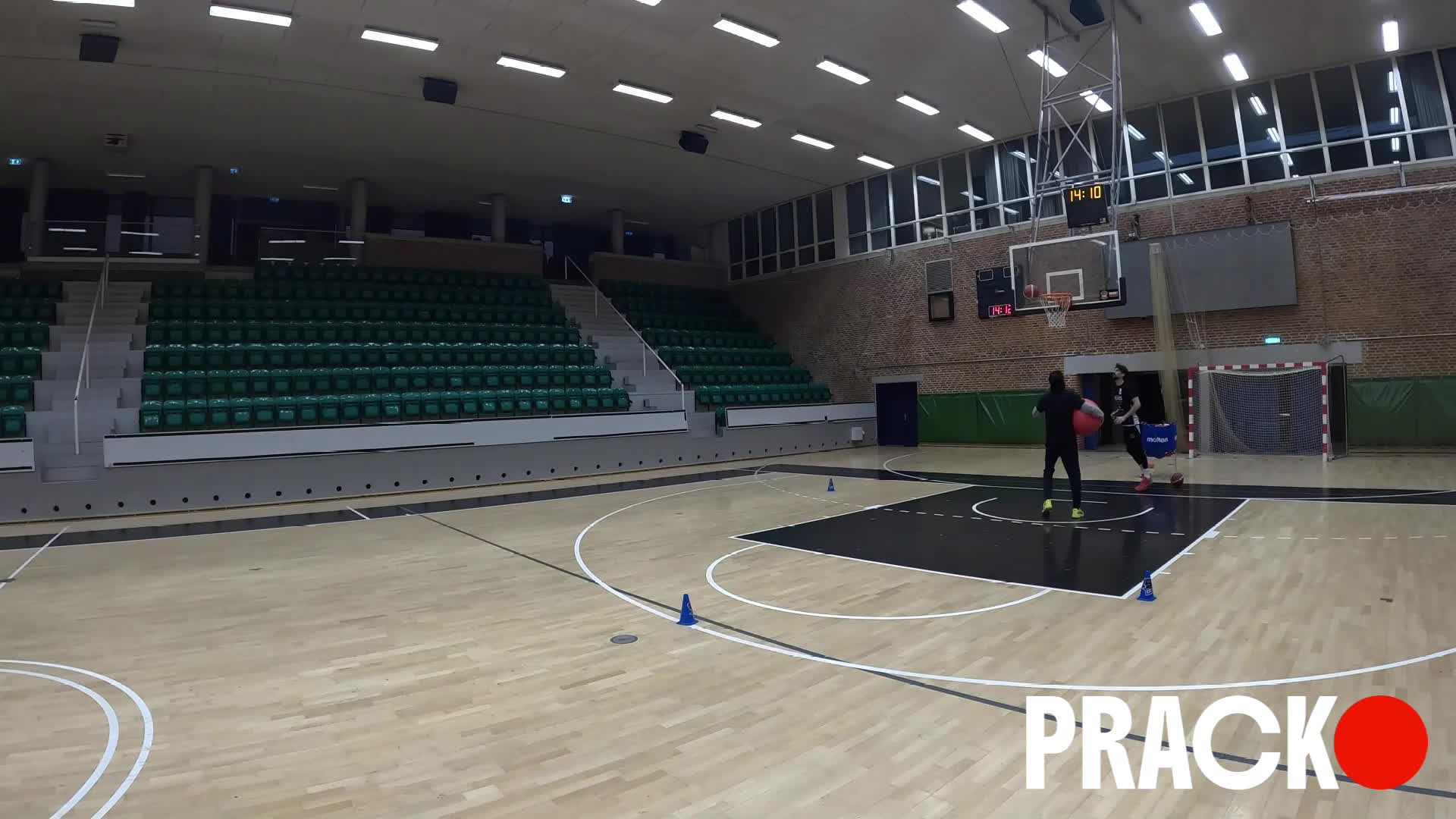
Equipment:BasketballsConesContest Stick
#finishing #ball handling
Finishing: continuous figure 8 cone touch finishes thumbnail
Finishing

Finishing: continuous figure 8 cone touch finishes

MentalLevel 1PhysicalLevel 1Players1+

This drill develops touch finishes around the basket while moving continuously in tight space. The player moves in a figure-eight pattern around two cones near the block and receives passes from a coach for quick touch shots at the front of the rim. Setup One player and one coach. Place two cones about 2–3 feet outside each block, near the lowest lane line marking. The coach stands in the middle of the lane or near the basket with a basketball. The player begins between the cones. How the Drill Works The player begins moving in a figure-eight pattern around the two cones. The player circles from the inside to the outside of each cone, staying low and moving quickly. Each time the player reaches the middle of the lane, the coach delivers a pass. The player catches the pass and immediately finishes with a quick touch shot at the rim. The player should aim to finish softly over the front of the rim, avoiding the backboard. After the shot, the player continues moving around the cones and repeats the pattern. The drill continues in a continuous rhythm of: movement around the cones catch touch finish immediate movement back into the figure-eight pattern. Key Training Focus Touch finishing around the rim Finishing on the move Short-space footwork and agility Conditioning during skill work Quick catch-and-finish mechanics Game Translation This drill simulates situations where players receive the ball near the basket immediately after cuts, seals, or offensive rebounds and must finish quickly before the defense can react. The continuous movement also mirrors the quick footwork required when working for position around the rim. Coaching Emphasis Move quickly and efficiently around the cones. Stay balanced and controlled when catching the ball. Finish with soft touch over the front of the rim rather than relying on the backboard. Keep the drill continuous with minimal pauses between repetitions. Emphasize rhythm between movement, catching, and finishing. Recommended Usage This drill works well during: finishing skill development post player workouts conditioning segments pre-practice finishing routines While it benefits all players, it is especially useful for post players and interior scorers who need soft touch and quick finishes around the basket. Equipment Basketball 2 cones

Equipment:BasketballsCones
#finishing #touch shots #conditioning
Closeout Defense: 2v2 disadvantage defense start thumbnail
Closeout Defense

Closeout Defense: 2v2 disadvantage defense start

MentalLevel 1PhysicalLevel 1Players4+

This drill trains offensive players to take advantage of 2-on-1 situations while teaching defenders how to make decisions when defending at a disadvantage. The ball handler attacks from the corner while a help defender must decide whether to stop the drive or stay with the weakside shooter. Setup Two offensive players and two defensive players. One offensive player starts in the corner or on the wing with the ball. Their defender starts a few steps behind them, creating an initial disadvantage. The second offensive player begins on the opposite wing. The second defender positions themselves between the two offensive players, acting as the help defender. Cones can be used to mark the starting positions for the offensive and defensive players. How the Drill Works The offensive player in the corner starts with the ball, with their defender positioned a few steps behind them. The second offensive player is spaced on the opposite wing. The help defender begins in between the two offensive players. When the ball handler decides to start the drill, they attack the basket immediately. This forces the help defender into a 2-on-1 decision between the driver and the weakside offensive player. The ball handler can: finish at the rim, pass to the weakside player, or continue the play based on the defender’s decision. The weakside offensive player moves to create space by: cutting to the basket, drifting to the corner, or repositioning for an open shot. The trailing defender (initially behind the ball handler) must decide whether to: continue chasing the ball handler, or switch late to the weakside shooter. Play continues live 2-on-2 until a shot is taken or the possession ends. Key Training Focus Offensive decision making in 2-on-1 situations Attacking defensive advantages Weakside spacing and cutting Help defense reads Defensive communication and recovery Game Translation This drill replicates situations where the defense is temporarily at a disadvantage, such as transition defense or breakdowns in half-court defense. When the first defender is beaten off the dribble, the help defender must decide whether to stop the drive or stay with the perimeter shooter. Offensive players must recognize these situations quickly and capitalize on the advantage. Coaching Emphasis The ball handler should attack aggressively to force the help defender to commit. Offensive players should maintain proper spacing to stretch the defense. Weakside players should stay active by cutting, drifting, or relocating to create passing angles. Help defenders must quickly determine the most dangerous offensive threat. Defensive players should communicate to recover and match up after the initial help decision. Recommended Usage Best used during team or small-group development segments focused on: attacking advantages transition decision making help defense and recovery offensive spacing and reads This drill is especially useful when teaching players how to recognize and exploit defensive breakdowns. Equipment Basketballs Cones (optional for marking starting positions)

Equipment:BasketballsCones
#closeout defense #closeout reads #rim protection #drive and kick #spacing and cutting #spray passes
Closeout Reads - Stampede Catch Decision Drill (2v2) thumbnail
Dribble Drive

Closeout Reads - Stampede Catch Decision Drill (2v2)

MentalLevel 1PhysicalLevel 1Players4+

This drill trains off-ball players to make early catch decisions when receiving a pass on the perimeter. The wing player must read the defender before the ball arrives and decide whether to shoot immediately or attack using a stampede catch (running through the catch into a drive). Setup Two offensive players and two defensive players. One offensive player starts at the top of the key with the ball. The second offensive player starts on either wing. One defender guards the ball handler at the top. The second defender guards the wing player but begins with one foot in the paint. The wing defender may not leave the paint until the pass is thrown. How the Drill Works The ball handler starts at the top of the key with a defender guarding them closely. The wing player is spaced on the perimeter with their defender positioned one foot in the paint. The ball handler passes the ball to the wing. As soon as the pass is thrown, the wing defender is allowed to leave the paint and close out. The wing player must read the defender before the ball arrives and choose one of two actions: Option 1 — Catch and Shoot If the defender is late on the closeout, catch the pass and shoot the three immediately. Option 2 — Stampede Catch Instead of standing still and catching the ball, the player moves toward the pass, meeting the ball on the catch. The player runs through the catch into a straight-line drive, attacking the defense before it gets set. The possession continues 2-on-2 after the catch decision. Key Training Focus Pre-catch decision making Reading defensive closeouts Stampede catches and attacking off the catch Quick perimeter shooting decisions Playing decisively without holding the ball Game Translation This situation occurs frequently when off-ball players receive kick-out passes or ball reversals. Many players catch the ball and pause before making a move, which allows the defense to recover. High-level players instead read the defense early and make their decision before the ball arrives. If the defender is late, they shoot. If the defender is closing out aggressively, they attack immediately with a stampede catch. Coaching Emphasis Players must read the defender before the pass arrives. Avoid catching the ball and hesitating before making a move. On stampede catches, move toward the ball instead of standing still. Catch on the move and attack immediately to take advantage of defensive rotations. Emphasize quick decisions and decisive actions. Recommended Usage Best used during skill development or small-sided games focused on: attacking closeouts off-ball decision making catch-and-shoot shooting perimeter scoring for wings This drill is especially useful for secondary offensive players who must make quick decisions when receiving passes created by another playmaker. Equipment Basketballs Standard half-court setup

Equipment:Basketballs
#closeout reads #closeout defense #catch and shoot #stampede
Pick and Roll Reads: guard to guard pocket step up finishes thumbnail
Pick and Roll Reads

Pick and Roll Reads: guard to guard pocket step up finishes

MentalLevel 1PhysicalLevel 1Players4+

This drill focuses on guard-to-guard pick-and-roll actions. Start with a ball handler in the slot with a defender guarding them. Another guard begins in the strong side corner as the screener. Underneath the basket, place a coach or player acting as a rim defender who must stay inside the paint and cannot leave the area around the basket. How it Works: The screener sprints up and sets a ball screen on the low side of the on-ball defender, targeting what is often called the defender’s “back pocket.” Usually defenders switch this screen. As the switch happens, the original on-ball defender is on the top side of the screener, creating a small pocket for the screener to roll to the basket with the defender now on their back. The ball handler reads the switch and delivers a pocket pass to the rolling guard. The rolling guard must finish inside the restricted area while the rim defender contests without leaving the paint. Focus Points: Emphasize setting the screen on the low side of the defender to force the switch and create the back-pocket angle. The ball handler should focus on timing and accuracy when delivering the pocket pass. The rolling guard must seal the defender on their back and finish through contact using fakes, step-throughs, and strong body positioning. The drill reinforces guard-to-guard pick-and-roll timing, pocket passing, and finishing against a rim protector.

Equipment:BasketballsContest Stick
#p/r reads #finishing #rim protection #p/r passing
Passing: split chase transition passing thumbnail
Passing

Passing: split chase transition passing

MentalLevel 1PhysicalLevel 1Players3+

Three players are involved in this drill. The offensive player starts near the lane holding a basketball under one arm. The defender is guarding them while also holding a basketball, which limits their ability to use their hands. A third player or coach stands free-throw-line extended with a ball and acts as the passer. How it Works: The offensive player moves like a running back in football, working to get open while keeping the ball tucked under one arm. The passer reads the movement and delivers a pass once the offensive player creates space. The offensive player must catch the ball with one hand, secure it, and finish at the basket while the defender contests. The defender is limited by also holding a ball, which creates a more balanced advantage for the offense. Focus Points: Work on getting open through quick cuts and body positioning. Emphasize catching the pass cleanly with one hand and immediately transitioning into a finish. The passer should focus on finding the correct passing angle and delivering an accurate pass. To increase difficulty, players can switch which arm holds the ball so they must catch and finish with their weak hand. This drill can be with three players, but it can also go up to five players. You'll be using a full court for this drill. The players will be standing at half court. There'll be one player with a ball, and then the other two players will also be holding a ball. You can play without the offensive player and defensive player, the other players holding a ball. You can play with one ball, or you can play with three. The three just adds another constraint to it. But the offensive player who has the ball to start, the passer is standing, cannot move from their position. They are teammates with the other offensive player who's facing them, and then the defensive player is not looking at the ball, they're facing the offensive player who's trying to score on either basket. So they can cut either way, score on either basket. The offensive player has to make the right advanced pass, and the offensive player, the other offensive player has to cut, catch the ball, and score. The way that you can make this with five players is if you put an extra defender underneath each basket, and then from there, you can just rotate all the spots. This drill is working on having to get open, catching, finishing, but most importantly, the passing from the offensive player hitting a player who's passing and cutting in space. Setup: This drill can be run with three players and expanded up to five players. Start with all players at half court using the full court. One offensive player has the ball and acts as the passer, while another offensive player stands facing them as the cutter. The defender stands between them but faces the cutter instead of the ball, creating a disadvantage. For an added constraint, the cutter and defender can each hold a basketball while playing. To expand the drill to five players, place an additional defender under each basket. How it Works: The passer must stay stationary at half court and cannot move. The cutter works to get open and can attack either basket on the court. Because the defender is not looking at the passer, the offensive player must time their cut and receive an advanced pass in space. Once the cutter catches the ball, they attack the basket and finish. If using the five-player variation, the cutter must finish against the extra defender waiting under the basket. After each rep, players rotate positions. Focus Points: Emphasize creating separation with smart cuts and timing. The passer should focus on throwing accurate lead passes that allow the cutter to catch the ball in stride. Offensive players should concentrate on catching cleanly and finishing quickly at the rim. This drill also reinforces vision and anticipation for the passer while teaching the cutter how to find open space and attack decisively.

Equipment:Basketballs
#transition offense #spacing and cutting #transition passing
Finishing: running back finishing thumbnail
Finishing

Finishing: running back finishing

MentalLevel 1PhysicalLevel 1Players3+

Three players are involved in this drill. The offensive player starts near the lane holding a basketball under one arm. The defender is guarding them while also holding a basketball, which limits their ability to use their hands. A third player or coach stands free-throw-line extended with a ball and acts as the passer. How it Works: The offensive player moves like a running back in football, working to get open while keeping the ball tucked under one arm. The passer reads the movement and delivers a pass once the offensive player creates space. The offensive player must catch the ball with one hand, secure it, and finish at the basket while the defender contests. The defender is limited by also holding a ball, which creates a more balanced advantage for the offense. Focus Points: Work on getting open through quick cuts and body positioning. Emphasize catching the pass cleanly with one hand and immediately transitioning into a finish. The passer should focus on finding the correct passing angle and delivering an accurate pass. To increase difficulty, players can switch which arm holds the ball so they must catch and finish with their weak hand.

Equipment:Basketballs
#finishing #tight space passing #rim protection #spacing and cutting
Ball Handling: turntable circle tag thumbnail
Ball Handling

Ball Handling: turntable circle tag

MentalLevel 2PhysicalLevel 3Players3+

This drill is best played with three players but can scale to four or five. Use the center jump circle or a free-throw lane circle. Every player has a basketball. Designate one player as the tagger, and the others will dribble around the perimeter of the circle. How It Works: The tagger dribbles around the circle attempting to tag another player while maintaining control of their own ball. All players must continuously dribble. Whenever the tagger changes direction, they must switch dribble hands — and the players being chased must also switch hands immediately. With three players, the drill flows naturally. With four players, the middle player in a line of three must rotate in and out or adjust spacing so they can be tagged; if they are slow to rotate and someone runs into them, they automatically become “it.” With five players, one player can wait inside the circle. When someone is tagged, that player rotates into the middle, and the tagged player becomes the new tagger. Focus Points: This drill works on ball control at speed, quick hand changes, awareness, and conditioning. Emphasize tight, low dribbles and immediate hand switches on direction changes. Players must stay alert, maintain spacing, and react quickly while under pressure.

Equipment:Basketballs
#ball handling
Passing: through the window partner kick outs thumbnail
Passing

Passing: through the window partner kick outs

MentalLevel 3PhysicalLevel 2Players3+

This is a three-player drill. One offensive player starts underneath the basket with the ball. A second offensive player is positioned behind the three-point line. A defender stands directly between them, facing the passer under the basket. The shooter must stay directly behind the defender to create a tight passing window. How It Works: The passer under the basket attempts to throw a pass through a tight window to the shooter behind the three-point line. The defender in the middle is active and trying to get a deflection or steal. The pass must be sharp and direct — high, slow passes allow the defender time to recover or contest. Once the pass is completed successfully “through the window” (around the defender’s ears, ankles, or through a tight lane), the shooter is live. The defender must immediately turn, close out, and contest the shot. You can either require a catch-and-shoot three or allow live one-on-one from the closeout. Focus Points: This drill emphasizes precision passing through tight spaces and reading defensive positioning. The passer must throw firm, on-time passes with proper angles. The shooter works on catching ready and making quick decisions. The defender focuses on active hands, vision, and sprinting into a controlled closeout.

Equipment:Basketballs
#tight space passing #spray passes #shot contests #closeout defense #closeout reads
Closeout Defense: extra player advantage scramble thumbnail
Closeout Defense

Closeout Defense: extra player advantage scramble

MentalLevel 3PhysicalLevel 4Players6+

This drill is played with 6 to 10 players. Set up four offensive players spaced outside the three-point line — one in each corner, one on a wing, and one at the top. Each of those players has a defender matched up. Add one extra offensive player (coach or player) on the opposite wing who is not being guarded. How It Works: The ball starts in one corner and is swung around the perimeter — corner to wing to top. As the ball is reversed, the extra offensive player on the opposite wing receives the pass and immediately drives to the basket. The defense must rotate and stop the ball, even though they are at a numbers disadvantage. The driver can attempt to score or kick out to an open teammate. From there, the possession becomes live scramble defense until a score or stop. If defenders overplay passing lanes on the perimeter swings, offensive players can backdoor cut to keep the defense honest. After the possession, rotate players as needed. Focus Points: This drill emphasizes closeout defense, rotations, and scramble situations when playing against an extra offensive player. Defenders must keep the ball in front, stunt and recover on swings, and communicate through rotations. Once the extra player drives, the defense must collapse, rotate out, and contest without losing shooters. Offensively, players work on quick ball movement, attacking advantages, and reading overplays.

Equipment:Basketballs
#closeout defense #swing passes #rim protection #rotations
Contest Shooting: double pass partner exchange shots thumbnail
Contest Shooting

Contest Shooting: double pass partner exchange shots

MentalLevel 3PhysicalLevel 2Players2+

This is a two-player shooting drill. One player starts with a ball and their heels just inside the three-point line. The second player starts under the basket with one foot inside the restricted area, also holding a ball. How It Works: The player under the basket begins dribbling. At any moment, they throw a chest pass to the player inside the three-point line. On the catch, that player immediately throws a bounce pass back to the passer, effectively exchanging balls. After delivering the bounce pass, the perimeter player quickly steps behind the three-point line for a shot. Meanwhile, the player who initiated the chest pass collects the bounce pass and sprints out to contest the three-point shot — while keeping the ball in their hands during the contest. After the shot, players reset or rotate. Focus Points: This drill works on quick hands, reaction passing, and shooting without knowing exactly when the pass is coming. The shooter must step into the three cleanly and shoot under pressure. The defender controls the timing of the drill and must close out under control with high hands, contesting without fouling. It also develops coordination by handling and contesting with a ball in hand.

Equipment:Basketballs
#shot contests #movement shooting #tight space passing
Passing: floor ball pick ups to advanced spray thumbnail
Passing

Passing: floor ball pick ups to advanced spray

MentalLevel 2PhysicalLevel 3Players2+

This is a two-player drill and a variation of ball floor pick ups. One player starts behind the three-point line with a live dribble. The partner begins inside the three-point line holding a second basketball. How It Works: The ball handler dribbles continuously outside the arc. At any moment, the partner inside the three-point line places their ball on the floor and immediately sprints outside the three-point line to space. The ball handler attacks the ball on the ground, picks it up cleanly, and must quickly decide which ball to keep. They pass one ball out to the partner who relocated beyond the arc, then finish at the rim with the other ball — no additional dribbles allowed and no traveling. The finish must happen off controlled footwork, using only the allowed steps after the pickup. Focus Points: This drill emphasizes reaction speed, clean pickups, and controlled footwork (slow steps, gathers, and finishing off one foot). It also works on passing while turning and maintaining balance before finishing. Players must stay low, keep their eyes up, and execute the pass and finish in one fluid motion without losing body control.

Equipment:Basketballs
#spray passes #finishing #ball handling #catch and shoot
Finishing: floor ball pick ups to finish thumbnail
Finishing

Finishing: floor ball pick ups to finish

MentalLevel 2PhysicalLevel 2Players2+

This is a two-player ball handling drill. One player starts behind the three-point line with a live dribble. The partner stands inside the three-point line holding a second basketball. How It Works: The ball handler dribbles continuously outside the three-point line. At any moment, the partner inside the arc will place their ball on the floor. As soon as the ball touches the ground, the ball handler must attack toward it, pick it up cleanly, and from the spot of the pickup has only two steps to finish at the basket — no additional dribbles allowed. The player must score without traveling. For an advanced variation, once the ball handler picks up the second ball, they switch the balls between hands before finishing at the rim. Another variation is to only shoot with inside/outside hand. Focus Points: This drill works on ball control at speed, quick reactions, and clean pickups off the floor. Emphasize staying low when gathering the ball and taking controlled, powerful steps to the rim. Players must avoid traveling and maintain balance through the finish. The advanced variation improves hand coordination, body control, and finishing ability under pressure.

Equipment:Basketballs
#finishing #ball handling
Closeout Defense: nail recover 1v1 thumbnail
Closeout Defense

Closeout Defense: nail recover 1v1

MentalLevel 3PhysicalLevel 4Players3+

This is a three-person drill. Place one ball handler at the top of the key with a live dribble. Position one offensive player on the wing. The defender starts in the gap between the ball handler and the wing player, responsible for helping and recovering. How It Works: The ball handler dribbles live at the top of the key. At any moment, when the ball handler picks up the dribble, the defender must sprint to the ball, touch it with one hand, and immediately recover back to guard the offensive player on the wing. Once the defender has touched the ball, the ball handler passes to the wing, and it becomes live one-on-one from the wing position. After the rep, players rotate spots. Focus Points: This drill emphasizes proper gap positioning and quick help-and-recover footwork. The defender must touch the ball under control and recover with high hands to contest without over-closing. Offensively, the wing player works on catching ready to attack and playing decisively in a live one-on-one situation.

Equipment:Basketballs
#closeout defense #shot contests #stampede #nail help #closeout reads #1v1
Dribble Drive: stampede vs bosu thumbnail
Dribble Drive

Dribble Drive: stampede vs bosu

MentalLevel 2PhysicalLevel 4Players3+

Three players are spaced with one in the right corner, one on the right wing, and one on the left wing. The ball starts on the left wing. A coach stands near the right corner holding a BOSU ball (or similar pad) to provide contact. An optional rim defender with a contest stick can be added. How It Works: The left wing swings the ball to the right wing. The right wing immediately swings it to the right corner. On the catch, the corner player attacks middle or baseline. As they drive, the coach steps in with the BOSU ball to apply heavy contact and bump the offensive player off balance. The offensive player must finish at the rim through the contact. You can add a live rim defender for a contested finish, or run it without a defender to focus purely on absorbing contact. After the rep, players rotate spots. Focus Points: Quick ball movement into advantage situations. Attacking on the catch with decisiveness. Finishing through physical contact. Body control and balance at the rim. Playing through resistance without avoiding contact.

Equipment:BasketballsBody PadContest Stick
#finishing #ball handling #stampede #drive and kick
Ball Handling: cone race to live finish thumbnail
Ball Handling

Ball Handling: cone race to live finish

MentalLevel 3PhysicalLevel 3Players3+

Three players are involved. One player starts underneath the basket with a ball. Two players face each other at the free-throw line, with a cone placed between them. Both players at the free-throw line have a basketball. How It Works The two players at the free-throw line compete in a dribble race. The coach designates a three-move combination (for example: crossover, between the legs, behind the back). The first player to complete the sequence grabs the cone and passes it to the player underneath the basket. The baseline player places the cone anywhere on the floor. The race winner then sprints to half court, touches it with the ball, and dribbles back toward the basket. On the way back, they must locate the cone, pick it up with one hand, keep it in that same hand, and finish at the rim while holding the cone. The player underneath the basket becomes the defender and contests the finish. Rotate positions after each rep. Focus Points Explosive ball handling under competition. Quick transition from skill work to game action. Spatial awareness while locating the cone. Finishing under pressure with limited ball control. Competing with pace and urgency.

Equipment:BasketballsCones
#finishing #ball handling
Contest Shooting: overhead trigger relocation shots thumbnail
Contest Shooting

Contest Shooting: overhead trigger relocation shots

MentalLevel 2PhysicalLevel 3Players3+

Three players are involved. One player starts underneath the basket with the ball. One offensive player is positioned outside the three-point line. One defensive player stands between them, facing the player on the perimeter. How It Works: The perimeter player and the defender begin by passing the ball back and forth while staying active. At any moment, the defender in the middle can throw an overhead pass to the player underneath the basket. This pass triggers the action. After making the overhead pass, the defender immediately sprints out to the three-point line to receive a return pass for a three-point shot. As this happens, the original perimeter player must sprint into the paint, get one foot in the lane, and then close out to contest the shot. Play to a target score and rotate positions after each set. Focus Points: Quick transition from passing to sprint relocation. Explosive paint touch and recovery closeout. Shooting under time pressure. Conditioning and reaction speed. Competitive urgency on both ends.

Equipment:Basketballs
#shot contests #movement shooting
Contest Shooting: zigzag advance to sprint transition three thumbnail
Contest Shooting

Contest Shooting: zigzag advance to sprint transition three

MentalLevel 3PhysicalLevel 4Players3+

Three players are involved: one offensive ball handler, one defender, and one player stationed inside the half-court circle. The ball starts with an offensive player on the baseline. The defender lines up in front of them. The offensive player must stay between the sideline and the lane-line extended as they advance up the floor. How It Works: The offensive player attempts to beat the defender up the floor while staying within the designated lane space. This typically turns into a zigzag-style advance, with the defender trying to turn the ball handler and slow their progress. Once the ball handler dribbles across half court, they pass the ball to the player standing inside the center circle. After making the pass, the ball handler immediately sprints to the three-point line to create separation for a shot. The defender must first run and touch the ball inside the circle, then sprint out to contest the three-point shot. Play to a target score, then rotate positions. Focus Points: Advancing the ball under defensive pressure. Maintaining control while being turned by the defender. Explosive sprint relocation after passing. Defensive urgency on recovery and closeout. Conditioning and game-speed execution.

Equipment:Basketballs
#shot contests #ball handling #on ball defense #movement shooting #transition passing
Passing: paint advantage passing drill thumbnail
Passing

Passing: paint advantage passing drill

MentalLevel 3PhysicalLevel 2Players7+

This is a full-team drill played 4-on-3 or 5-on-4 (offense has one extra player). If playing 5-on-4: Two offensive players are in the corners, two on the wings, and one player starts inside the paint. The paint player can move freely inside the lane but cannot leave the paint. The defense matches up with one fewer defender than the offense. How It Works: The perimeter players must stay spaced and cannot move from their spots. They move the ball around the perimeter, reading the defense and looking for angles. The player in the paint works to find open space inside the lane to receive a pass and create an advantage. The defense attempts to get a deflection or steal. The offense scores a point for each completed pass or for reaching a designated target number of passes. If the defense gets a deflection or steal, the teams switch offense and defense. Focus Points: Ball movement and patience on the perimeter. Interior spacing and finding soft spots in the defense. Passing angles and timing. Defensive anticipation and active hands. Playing with advantage and reading rotations.

Equipment:Basketballs
#swing passes #closeout defense
Outlet Passing: advance pass to catch-and-shoot race thumbnail
Outlet Passing

Outlet Passing: advance pass to catch-and-shoot race

MentalLevel 2PhysicalLevel 3Players8+

Split the team into two equal groups. Each team forms a line underneath the basket along the baseline. One player from each team starts at the free-throw line, and another starts at half court. Each team has one basketball. How It Works: The drill begins as a race. The first player in line steps out of bounds on the baseline and inbounds the ball to the teammate at the free-throw line. The free-throw line player must catch with their back (butt) to the sideline, pivot, and quickly advance the ball up the floor. They pass ahead to the half-court player, who is sprinting toward the opposite three-point line for a catch-and-shoot three. After the shot, players rotate: The free-throw line player moves to half court. The half-court player goes to the end of the baseline line. The inbounder moves to the free-throw line. Count made threes and play to a target score. The first team to reach the target wins. Then flip sides. Focus Points: Proper outlet positioning and pivot footwork. Advancing the ball quickly and accurately. Sprint lanes and timing in transition. Shooting in rhythm at game speed. Competing with pace and urgency.

Equipment:Basketballs
#movement shooting #catch and shoot #transition offense #transition passing #outlet passing
Passing: blind defender bounce pass drill thumbnail
Passing

Passing: blind defender bounce pass drill

MentalLevel 3PhysicalLevel 1Players3+

One offensive player starts with the ball. The defender stays between the two offensive players and faces the player without the ball. The ball handler must complete a bounce pass to the other offensive player around the defender. Both offensive players can not move outside a 2 cones places 5 feet away from each other. Passes can be thrown: Between the defender’s legs Around either side of the defender The defender slides quickly side to side, attempting to deflect or steal the pass. If the defender gets a deflection or steal, players rotate positions, and the defender becomes offense. Focus Points: Passing accuracy in tight spaces Creativity and deception with bounce passes Defensive lateral quickness and anticipation Reading defender positioning Ball security and decision-making under pressure

Equipment:BasketballsCones
#tight space passing #on ball defense
Dribble Drive: nail read drive, pass & relocation drill thumbnail
Dribble Drive

Dribble Drive: nail read drive, pass & relocation drill

MentalLevel 2PhysicalLevel 2Players3+

The offensive player on the wing drives the ball directly at the nail defender. As the drive begins, the offensive player on the opposite wing slides away from the ball to create space. The nail defender shows their basketball high or low/side. The ball handler must tap their basketball against the nail defender’s ball, then immediately make a sharp pass to the relocating shooter. After passing, the driver backpedals behind the three-point line. The nail defender underhand-tosses the ball to the shooter to initiate the shot read: Hands down: Catch-and-shoot Hands up: Shot fake, one dribble to space, then shoot Players rotate positions after each rep. Focus Points: Driving with purpose into the nail Reading help defense and making quick decisions Passing accurately out of a crowd Relocation spacing off the drive Shooting off a live read and contest

Equipment:Basketballs
#spray passes #movement shooting #nail help #spacing and cutting
Off the Dribble Shooting: blind screen p/r pull up 3s thumbnail
Off the Dribble Shooting

Off the Dribble Shooting: blind screen p/r pull up 3s

MentalLevel 2PhysicalLevel 3Players3+

The offensive player and defender begin by passing the ball back and forth. As they pass, the offensive player moves laterally (side to side), staying active. While this is happening, the screener starts under the basket and runs up into a screen on the defender. The screen is set from an angle where the defender cannot see it coming. The offensive player uses the screen to create separation and attempts a three-point shot. The defender tries to fight over or around the screen to prevent the three. Focus Points Timing and angle of the blind screen Offensive relocation and separation Reading defender positioning Shooting off movement Defensive awareness and screen navigation

Equipment:Basketballs
#p/r handler shooting #off the dribble shooting #p/r ball handler defense
Ball Handling: changing heights warm up thumbnail
Ball Handling

Ball Handling: changing heights warm up

MentalLevel 2PhysicalLevel 1Players1+

Start on one knee and dribble the ball as low and controlled as possible. Stand up and dribble at waist height with two feet on the floor. Step onto an elevated surface (knee- to waist-high) and dribble while standing on the ledge. Perform 25–30 dribbles at each height before switching hands or levels. Focus Points Changing dribble height with control Keeping the ball tight to the body Maintaining rhythm and balance at different levels Building comfort dribbling low and high Warm-up activation for ball handling sessions

Equipment:Basketballs
#ball handling
Closeout Defense: no middle wing closeouts thumbnail
Closeout Defense

Closeout Defense: no middle wing closeouts

MentalLevel 1PhysicalLevel 2Players3+

The coach begins dribbling at the top of the key. As the coach dribbles toward the offense, the defensive player at the elbow stunts hard at the ball, forcing the ball handler to pick up the dribble. The coach then passes the ball to the offensive player on the wing. The defender immediately closes out to the wing, arriving with their top foot up to take away the middle. The drill becomes live for two dribbles. After two dribbles, the offensive player must pick up the ball and the rep is complete. Focus Points Proper stunt timing and urgency Closing out under control with correct footwork Taking away the middle on the closeout Defensive balance and body positioning Containing the ball for a limited number of dribbles

Equipment:Basketballs
#closeout defense
Finishing: resistance pushes to finish thumbnail
Finishing

Finishing: resistance pushes to finish

MentalLevel 2PhysicalLevel 3Players3+

The offensive player begins dribbling forward from half court. The defender at half court applies physical resistance using their basketball, pushing from the side or directly in front to slow the dribbler. The offensive player must maintain control and drive the defender backward through the resistance. Once the offensive player reaches the three-point line, the drill becomes live. The ball handler attacks the basket and plays 1-on-1 against the rim defender to finish. Focus Points Dribbling through contact Balance and body control under pressure Protecting the ball while advancing Finishing at the rim against a live defender Playing through physical resistance without losing pace

Equipment:Basketballs
#ball handling #finishing #rim protection
DHO Shooting: chase-down advantage dho drill thumbnail
Dribble Hand Off

DHO Shooting: chase-down advantage dho drill

MentalLevel 2PhysicalLevel 3Players3+

This drill can be run with two players and a coach or three players. On one wing, there is either a coach or another offensive player. On the opposite wing, there is one offensive player and one defender. The defender starts about 10 feet behind the offensive player (cones can be used to mark the distance). The defender begins with the basketball. How it Works: The drill starts when the defender throws the ball to the opposite wing (to the offensive player or coach). As soon as the pass is made, it triggers the offensive player who was 10 feet ahead to sprint after the ball, creating a 2-on-1 advantage. From there, the offense plays live. The ball handler can: Enter a dribble handoff (DHO) with their teammate, or Flow into a two-man game (re-screen, pick-and-roll, or re-attack), depending on how the defender plays it. If the defender goes under or recovers, the offense continues to re-screen or re-space until they create a quality 3 point shot. Focus Points: Reading defender recovery in 2-on-1 situations Timing and execution of dribble handoffs Flowing from advantage into secondary actions Defensive effort and recovery from a trailing position

Equipment:BasketballsCones
#dribble hand off reads #dribble hand off shooting #closeout defense #on ball defense #shot contests
Passing: blind spray pass to paint finish dril thumbnail
Finishing

Passing: blind spray pass to paint finish dril

MentalLevel 3PhysicalLevel 3Players3+

This is a three-player drill. One offensive player starts underneath the basket with the ball. One offensive player starts behind the three-point line. One defender starts slightly inside the three-point line, guarding the perimeter offensive player. How it Works: The offensive player behind the three-point line moves laterally, juking and changing pace to get open. The defender plays blind face-guard defense, attempting to deny, deflect, or steal the pass without knowing exactly where the ball is coming from. The passer under the basket works to throw a precise pass around the defender to the perimeter offensive player. Once the pass is completed, the perimeter offensive player immediately drives the ball into the lane. At the same time, the original passer becomes the new defender, stepping up to contest the drive but must remain inside the paint. The original perimeter defender is now out of the play. The offensive player must finish inside the paint, while the new defender protects the rim without leaving the lane. Focus Points: Getting open against denial defense Passing accuracy around a face-guard Catch-and-drive decision-making Finishing inside the paint under constraint Defensive positioning and verticality

Equipment:Basketballs
#finishing #off ball defense #rim protection #drive and kick #tight space passing
Finishing: two-ball handle, pass & complex finish drill thumbnail
Finishing

Finishing: two-ball handle, pass & complex finish drill

MentalLevel 3PhysicalLevel 3Players3+

This is a three-player drill. One ball handler starts at the free-throw line, dribbling one basketball back and forth from elbow to elbow. One defender stands between the elbows and begins with a second basketball. One offensive player starts underneath the basket. How it Works: The ball handler dribbles laterally between the elbows with a live dribble. At any moment, the defender throws their basketball to the ball handler, who must now control two balls. As the second ball is thrown, the offensive player under the basket relocates to either the left or right block. The ball handler must pass one of the two balls to that player without allowing the defender to steal or deflect the pass. The defender cannot see the relocating player under the rim. Once the pass is completed, the defender must touch the ball that the block player just caught. As soon as the defender touches that ball, the original ball handler attacks the basket with their remaining ball. The offensive player on the block then throws the ball back to the attacking player for a contested layup, while the defender recovers to contest the finish. The finisher must score without traveling or double-dribbling while managing the chaos of the exchange. Scoring: Made basket = +1 offense Defensive steal or deflection = +1 defense After each rep, players rotate roles. Focus Points: Two-ball coordination and control Passing accuracy under pressure Reading blind defenders Timing on give-and-go actions Finishing through chaos and contact Defensive anticipation and recovery

Equipment:Basketballs
#finishing #tight space passing #rim protection #ball handling
Contest Shooting: Race-to-Corner Cone Closeout Drill thumbnail
Contest Shooting

Contest Shooting: Race-to-Corner Cone Closeout Drill
MentalLevel 2PhysicalLevel 2Players2+

This is a three-person drill (two players and a coach, or three players). Two players start on the block (one offense, one defense). A cone is placed out of bounds along the baseline, slightly extended past the basket. A coach or third player stands out of bounds to pass the ball (baseline out-of-bounds position). How it Works: The offensive player begins on the block. At any moment, they explode from the block to the strong-side corner. As the offensive player moves, the defender must first touch the cone out of bounds on the baseline, then immediately sprint to close out on the corner shooter. The passer delivers the ball to the corner as the offensive player arrives. The offensive player catches, sets their feet, and shoots a corner three under a live contest. Focus Points: Explosive movement from the block to the corner Footwork and shot preparation on corner threes Defensive recovery speed and closeout technique
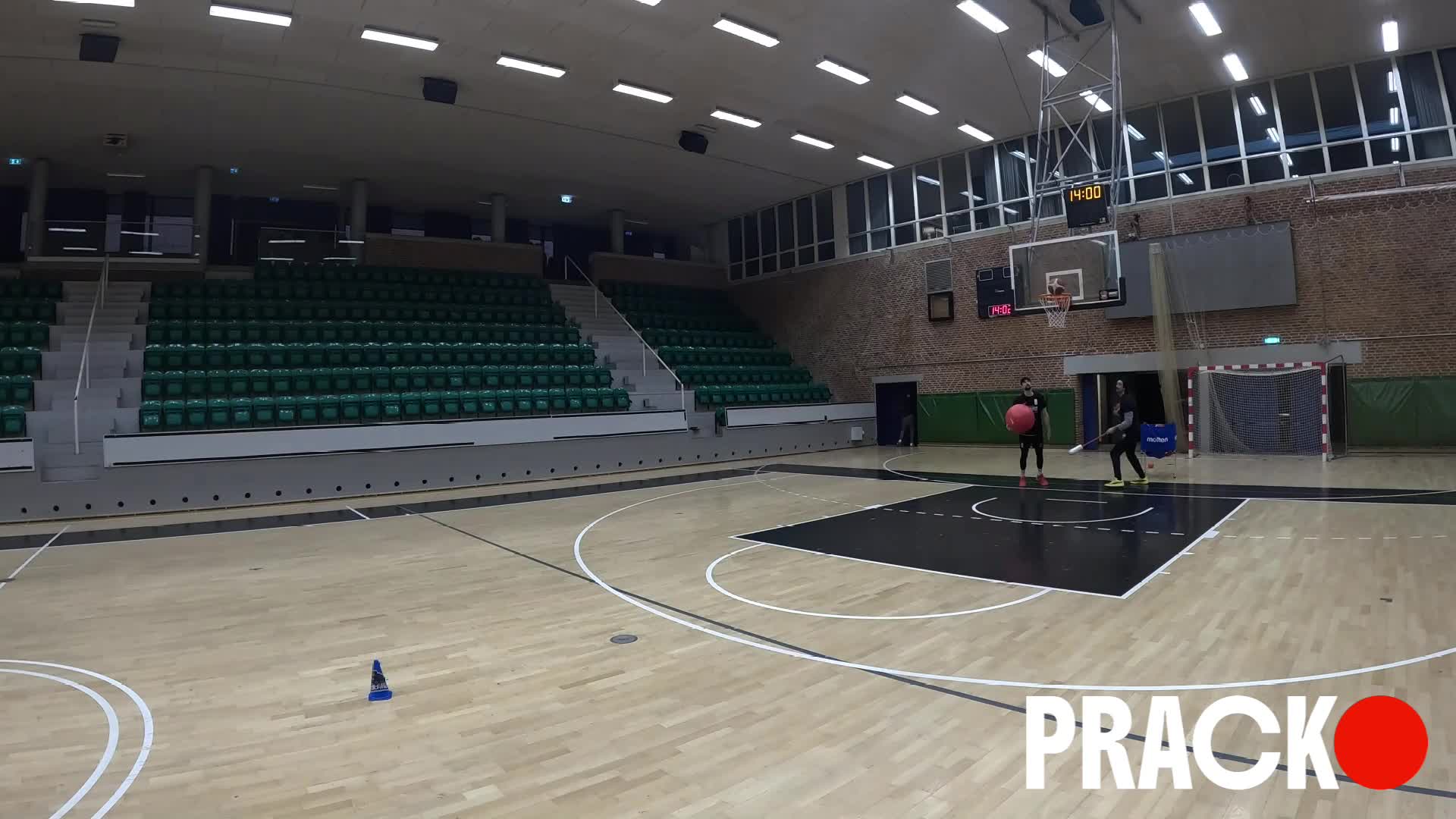
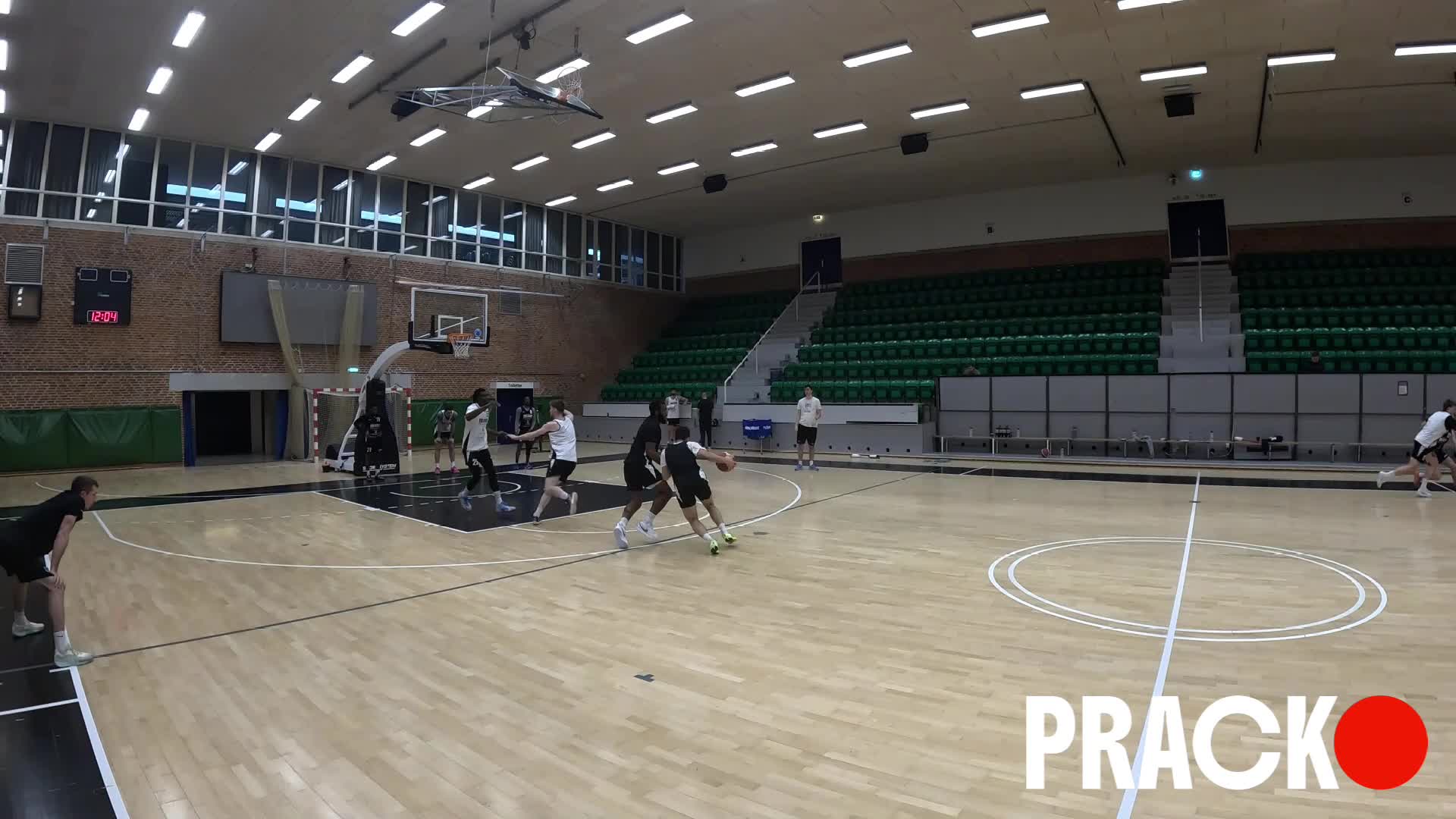
Equipment:BasketballsCones
#movement shooting #shot contests
Movement Shooting: push and pull shooting reads thumbnail
Spacing and Cutting

Movement Shooting: push and pull shooting reads

MentalLevel 2PhysicalLevel 3Players1+, 2+

This drill is run with two players or one player and a coach. One basketball is placed on the nail (free-throw line). Two players start on opposite wings, passing one ball back and forth. One player is designated as the driver, the other as the shooter. How it Works: The two players pass the ball back and forth on the wings. At any moment, the designated driver attacks either: Toward the other player, or Away from the other player (baseline) If the driver attacks toward the shooter, the shooter must move away from the ball, relocating to the corner to create space for a three-point shot. If the driver attacks away from the shooter, the shooter must pull behind the drive and fill the space vacated by the ball handler. After the relocation, the shooter catches and shoots a three-point shot. Immediately after the shot, the shooter sprints to the nail, picks up the ball placed there, and performs a backpedal step-back three at the top of the key. The goal is to make both shots, completing the sequence three times. Focus Points: Reading drive direction and reacting with proper spacing Shot readiness on relocation threes Conditioning and balance into step-back shots Understanding spacing principles in drive-and-kick situations

Equipment:Basketballs
#movement shooting #off the dribble shooting #spacing and cutting #drive and kick #pull behind shots #slide shots
Off the Dribble Shooting: Read & Exchange Pick-and-Roll Shooting Drill thumbnail
Off the Dribble Shooting

Off the Dribble Shooting: Read & Exchange Pick-and-Roll Shooting Drill

MentalLevel 3PhysicalLevel 2Players1+

This is a one-player drill with a coach. Both the player and the coach start with a basketball. The player begins as the ball handler, and the coach acts as the screener. How it Works: The ball handler starts with a live dribble. The coach steps up to set a ball screen, holding a basketball behind their back. The player comes off the screen looking to shoot. As the player comes off the screen: If the coach puts the ball out in front, the player must exchange basketballs — passing their current ball to the coach, grabbing the coach’s ball, and immediately shooting a three-point shot with the new ball. If the coach does not show the ball, the player re-screens and comes off the ball screen in the opposite direction. This continues until the coach presents the ball, forcing the player to read and react before shooting. Focus Points: Reading cues out of pick-and-roll actions Shooting off the dribble from three Maintaining rhythm through re-screens Hand-eye coordination during ball exchanges Decision-making under visual pressure

Equipment:Basketballs
#ball handling #p/r handler shooting #p/r reads #off the dribble shooting
Off the Dribble Shooting: Signal Reaction Dribble-to-Shot Drill thumbnail
Off the Dribble Shooting

Off the Dribble Shooting: Signal Reaction Dribble-to-Shot Drill

MentalLevel 2PhysicalLevel 2Players1+

This is a one-player drill with a coach. The player starts in the left corner with a basketball. The coach stands underneath the basket and serves as the signaler. How it Works: The player begins continuous dribbling in the corner using any dribble moves the coach allows (crossovers, between-the-legs, behind-the-back, strong hand, weak hand, etc.). While dribbling, the player must keep their head up, reading the coach. At any moment, the coach gives a visual signal (basketball, hand signal, or other cue). Once the signal is given, the player must immediately pick up the ball and shoot, with no additional dribbles. If the shot is made, the player advances to the next spot. If the shot is missed, the player moves back one spot. The drill continues through five shooting spots, with the goal of making five consecutive shots to complete the drill. Focus Points: Head-up ball handling Reacting to external visual cues Transitioning quickly from dribble to shot Shot readiness and balance

Equipment:Basketballs
#off the dribble shooting #ball handling
Assisted Lateral Deceleration to Resisted Lateral Acceleration thumbnail
Quickness

Assisted Lateral Deceleration to Resisted Lateral Acceleration

MentalLevel 1PhysicalLevel 1

With the resistance band around your hip and the anchor point to your left, move a few steps to your right to where you feel enough resistance from the band. In an athletic position with your hips, knees, and ankles bent, and your shoulders over your toes, let the band assist you in moving to your left for either one, two, or three steps (depending on the resistance and length of the band you are using), and then using the same amount of steps (or less to make the drill more intense) to stop yourself in the same balanced athletic position that you started. After you have come to a complete stop and found your balance, accelerate against the resistance of the band, away from the anchor point, back to where you started the drill. Once you have returned to the start position, turn around so that the anchor point is to your left and repeat the drill on your other side. Make sure your band is strong enough that it will not snap and that you only go as far as it will tolerate. To be safe, you can focus on just one step.

Equipment:Resistance Bands
#deceleration #acceleration #lateral movement
Assisted Forward Deceleration thumbnail
Quickness

Assisted Forward Deceleration

MentalLevel 1PhysicalLevel 1

With the resistance band around your hip and the anchor point in front of you, walk backward to where you feel enough resistance from the band. Standing tall, let the band assist you in moving forward for either one, two, or three steps (depending on the resistance and length of the band you are using), and then using the same amount of steps (or less to make the drill more intense) to stop yourself in a balanced position with your left leg in front of your right. After you have come to a complete stop and found your balance, reverse walk away from the anchor point and repeat the process, except now bring yourself to a stop with your right leg in front of your left leg. Make sure your band is strong enough that it will not snap and that you only go as far as it will tolerate. To be safe, you can focus on just one step.

Equipment:Resistance Bands
#linear deceleration
Resisted Forward Acceleration thumbnail
Quickness

Resisted Forward Acceleration

MentalLevel 1PhysicalLevel 1Players1+

With the resistance band around your hips, the anchor point behind you, and you facing away from the anchor point walk forward to where you feel a little bit of resistance from the band. Then get into a staggered stance position with your left foot forward and your right leg back. Bend your hips, knees, and ankles to lower your body into a ready position where you feel balanced with about 60% of your body weight on the front leg and 40% on the back leg. Simultaneously, move your left arm back and your right arm forward to get to a ready position to accelerate. Once you are in a ready position and stable, quickly accelerate forward for either one, two, or three steps (depending on the resistance and length of the band you are using). Make sure your band is strong enough that it will not snap and that you only go as far as it will tolerate. To be safe you can focus on just one step. After you have accelerated forward, stop and find balance, and then reverse walk back toward the anchor point and repeat the same drill with the right leg forward.

Equipment:Resistance Bands
#linear #acceleration
Scrimmage: random outlet transition start thumbnail
Scrimmage

Scrimmage: random outlet transition start

MentalLevel 4PhysicalLevel 5Players10+

This is a 5-on-5 scrimmage drill. One team lines up along the baseline on offense. The opposing team lines up facing them (can be at free-throw line extended or half court). A coach or player initiates the drill with the basketball. How it Works: The ball is passed to one offensive player on the baseline. That player immediately throws the ball to any one of the five players lined up across from them. That receiver must instantly pass the ball back to any offensive player on the baseline. As soon as the second pass is made, the drill becomes a live 5-on-5 transition scrimmage. Everyone sprints into the play, and the offense must organize, space the floor, and flow into their transition offense or early offense actions. The randomness of who receives and returns the ball creates chaos and forces players to react, communicate, and find proper spacing on the fly. Focus Points: Transition spacing and floor balance Reacting to unpredictable ball handlers Communication and role recognition in transition Flowing naturally into early offense Playing with pace and organization under chaos

Equipment:Basketballs
#transition offense #transition passing #scrimmage #transition defense
Scrimmage: oversized no dribble game thumbnail
Scrimmage

Scrimmage: oversized no dribble game

MentalLevel 4PhysicalLevel 4Players10+, 8+, 12+, 14+

This is a team scrimmage drill played with normal basketball rules except no dribbling. It works best with more than 5-on-5 (6-on-6 or 7-on-7), but can be adapted to any group size. Teams are evenly divided and play on a full or modified court. How it Works: Play live basketball with one major constraint: no player is allowed to dribble. After catching the ball, players must stop, pivot, pass, or shoot. All other rules remain the same. The coach can add additional constraints to shape behavior, such as: Three-point shots only Paint finishes only Must make a set number of passes before shooting Play continues like a normal scrimmage, emphasizing movement, spacing, and decision-making without the use of the dribble. Focus Points: Cutting and relocating to create advantages Passing accuracy and timing Playing off pivots and footwork Offensive spacing and ball movement Team communication and awareness

Equipment:Basketballs
#transition passing #spacing and cutting
Closeout Defense: 1v2 blind defender closeout drill thumbnail
Closeout Defense

Closeout Defense: 1v2 blind defender closeout drill

MentalLevel 3PhysicalLevel 3Players4+

This is a four-player drill with three offensive players and one defender. Two offensive players are spaced about 10 feet apart behind the three-point line. One offensive player acts as a passer underneath the basket. One defender starts between the basket and the three-point line, facing the shooters and unable to see the passer. How it Works: The passer throws the ball to either of the two offensive players behind the three-point line. The defender must react, close space, and play in between the two shooters to take away the shot. The offensive players are allowed one pass between themselves before a three-point shot must be taken. The defender’s goal is to force a miss, get a deflection, or block the shot. Scoring & Rotation: Defensive stop (miss, deflection, or block) = +1 point (defender) First defender to 3 stops wins After each rep, players rotate roles. Variations: Passer uses tougher passes (bounce pass, behind-the-back, one-hand) Shooters are required to pass before shooting Shorten or widen spacing to change difficulty Focus Points: Defensive anticipation and reaction Closing out while staying between two shooters Offensive shot preparation under pressure Quick decision-making with limited passes Competitive effort and defensive toughness

Equipment:Basketballs
#closeout defense #shot contests #catch and shoot #spray passes #swing passes
Closeout Defense: post entry gauntlet game thumbnail
Closeout Defense

Closeout Defense: post entry gauntlet game

MentalLevel 3PhysicalLevel 4Players3+

This is a three-player drill. One offensive player starts on the same-side wing behind the three-point line. One offensive player is positioned on the block. One defender starts between the wing and the block, acting as an automatic post double-team defender. A scoring system is used. How it Works: The drill begins with the wing player passing the ball into the post. The defender immediately attacks the post as if it is an automatic double team, attempting to get a steal or deflection. The post player must hold the ball for a full two-count before making a decision. After the count, the post player passes the ball back out to the perimeter. As the pass is made into the post, the wing player relocates away from the defender to create space for a three-point shot. Once the ball is kicked out, the defender sprints out to close out and contest the shot. Scoring: Shooter makes the three = +1 point (offense) Defender gets a steal, deflection, or block = +1 point (defense) Deflected post pass = –1 point (post player) Play continues to a target score, then rotate players through each position. Focus Points: Post patience and ball security under pressure Passing out of double teams Relocation and spacing after post entry Defensive closeout technique after help

Equipment:Basketballs
#movement shooting #closeout defense #shot contests #tight space passing #post offense
Contest Shooting: jump, kick, swing game thumbnail
Contest Shooting

Contest Shooting: jump, kick, swing game

MentalLevel 3PhysicalLevel 4Players3+

This is a three-player drill. One player starts on the right wing with the ball. One player is in the left corner. One player is on the left wing. Players rotate through all spots. A scoring system is used. How it Works: The drill starts with the right-wing player attacking the basket off the dribble. As they enter the lane, they must jump in the air (touching the net, backboard, or jumping as high as possible) and throw a pass to the left corner while airborne. The pass must hit the corner player in the shooting pocket. A bad pass results in –1 point for the passer. If the pass is good, the corner player immediately swings the ball to the left-wing shooter. That pass must also be on time and on target, or it is –1 point for the corner passer. After making the airborne pass, the original driver sprints out from under the basket to contest the shot on the left wing. The wing player must shoot a three-point shot (shot fake + one dribble allowed, no drives to the rim). Scoring: Made three = +1 point (shooter) Blocked shot = +1 point (defender) Any bad pass = –1 point (passer) Play continues to a target score, then flip sides to work both directions. Focus Points: Passing accurately while airborne Quick ball movement and swing decisions Shooting under a live, late contest Sprinting from offense to defense Communication, precision, and pace

Equipment:Basketballs
#shot contests #catch and shoot #drive and kick #spray passes #swing passes
Finishing: elbow dribble race to outside the lane finishes thumbnail
Finishing

Finishing: elbow dribble race to outside the lane finishes

MentalLevel 1PhysicalLevel 2Players2+

This is a two-player competitive drill. One player starts on each elbow, both with a basketball. Players are assigned a direction for the rep (one going weak hand, one going strong hand). How it Works: Both players begin dribbling in place. The player going to their weak hand initiates the drill by performing a designated dribble move (double between-the-legs, double behind-the-back, crossover, etc.). Once that player starts, the strong-hand player may begin their move as well. From there, it becomes a race. Each player completes the dribble move and attacks toward the outside of the lane, finishing with: Right foot / right hand when attacking right Left foot / left hand when attacking left After each rep, players switch elbows and continue competing. Play to a target score. Focus Points: Explosive dribble moves under competition Weak-hand ball handling confidence Finishing off different feet and hands Footwork and balance outside the lane Speed, control, and competitive mindset

Equipment:Basketballs
#ball handling #finishing
Contest Shooting: step-back trigger advantage drill thumbnail
Contest Shooting

Contest Shooting: step-back trigger advantage drill

MentalLevel 3PhysicalLevel 4Players3+

This is a 2-on-1 drill with two offensive players and one defender. The ball handler starts behind the three-point line with a live dribble. The second offensive player is on the same side, positioned on the block. The defender starts inside the three-point line with hands on hips. How it Works: The drill begins with the ball handler dribbling in place behind the three-point line. Once the ball handler executes a designated starter move (such as a between-the-legs step-back), the drill becomes live. From the initial move, the ball handler has two options: Shoot the three-point shot, or Shot fake and pass to the offensive player on the block, then relocate to receive a return pass for another three-point shot. The offensive goal is to create and take a three-point shot — not to drive to the basket. The defender must close out and attempt to get a stop. Focus Points: Creating separation with a step-back Shot preparation and balance off the dribble Passing and relocating to improve shot quality Reading closeouts and defensive recovery Defensive closeout technique and discipline

Equipment:Basketballs
#off the dribble shooting #shot contests #step back
Off the Dribble Shooting: lane touch step-back race thumbnail
Off the Dribble Shooting

Off the Dribble Shooting: lane touch step-back race

MentalLevel 2PhysicalLevel 2Players2+

This is a two-player competitive drill. Both players start shoulder-to-shoulder behind the three-point line, each with a basketball. How it Works: The drill begins when both players knock their basketballs together. As soon as the balls make contact, both players dribble aggressively into the lane, place one foot inside the paint, then retreat back behind the three-point line. From there, each player takes a step-back three-point shot. The first player to make the shot wins the rep. The drill can be played to a target score set by the coach. Focus Points: Explosive speed into and out of the lane Footwork and balance on step-back threes Shooting under competition and fatigue Quick transitions from drive to shot Competitive toughness and focus

Equipment:Basketballs
#off the dribble shooting #step back
Play Execution: no dribble constraint 5v0 thumbnail
Play Execution

Play Execution: no dribble constraint 5v0

MentalLevel 4PhysicalLevel 2Players5+

This is a 5-on-0 team drill. All five offensive players start in a circle around the half-court line. One player is designated as the no-dribble player (wearing a different jersey or clearly identified). The coach starts with a basketball. How it Works: The coach bounces the ball into the air. Whichever player secures the ball initiates the possession. Players immediately sprint to their offensive spots and flow into the team’s normal offensive system. The offense is run live with one constraint: the designated player cannot dribble at any point during the possession. The team must adjust spacing, timing, and decision-making to account for that limitation. The possession continues until a quality shot or the offense completes its actions. Focus Points: Offensive awareness and adaptability Spacing and ball movement without relying on dribbles Playing through constraints to improve decision-making Communication and recognition of personnel roles Executing offense with purpose, not memorization

Equipment:Basketballs
#spacing and cutting
P/R Reads: 3v3 low defender reads thumbnail
Pick and Roll Reads

P/R Reads: 3v3 low defender reads

MentalLevel 4PhysicalLevel 4Players6+

This is a 3-on-3 drill (players vs. players or players vs. coaches). One offensive player starts at the top of the key with the ball. A screener is positioned at the free-throw line (nail). A third offensive player starts under the basket. Each offensive player is guarded by a defender. How it Works: The screener sets a ball screen for the ball handler at the top of the key, choosing either side. As the pick-and-roll action begins, the offensive player under the basket chooses a corner (strong side or weak side) to relocate to. The ball handler must read the low defender’s positioning and make the correct decision — whether that’s passing to the corner, hitting the roller, or scoring themselves. The play is live and continues until a basket or defensive stop. Focus Points: Reading the low man in pick-and-roll situations Timing and spacing on corner relocation Decision-making out of ball screens Offensive communication and spacing discipline Defensive rotations and help responsibility

Equipment:Basketballs
#p/r reads #p/r ball handler defense #p/r screener defense
Contest Shooting: blind toss side step shots thumbnail
Contest Shooting

Contest Shooting: blind toss side step shots

MentalLevel 2PhysicalLevel 2Players2+

This is a two-player drill with one offensive player and one defensive player. The offensive player starts behind the three-point line. The defender starts about 10 feet inside the three-point line and begins with the basketball. How it Works: The defender throws the ball over their head without looking at the offensive player. The offensive player reacts to the toss, catches the ball, and immediately takes one step to the left or right to create space. As the offensive player gathers, the defender turns and sprints to contest the shot. The rep finishes with a contested three-point shot. This drill is primarily used as a warm-up with variability in timing and direction. Focus Points: Reaction and tracking on unpredictable passes Quick footwork into side-step shots Shot preparation under pressure Creating space with one hard step Defensive closeout speed and control

Equipment:Basketballs
#shot contests #movement shooting
Finishing: 2 bounce cut finishes thumbnail
Finishing

Finishing: 2 bounce cut finishes

MentalLevel 3PhysicalLevel 3Players3+

This drill uses two offensive players and one defender (or a coach as the defender). One offensive player starts behind the three-point line with a basketball. A second offensive player starts behind the three-point line without a ball. A defender is positioned under the rim. How it Works: The offensive player with the ball throws it randomly into the lane, allowing it to bounce in any direction. The pass can be high, low, or angled, as long as it lands inside the paint. Once the ball has bounced twice, the offensive player without the ball cuts to it, picks it up, and immediately attacks the basket without dribbling. The defender under the rim contests the finish live. A coach may use a contest stick or pad to increase difficulty. Focus Points: Timing and angles of basket cuts Gathering the ball off the bounce Finishing without dribbling Body control and touch around the rim Finishing through contests

Equipment:BasketballsContest Stick
#finishing #spacing and cutting
Static Shooting: continuous team shooting thumbnail
Static Shooting

Static Shooting: continuous team shooting

MentalLevel 1PhysicalLevel 1Players10+

Divide the team in half, with one group on each basket. If space is limited, the full team can work on a single basket. Use one fewer basketball than the number of players at each basket (e.g., 5 players = 4 balls). How it Works: A player shoots, rebounds their own shot, and immediately passes to a teammate who does not have a ball. After passing, the shooter relocates behind the three-point line or to the designated shooting spot. As soon as they are set, another teammate passes them a ball for the next shot. The drill continues in a continuous flow, with players shooting, rebounding, passing, and relocating. The coach can dictate shot types (catch-and-shoot, one-dribble pull-ups, step-backs, etc.) and set a target score to make it competitive. Focus Points: Shot readiness and quick preparation Passing accuracy and ball movement Conditioning through continuous motion Shooting under rhythm and light fatigue Team communication and awareness

Equipment:Basketballs
#catch and shoot
Contest Shooting: spin reaction catch and contest thumbnail
Contest Shooting

Contest Shooting: spin reaction catch and contest

MentalLevel 3PhysicalLevel 2Players2+

This is a two-player drill with one offensive player and one defensive player. Both players start behind the three-point line, with approximately 10–15 feet of separation. The defender begins with the basketball. How it Works: The defender throws the ball above the offensive player’s head without a set rhythm or timing. The offensive player does not know when the ball will be released. Once the offensive player sees the ball bounce in front of them, they execute a full spin, locate the ball, and catch it. As the catch is made, the defender sprints forward to contest. From there, the rep can finish as either: A contested catch-and-shoot, or A live one-on-one situation, depending on the emphasis and warm-up level. Focus Points: Reaction time and awareness Locating the ball after a spin Footwork and balance on the catch Shooting under a late, hard contest Defensive closeout speed and control

Equipment:Basketballs
#movement shooting #closeout defense #shot contests
Outlet Passing: endzone passing thumbnail
Outlet Passing

Outlet Passing: endzone passing

MentalLevel 3PhysicalLevel 4Players3+

This is a three-player drill. One player starts as the outlet passer underneath the basket. A defender guards the other offensive player. An end zone area is marked near half court (similar to an American football end zone). How it Works: The defender begins with their head turned away from the outlet passer under the basket. On the coach’s signal, the offensive player works to get open and create separation from the defender. The outlet passer throws a deep outlet pass into the end zone area. The offensive player must track the pass, secure the catch, and complete it inside the end zone. Rotate players through each role. Focus Points: Outlet passing accuracy and decision-making Offensive movement and separation to get open Defensive ball denial

Equipment:ConesBasketballs
#transition offense #transition passing #outlet passing
Contest Shooting: combo move retreat shots thumbnail
Contest Shooting

Contest Shooting: combo move retreat shots

MentalLevel 2PhysicalLevel 2Players2+

This is a two-player drill. One defender starts with one foot inside the restricted area under the basket. The offensive player starts one step inside the three-point line with a basketball. How it Works: The offensive player begins dribbling in place with either hand. Once the ball handler executes their first between-the-legs dribble, the defender becomes live and sprints out to contest. The offensive player must perform two between-the-legs dribbles while backpedaling behind the three-point line, then rise into a jump shot. The defender’s goal is to contest or block the shot without fouling. The coach can vary the drill by changing the required dribble moves (e.g., crossover + between-the-legs). Focus Points: Creating separation with retreat dribbles Footwork and balance when backpedaling into a shot Shooting under pressure and time constraints Defensive closeout technique without fouling

Equipment:Basketballs
#off the dribble shooting #shot contests
Contest Shooting: cone reaction shot contest drill thumbnail
Contest Shooting

Contest Shooting: cone reaction shot contest drill

MentalLevel 3PhysicalLevel 2Players2+

This is a two-player drill with a passer (coach or player). One offensive player starts at the three-point line facing the basket. A defender starts directly in front of them. Two cones are placed 5–6 feet apart between the offensive and defensive players. The passer is positioned behind the play. How it Works: The offensive player chooses a side and cuts around both cones in that direction to get open. Simultaneously, the defender must go the opposite direction around the cones to recover and contest the shot. After clearing the cones, the offensive player catches the pass from the passer and shoots immediately. The defender closes out to contest. The passer can vary pass angles and locations to create different catch-and-shoot scenarios. Focus Points: Quick reaction and decision-making off movement Footwork and body control when changing direction Catch-and-shoot readiness Shot contest technique and recovery

Equipment:BasketballsCones
#movement shooting #shot contests
Pick and Roll Reads: 2v2 corner step up thumbnail
Pick and Roll Reads

Pick and Roll Reads: 2v2 corner step up

MentalLevel 4PhysicalLevel 4Players4+

This is a 2-on-2 drill. The ball handler starts at the top of the key. Their offensive teammate begins in the corner. One defender guards the ball at the top, while the second defender starts two steps behind the screener in the corner. How it Works: The drill begins with the corner offensive player sprinting out of the corner to create separation from their defender and flowing directly into a ball screen for the ball handler. From the screen, the screener can either pop to space or dive to the basket. The ball handler reads the coverage and makes the appropriate decision. The defense must recover and defend the action live, with the screener’s defender starting at a disadvantage. Focus Points: Pick-and-roll reads in a 2-on-2 environment Sprinting into screens to create separation Screening angles and timing Reading a disadvantaged screener defender Offensive decision-making with limited space

Equipment:Basketballs
#p/r reads #p/r screener defense #p/r handler shooting #p/r ball handler defense #ghost screens
Dribble Drive Reads: advantage drill thumbnail
Dribble Drive

Dribble Drive Reads: advantage drill

MentalLevel 4PhysicalLevel 4Players4+

This drill can be played 2-on-2 up to 5-on-5. Players are matched up offense vs. defense. The offense may start in any alignment the coach chooses. One offensive player begins with the ball. How it Works: The defender guarding the ball starts with their back turned to the ball handler, while the offensive player rests the ball lightly on the defender’s back. When the offensive player decides to attack, they move the ball off the defender’s back and immediately drive. From that moment, the drill is live. The offense plays with a built-in advantage created by the delayed defensive reaction, while the defense must recover, communicate, and attempt to get a stop. Focus Points: Attacking off an advantage Quick decision-making on dribble penetration Playing downhill and forcing defensive rotations Defensive recovery and communication Reading help and making advantage-based plays

Equipment:Basketballs
#closeout defense #drive and kick #low man help defense #nail help #rotations #spray passes #spacing and cutting
Contest Shooting: cone escape pull ups thumbnail
Contest Shooting

Contest Shooting: cone escape pull ups

MentalLevel 3PhysicalLevel 4Players2+

This is a two-player drill with a coach as a passer, and it can also be run as a three-player drill. One offensive player starts on the wing. A defender starts on the same-side elbow, inside the paint. A cone is placed anywhere on the floor, with distance adjusted based on difficulty (closer to 3pt line = easier, farther = harder). How it Works: The coach or passer throws the ball to the offensive player on the wing. The offensive player immediately dribbles toward the cone. As soon as the ball handler touches the cone, they must escape back behind the three-point line to create space for an off-the-dribble shot. Once the cone is touched, the defender is live and sprints out to contest the shot. The offensive player finishes the rep with an off-the-dribble three-pointer under pressure. Focus Points: Explosive change of direction after cone touch Creating separation for off-the-dribble threes Shooting with a live closeout Defender reaction and shot contest technique

Equipment:BasketballsCones
#off the dribble shooting #shot contests
Contest Shooting: post relocations thumbnail
Contest Shooting

Contest Shooting: post relocations

MentalLevel 3PhysicalLevel 4Players3+

This is a three-player drill. One offensive player starts on the wing with the ball. A second offensive player is in the post. A defender begins with both feet inside the paint. How it Works: The wing player passes the ball into the post and immediately relocates as quickly as possible to the strong-side corner. Once the post entry pass is made, the defender inside the paint sprints out to close out on the corner shooter. The corner player reacts to the closeout based on the constraints set by the coach. The rep can end with a catch-and-shoot three, or be played live one-on-one from the closeout. Focus Points: Post entry passing and immediate relocation Creating space by moving after the pass Corner closeout technique and recovery Shot readiness under pressure Reading the closeout and making quick decisions

Equipment:Basketballs
#shot contests #movement shooting
P/R Reads: 3v3 live step up thumbnail
Pick and Roll Reads

P/R Reads: 3v3 live step up

MentalLevel 3PhysicalLevel 5Players4+

This drill can be played 2-on-2 or 3-on-3. The offense starts in step-up ball screen spacing with a ball handler on the wing, a teammate in the strong-side corner, and an optional third offensive player on the opposite wing or corner. How it Works: The ball handler begins with a live dribble on the wing. The player in the strong-side corner steps up to set a step-up ball screen on the ball handler’s defender, then dives to the basket. As the screen action occurs, the opposite offensive player shakes up behind the three-point line to create a passing outlet. The offense plays live out of the action, reading the coverage and creating a scoring opportunity. Play continues until a basket or a defensive stop, then teams switch offense and defense. Focus Points: Step-up ball screen timing and spacing Pick-and-roll reads out of the corner Screening angles and hard dives to the rim Weak-side shake timing and spacing Live decision-making in small-sided play

Equipment:Basketballs
#p/r reads #p/r ball handler defense #p/r screener defense
P/R Defense: 2v2 Bonn Drill thumbnail
Pick and Roll Defense

P/R Defense: 2v2 Bonn Drill

MentalLevel 3PhysicalLevel 5Players4+

This is a four-player drill. Two defensive players start on each block with one basketball. Two offensive players are positioned on the wings, just behind the three-point line at elbow-vertical spacing. How it Works: The defender on the left block starts with the ball and passes it across the lane to the defender on the right block. As the pass is made, the two defenders cross paths and sprint out to close out on the offensive players across from them on the wings. Once an offensive player catches the ball, they swing it to the opposite wing and immediately flow into a ball screen. The defenders must match up, close out under control, and then defend the pick-and-roll two-on-two using the desired coverage. The offense plays live to read the coverage and create a scoring opportunity. Focus Points: Sprinting and controlling closeouts Defensive communication through cross and matchup Pick-and-roll coverage execution (2-on-2) Offensive pick-and-roll reads and decision-making Transitioning quickly from closeout defense into ball-screen defense

Equipment:Basketballs
#p/r ball handler defense #p/r reads #p/r screener defense
Passing: ball drop spray & finish thumbnail
Dribble Drive

Passing: ball drop spray & finish

MentalLevel 4PhysicalLevel 3Players2+

This is a two-player drill with one coach. One offensive player starts outside the three-point line with a live dribble. A second offensive player is positioned in the opposite corner. The coach stands inside the three-point line with a basketball. How it Works: The ball handler begins dribbling outside the three-point line. As the player attacks downhill, the coach drops or bounces a basketball inside the three-point line. The ball handler drives toward the dropped ball, picks it up, and simultaneously throws their original basketball to the offensive player in the opposite corner. The corner player catches the pass and shoots immediately. After making the pass, the original ball handler finishes the play by taking the coach’s ball and attacking the basket for a finish. Focus Points: Passing with the off hand Coordination while exchanging basketballs Vision and accuracy on drive-and-kick passes

Equipment:Basketballs
#drive and kick #spray passes
Finishing: floor pick ups thumbnail
Finishing

Finishing: floor pick ups

MentalLevel 2PhysicalLevel 3Players2+

This is a two-player drill with one coach. One offensive player starts outside the three-point line with a live dribble. A second player is positioned under the basket as the defender. The coach stands near the three-point line with a basketball. How it Works: The ball handler begins dribbling outside the three-point line and attacks downhill. As the player approaches the three-point line, the coach places a basketball on the floor in front of the ball handler. The offensive player must dribble toward the ball on the floor, pick it up, and leave the original basketball with the coach. From there, the player finishes at the rim against the defender under the basket. The coach controls the variation: With dribble: The player may take one or two dribbles after picking up the new ball before finishing. No dribble: The player must gather the ball and finish without dribbling. Focus Points: Clean gathers off the floor Slow steps and body control into finishes Finishing without dribbling (cut finishes) Decision-making at the rim against a defender Balance and touch through contact

Equipment:Basketballs
#finishing #ball handling
Ball Handling: 2 ball partner resist thumbnail
Ball Handling

Ball Handling: 2 ball partner resist

MentalLevel 2PhysicalLevel 4Players2+

This is a two-player drill that can be scaled up to the entire team. Players line up on one sideline. The offensive player has a basketball and the defender also has a basketball. How it Works: The offensive player begins with a live dribble and works from one sideline to the other. The defender stays in front while holding their own basketball and applies physical resistance by bumping and pushing with their body and ball. The ball handler uses any combination of dribble moves chosen by the coach or player to advance across the court while maintaining control through contact. Once they reach the opposite sideline, players can switch roles or rotate. Focus Points: Handling the ball through physical contact Maintaining balance and control under resistance Defenders staying in front without using hands Footwork, body positioning, and toughness on both offense and defense If you want, next we can: Add coaching cues (what to correct in real time) Add progressions (live defender, no ball defender, timed reps) Add tags for your library (Ball Handling, Toughness, Defense, Contact) Just say the word.

Equipment:Basketballs
#on ball defense #ball handling #drive and kick
Dribble Drive Reads: punch nail to late whistle reads thumbnail
Dribble Drive

Dribble Drive Reads: punch nail to late whistle reads

MentalLevel 4PhysicalLevel 3Players3+

Three players plus a coach. – Ball handler starts on the wing with a live dribble. – Offensive shooter is positioned in the opposite corner. – On-ball defender guards the ball handler while holding a basketball. – Coach stands at the nail acting as the help defender (with a whistle). How it Works: The ball handler begins with a live dribble on the wing. At any moment, they attack downhill toward the nail, driving inside the coach’s position. The on-ball defender applies pressure using their basketball to bump and disrupt the ball handler’s balance. As the drive reaches the nail, the coach simulates contact by reaching or stepping into the drive (using a hand, pad, or stick). – If the coach blows the whistle, the ball handler immediately goes into a shooting motion, simulating free throws on a shooting foul. – If there is no whistle, the ball handler must kick the ball to the opposite corner for a catch-and-shoot jumper. Rotate players through each role. Focus Points: – Driving through contact with balance and control – Reading the nail defender and reacting to the foul/no-foul decision – Awareness and discipline: shot vs. kick-out decision – Defender applying physical pressure without fouling – Quick, confident corner shot readiness

Equipment:BasketballsContest Stick
#drive and kick #finishing
Ball Handling: 3 person in the arc handling thumbnail
Ball Handling

Ball Handling: 3 person in the arc handling

MentalLevel 3PhysicalLevel 4Players3+

Three or more players. – Create a small circle using cones, the center circle, or the free-throw circle. – Two offensive players start inside the circle with one basketball. – One defender starts in the middle of the circle. How it Works: The two offensive players play live 2-on-1 inside the circle, focusing on ball movement and spacing. The player with the ball cannot hold it longer than three seconds. The off-ball offensive player may set a screen, initiate a handoff, or move into open space to receive a pass. The defender works to steal the ball, force a deflection, or cause a three-second violation. Play continues until the defense earns a stop, then rotate roles. Focus Points: – Tight-space ball handling and quick decision-making – Passing under pressure in limited space – Off-ball movement: screening, handoffs, and relocation – Defender: active hands, anticipation, and positioning in 2-on-1 situations

Equipment:Basketballs
#spacing and cutting #ball handling #on ball defense #tight space passing
Contest Shooting: 3 man nail weave thumbnail
Contest Shooting

Contest Shooting: 3 man nail weave

MentalLevel 3PhysicalLevel 2Players3+

Three players. All three begin aligned across the free-throw line. – One player starts on the left wing with the ball. – One player starts in the middle at the nail. – One player starts on the right wing. How it Works: The drill begins with the left-wing player attacking the basket off the dribble. As the drive occurs, the middle player waits at the nail. The driver passes the ball behind the back to the middle player at the nail. Immediately after the catch, the middle player swings the ball to the right-wing player, who is sliding away from the ball from the wing to the corner to create a longer closeout. The shooter catches the ball in the corner and takes a contested three-point shot. The middle player, after making the pass, must close out and contest the shot at game speed. Focus Points: – Offensive movement away from the ball to create spacing – Timing and accuracy on the drive-and-kick sequence – Shooting under a hard, late closeout – Defender sprinting out of the pass and contesting without fouling – Game-like pace and flow through the entire action

Equipment:Basketballs
#closeout defense #shot contests #movement shooting
Ball Handling: reaction pick ups to combos thumbnail
Ball Handling

Ball Handling: reaction pick ups to combos

MentalLevel 2PhysicalLevel 2Players2+

– Offensive player starts on the baseline. – Defender begins with a basketball and provides dummy defense. – (Optional) A third player or coach stands under the basket with a ball for the finishing phase. How it Works: The defender throws the ball in a random direction. The offensive player runs to retrieve it and immediately begins a 2–3 move dribble combo off the bounce—no catching with two hands. The defender plays live dummy defense, cutting off angles and forcing reactions. After the combo, the offensive player tosses the ball back to the defender, who again throws it in a new direction. This sequence repeats, forcing the offensive player to react to different pickups, bounces, and angles. Once the sequence is complete, the offensive player zigzags up the floor. – If only two players are involved, roles can switch. – If a third player is present, the offensive player takes a new ball and attacks the basket to finish against a defender waiting under the rim while holding a ball. Focus Points: – Reacting to unpredictable pickups and bounces – Clean ball control without gathering with two hands – Quick decision-making and change of direction – Finishing at the rim after ball-handling fatigue – Staying balanced and composed through chaos

Equipment:Basketballs
#ball handling #finishing
Contest Shooting: 2 ball touch pass shots thumbnail
Contest Shooting

Contest Shooting: 2 ball touch pass shots

MentalLevel 4PhysicalLevel 2Players2+

– Defender stands inside the three-point line, dribbling one basketball. – Offensive player stands outside the three-point line ready to shoot. Both players share a second ball, passing it back and forth. How it Works: The defender continuously dribbles one ball while simultaneously passing and receiving the second ball with the offensive player. At any moment, the offensive player can catch and hold the pass, immediately going up into a three-point shot. The defender must react instantly—while still dribbling their own ball—and use the dribbling ball to contest the shot without fouling. The drill emphasizes timing, ball control, and shooting under pressure. Focus Points: – Defender: dribble control + quick reaction into a balanced contest – Offensive player: readiness to shoot, footwork into a clean catch-and-shoot – One-hand passing rhythm between both players – Shooting through pressure and contest timing

Equipment:Basketballs
#ball handling #catch and shoot #shot contests
Contest Shooting: around the back wrap shots thumbnail
Contest Shooting

Contest Shooting: around the back wrap shots

MentalLevel 2PhysicalLevel 3Players2+

– Offensive player starts behind the 3-point line (or any chosen shooting spot) with a ball. – Defender stands directly in front of them, also holding a ball. Both players continuously wrap the ball around their waist. How it Works: Both players move their feet and wrap the ball around their waist while staying in front of each other. The offensive player tries to create small pockets of space by shifting laterally—without dribbling. At any moment, the offensive player may stop wrapping and go directly into a shot. The defender must immediately contest the shot while still holding their own ball (no dropping, tossing, or using hands outside of the contest motion). The offensive player’s goal is to read when the defender’s ball position is out of phase—for example, behind their back—and shoot before the defender can contest effectively. Focus Points: – Offensive player: timing the shot when defender is at a disadvantage – Controlled wrap-around ball handling – Shooting under pressure and through a late contest – Defender: balance, hand-up contest, staying vertical while holding the ball

Equipment:Basketballs
#shot contests #movement shooting #ball handling
Contest Shooting: through the legs entry shots thumbnail
Contest Shooting

Contest Shooting: through the legs entry shots

MentalLevel 2PhysicalLevel 2Players2+

– Offensive player begins behind the three-point line (or any chosen shooting spot). – Defender stands about 10 feet in front, facing away from the offensive player. The defender has a ball and dribbles continuously with a coach-directed dribble move. How it Works: The defender dribbles with their back turned, using whatever ball-handling pattern the coach calls out. At any moment, the defender makes a between-the-legs backward pass to the offensive player behind them. Once the ball is caught, the offensive player may pivot or step into their shot, but cannot dribble. The defender immediately turns, closes out, and contests the shot—attempting to block it without fouling. Rotate roles and continue reps at game pace. Focus Points: – Defender: controlled ball handling into an immediate, high-effort contest – Shooter: clean footwork and shot preparation under pressure – Reading the closeout and getting into the shot quickly – Defender staying vertical and contesting without fouling

Equipment:Basketballs
#catch and shoot #shot contests #ball handling
Finishing: low pick up stab finishes thumbnail
Finishing

Finishing: low pick up stab finishes

MentalLevel 2PhysicalLevel 2Players1+

A coach or designated player stands at the nail (free-throw line area) acting as the help defender, showing either a high hand or low hand to simulate nail help. How it Works: The offensive player starts above the nail with a live dribble. As they attack toward the nail, the coach/help defender presents either a high or low hand. The ball handler must: – Keep a low, tight dribble, – Read the hand position, and – Play over the top (if the defender’s hand is low) or underneath (if the hand is high). After clearing the nail defender, the player continues downhill to finish at the basket. Players rotate through quickly, each rep emphasizing reading the help and attacking through the gap. Focus Points: – Low, controlled dribble into the nail – Reading the help defender’s hand position – Playing over or under the help to create advantage – Staying on balance through the read and into the finish – Game-like speed and decisiveness attacking through the nail

Equipment:BasketballsCones
#finishing #nail help
Closeout Defense: tika toka passing thumbnail
Closeout Defense

Closeout Defense: tika toka passing

MentalLevel 2PhysicalLevel 4Players7+

– Four offensive players are spaced with one in each corner and one on each wing. All remain stationary in their spots. – Three defenders guard the four offensive players. A coach stands with a ball to initiate the action. How it Works: The coach throws the ball to any one of the four offensive players. Once the catch is made, the offense can either: – Shoot the three, or – Swing the ball quickly to another offensive player. If an offensive player makes a three-point shot, the drill immediately resets. The defense must execute disciplined closeouts, read passing lanes, contest all shots, and secure the rebound to end the possession. Offensive players cannot move from their spots; the focus is on shooting under pressure and fast ball movement. Focus Points: – Defense: urgent closeouts, multiple efforts, high hands, finishing plays with rebounds – Offense: quick swing passes, shot readiness, shooting under heavy contest – Reading defender momentum to decide shot vs. pass – Defensive communication and rotation in disadvantage scenarios

Equipment:Basketballs
#swing passes #catch and shoot #shot contests #closeout defense
DHO Shooting: partner reaction dho shots thumbnail
Dribble Hand Off

DHO Shooting: partner reaction dho shots

MentalLevel 3PhysicalLevel 4Players3+

Three players start in a line. – Two players start elbow-extended on opposite sides. – One player stands in the middle, between the two elbows, ready to react. A coach or passer initiates the drill by throwing the ball to either elbow. How it Works: The passer throws the ball to one of the outside players. As soon as the catch is made, the middle player cuts to that side for a live dribble handoff (DHO). The middle player and the ball receiver now play 2-on-1 against the opposite elbow player, who becomes the defender. The offense plays live out of the handoff, working on: – Reading the trail defender – Shooting off the DHO – Re-screen shots if the defense goes under – Executing a clean, well-timed handoff The drill continues until a shot or stop Focus Points: – Middle player: quick reaction to the pass and sharp angle into the DHO – Ball receiver: strong handoff, create separation for the teammate – Defender: trail defense, fight over/under the handoff, contest without fouling

Equipment:Basketballs
#dribble hand off shooting #dribble hand off reads
Relocation Shooting: nail slide closeouts thumbnail
Contest Shooting

Relocation Shooting: nail slide closeouts

MentalLevel 2PhysicalLevel 4Players3+

Three players. – Ball handler starts on the wing, dribbling in place. – Other offensive player begins at the top of the key. – Defender starts at the free-throw line, next to a cone, in a defensive stance. How it Works: The ball handler attacks toward the nail with a live dribble, driving straight at the defender. Once the ball handler breaks the three point line, the other offensive player at the top of the key slides to the opposite wing to create space. The defender must touch the cone with one hand, then execute a full-speed closeout to the offensive player receiving the pass on the wing. From there, the wing player plays out the advantage: – Shoot the three – Play live 1-on-1 off the closeout This drill can be run in groups of three or rotated through the entire team. Focus Points: – Defender: explosive closeout from a disadvantage position – Offensive spacing and sliding away from the drive – Reading the closeout: shoot vs. attack decision – Game-speed timing between the drive, pass, and relocation

Equipment:BasketballsCones
#closeout defense #shot contests #movement shooting #slide shots
Finishing: frogger 2v1 thumbnail
Finishing

Finishing: frogger 2v1

MentalLevel 3PhysicalLevel 3Players3+

Three players. One player starts with a ball at the top of the key as the offensive attacker. The other two players act as defenders, each holding a basketball. – Defender 1 slides laterally across the free-throw line – Defender 2 slides laterally under the basket Both defenders continuously slide back and forth while keeping control of their basketballs. How it Works: The offensive player at the top waits for a moment of their choosing, then attacks the basket. The two defenders must play live defense while still holding their basketballs, forcing them to move, stay balanced, and contest without using their hands normally. The offensive player’s goal is to finish at the rim or create a clean scoring opportunity. The drill can be scaled for three players or run in rotations with the entire team. Focus Points: – Offensive player: reading angles and attacking gaps – Defenders: active feet, body positioning, and verticality without using hands – Finishing through traffic and crowded space – Maintaining balance and control while sliding with a ball

Equipment:Basketballs
#finishing #ball handling #low man help defense #rim protection
Ball Handling: partner handshake cone grabs thumbnail
Ball Handling

Ball Handling: partner handshake cone grabs

MentalLevel 4PhysicalLevel 1Players2+

Two players face each other with one cone placed on the floor between them. Each player has a basketball in their left hand and begins with their right hands shaking. How it Works: Both players dribble in place with their left hands while maintaining the handshake. When one player calls “Go,” they release hands and immediately perform a three-move dribble combo of their choosing (e.g., crossover → between the legs → behind the back). Once both players complete the combo, they react quickly, racing to grab the cone in the middle. The first player to secure the cone wins the rep. This drill can be run in pairs across the entire team. Focus Points: – Quick reaction after finishing the dribble sequence – Tight, controlled ball handling under pressure – Competitiveness and timing – Maintaining balance and clean footwork through the combo

Equipment:BasketballsCones
#ball handling
Ball Handling: 2 ball pocket passes thumbnail
Ball Handling

Ball Handling: 2 ball pocket passes

MentalLevel 3PhysicalLevel 3Players2+

This is a two-player drill. One player (the ball handler) has two basketballs and continuously dribbles both at the same time. The second player acts as the pick-and-roll screener. How it works: The ball handler begins dribbling both basketballs in place. The screener comes up to set a screen, then rolls hard to the basket. While maintaining control of both basketballs, the ball handler must make a pocket pass with one of them to the rolling screener. The screener catches and finishes at the rim. Immediately after the pass, the ball handler takes one or two more dribbles with the remaining basketball and finishes the rep with a step-back or off-the-dribble 3-point shot. Focus points: Pocket passing accuracy while maintaining two-ball control Pick-and-roll timing and communication Off-the-dribble 3-point shooting rhythm Decision-making and balance under pressure

Equipment:Basketballs
#off the dribble shooting #p/r handler shooting
Closeout Defense: level of the ball thumbnail
Closeout Defense

Closeout Defense: level of the ball

MentalLevel 2PhysicalLevel 2Players6+

This is a 6-player drill with 3 players on offense and 3 players on defense. Each offensive player is guarded man-to-man by a defender. Position one offensive player on each wing and one under the basket. How it works: The offensive player under the basket starts the drill by throwing the ball off the backboard, rebounding it, and turning to face the opposite direction. He makes an outlet pass to one of the wing players. As soon as the pass is made, all defensive players must adjust to the level of the ball — meaning every defender must be at least even with or above the ball’s level to stay in help position and protect driving lanes. The offensive player on the wing takes one or two dribbles, then passes back to the middle. The defense shifts accordingly, maintaining the level of the ball and positioning in the gaps. The ball is then swung to the opposite wing, and the same rotation happens. Focus points: Maintaining defensive positioning at the level of the ball Quick defensive shifts on every pass or dribble Staying in help position while keeping vision on the ball and your man On-ball defensive pressure and team spacing

Equipment:Basketballs
#closeout defense
Finishing: 360 eyes find the rim thumbnail
Finishing

Finishing: 360 eyes find the rim

MentalLevel 2PhysicalLevel 3Players1+

This drill can be done individually or with a full team. Place one cone anywhere inside the lane to serve as the finishing marker. Players start outside the paint with a basketball. How it works: Each player drives toward the cone under control. Before reaching the cone, the player must jump, complete a 360-degree spin in the air, locate the rim with their eyes, and finish the layup or shot. The emphasis is on balance, body control, and visual awareness after the spin. Rotate players quickly to keep the drill moving. Focus points: Body control and balance during mid-air movement Re-focusing on the rim after spinning Developing finishing variation and creativity Core strength and coordination in the air

Equipment:BasketballsCones
#finishing
Ball Handling: mini ball hoops thumbnail
Ball Handling

Ball Handling: mini ball hoops

MentalLevel 4PhysicalLevel 3Players6+

This drill can be played with groups ranging from 3-on-3 to 7-on-7. Every player has a basketball and must continuously dribble throughout the game. In addition to the regular basketballs, there is one smaller ball in play — such as a tennis ball or mini ball — that serves as the game ball. How it works: Players are divided into two teams. While continuously dribbling their own basketballs, both teams compete to score the mini ball using normal basketball rules. Players can pass, catch, and shoot the mini ball, but must keep dribbling their main basketball at all times. If a player stops dribbling, they must immediately set the mini ball down — this results in a turnover and possession goes to the other team. Steals, rebounds, and scoring follow normal basketball flow, but players must always maintain their dribble with their main ball. Focus points: Maintaining continuous dribbling while under game pressure Ball handling, coordination, and multitasking Spatial awareness and cutting while controlling two objects Communication and team spacing

Equipment:BasketballsTennis Ball
#ball handling #transition passing #finishing
Static Shooting: bad pass 3s thumbnail
Contest Shooting

Static Shooting: bad pass 3s

MentalLevel 1PhysicalLevel 1Players2+

This drill can be played with 2 players or scaled up to teams of 4 to 8 players. Divide into two even teams. Each team has one ball, and players are positioned around the three-point line. How it works: The drill begins with one player taking a shot. After shooting, that player rebounds their own miss or make and then throws a bad but catchable pass to a player on the opposite team. The receiving player must locate and control the off-target pass, then immediately shoot a three-pointer. After shooting, that player rebounds and throws the next bad pass back to the other team. Play continues back and forth until a target number of makes or a time limit is reached. Focus points: Locating and controlling off-target passes Maintaining shooting balance under pressure Quick reaction and footwork adjustments before shooting Passing with purpose — off-target but realistic passes

Equipment:Basketballs
#catch and shoot
Relocation Shooting: stampede to contested wheel 3s thumbnail
Contest Shooting

Relocation Shooting: stampede to contested wheel 3s

MentalLevel 3PhysicalLevel 3Players2+

This is a 2- to 3-person drill using two basketballs. Two offensive players start several feet apart, passing the ball back and forth. A coach or additional player stands between them holding a basketball. How it works: As the two players pass back and forth, the coach or middle player will randomly raise their ball as a signal. The player who has the ball at that moment immediately drives toward the coach, touches their basketball to the coach’s basketball, and then passes to the other offensive player. As the drive happens, the off-ball player slides away from the drive to create space for the pass. After the touch and pass, the sliding player catches and shoots a three-pointer while the original ball handler closes out to contest the shot. Focus points: Sliding away from a drive to create passing and shooting space Catch-and-shoot rhythm under defensive pressure Contesting shots without fouling Communication and awareness between partners

Equipment:Basketballs
#movement shooting #shot contests #slide shots #stampede #spacing and cutting
P/R Reads: single side tag vs drop coverage reads thumbnail
Pick and Roll Reads

P/R Reads: single side tag vs drop coverage reads

MentalLevel 2PhysicalLevel 3Players3+

This is a 3-player drill focused on reading the single-side tag in a pick-and-roll situation. One player starts with the ball on the left wing, one player is the screener setting a screen to the handler’s right hand, and the third player is in the left corner. How it works: The ball handler uses the ball screen to drive right while the screener’s defender plays in drop coverage. As the ball handler comes off the screen, he reads the defense to determine which pass is open — the roller going to the basket or the corner player shaking up to the wing. Both the shake-up and roll happen simultaneously, giving the ball handler two live passing options. After the pass, the player who shook up from the corner attacks the closeout defender and reads whether to drive or shoot. If the player drives, the roller relocates to create a 2-on-1 opportunity at the rim. After that action, all players get a shot. Focus points: Reading single-side tag help defense Timing the roll and shake-up actions together Ball handler making live reads at game speed Proper relocation and spacing after each drive or pass

Equipment:BasketballsContest Stick
#p/r reads #spacing and cutting
P/R Reads: strong side wing slide cuts thumbnail
Spacing and Cutting

P/R Reads: strong side wing slide cuts

MentalLevel 2PhysicalLevel 3Players3+

This is a 3-player drill focused on working wheel cuts out of the pick and roll. One player starts with the ball as the handler, another is on the left wing, and the third is the screener/roller. How it works: The screener sets a ball screen to the handler’s left side. As the handler comes off the screen going left, the wing player slides down to the corner to create space. The wing defender, who is typically helping at the nail, is pulled away from the corner. The ball handler reads the defense and throws a pass to the corner for a shot. At the same time, the roller receives a pass from a coach to finish around the basket. After the ball handler passes to the corner, he spaces back out behind the three-point line for a shot of his own. Focus points: Reading the help defender at the nail during pick-and-roll action Timing the wing-to-corner slide for spacing Making quick, accurate skip passes to the corner Roller finishing through contact and the ball handler relocating for a catch-and-shoot three

Equipment:Contest StickBasketballs
#p/r reads #spacing and cutting
P/R Reads: strong side corner wheel cuts thumbnail
Spacing and Cutting

P/R Reads: strong side corner wheel cuts

MentalLevel 2PhysicalLevel 3Players3+

This is a 3-player drill designed to work on spacing and cutting from the strong side corner out of a pick and roll. One player starts with the ball in the middle of the floor, one player is in the right corner, and the third player is the screener/roller. How it works: The screener comes up to set a ball screen on the right side for the ball handler. The ball handler uses the screen and drives to the right. As the ball handler comes off the screen, a coach passes the roller a ball to finish over another coach acting as a rim defender. At the same time, the corner player makes a backdoor cut as the pick and roll action happens. The ball handler passes to the cutter for a layup. After the pass, the ball handler spaces back out for a three-point shot. Focus points: Proper timing and spacing during pick-and-roll action Coordinated backdoor cuts from the strong-side corner Finishing through contact for the roller Ball handler spacing and relocating after passing

Equipment:Basketballs
#spacing and cutting #p/r reads
Pick and Roll Spacing: 4 man read and react thumbnail
Spacing and Cutting

Pick and Roll Spacing: 4 man read and react

MentalLevel 2PhysicalLevel 1Players4+

This is a 4-player drill. One ball handler starts in the middle of the floor. A screener sets a pick-and-roll going away from the two other offensive players, who are positioned on the wing and in the corner. How it works: The ball handler uses the screen and makes a read based on the defense. If the pass goes to the roller, the corner player cuts to the basket and the wing player fills down to the corner to maintain spacing. If the pass goes to the wing or corner instead, those players immediately swing the ball to the next player and initiate a drive-and-kick action, following the same spacing and reaction principles from the “Dribble Tag to Drive and Kick” drill. Focus points: Maintaining proper spacing in pick-and-roll actions Reading the pass and reacting with purposeful cuts Timing and movement off the ball Continuous drive-and-kick flow

Equipment:Basketballs
#spacing and cutting #p/r reads
Cutting and Spacing: dribble tag to drive and kick thumbnail
Spacing and Cutting

Cutting and Spacing: dribble tag to drive and kick

MentalLevel 2PhysicalLevel 2Players3+

This drill can be done with 3 to 5 players. One offensive player starts at the elbow with the ball. The other players are spaced in a loose circle around the lane, outside the paint. How it works: The player with the ball begins dribbling in any direction. The surrounding players must move in that same direction to avoid being tagged — if the ball handler drives right, everyone moves right; if they drive left, everyone moves left. Players must stay active and read the movement of the dribbler. After 5 to 10 seconds, the ball handler picks up the ball and slaps it. At that signal, all players must sprint outside the three-point line and continue the drill with multiple drive-and-kick actions, maintaining the same read-and-react movement principles. Focus points: Reading and reacting to the ball handler’s movement Maintaining proper spacing and timing Quick decision-making in drive-and-kick sequences Awareness of teammates’ positioning

Equipment:Basketballs
#spacing and cutting #drive and kick
Spot Shooting: playoff shooting thumbnail
Contest Shooting

Spot Shooting: playoff shooting

MentalLevel 2PhysicalLevel 2Players2+

This drill can include anywhere from 2 to 6 players. One shooter starts in the corner. One defender begins with one foot inside the restricted area. A passer, either a coach or another player, is positioned at the elbow extended. How it works: The passer throws the ball to the shooter in the corner. Once the pass is made, the defender can leave the restricted area to contest the shot. The shooter takes the shot immediately — no pump fakes allowed. Each shooter stays in the corner until all defenders have contested one shot. Scoring can be tracked: shooters earn one point for every make, and defenders earn one point for each blocked shot. Focus points: Shooting under heavy defensive pressure Staying balanced and confident on contested shots Closing out and contesting without fouling Timing and reaction from the restricted area

Equipment:Basketballs
#shot contests #catch and shoot
Transition Shooting: throw ahead contested corner 3s thumbnail
Transition Shooting

Transition Shooting: throw ahead contested corner 3s

MentalLevel 2PhysicalLevel 3Players3+

One offensive player starts at half-court with the ball. A second offensive player starts ahead at the break, running toward the corner. A defender starts five to six feet behind the offensive player at the break, closer to half-court. How it works: The offensive player at half-court initiates the drill by making an advance pass in transition to the player running ahead to the corner. The defender in the middle has his hands up and is trying to intercept the pass without directly watching the ball. As soon as the defender recognizes the offensive player’s movement, he can attempt to recover and contest the pass. The offensive player with the ball throws the pass over the defender’s head to the runner filling the corner. The corner player must catch and shoot a three, or use a shot fake, take one dribble, and shoot a three-pointer. Focus: Making early advance passes in transition Running wide to the corners for spacing Accurate passing over defenders Shooting contested transition threes

Equipment:BasketballsCones
#transition passing #movement shooting #spacing and cutting
P/R Handler Shooting: pull behind to 2v1 3s thumbnail
Pick and Roll Shooting

P/R Handler Shooting: pull behind to 2v1 3s

MentalLevel 3PhysicalLevel 3Players3+

Two offensive players start on opposite wings. One defender starts on the low block on the opposite side of the ball. The drill begins with the ball on the wing. How it works: The ball handler drives baseline with his right hand toward the basket. The low defender rotates across the lane to help stop the drive. The ball handler touches the ball to the defender’s hands, then reverse pivots. As this happens, the opposite wing offensive player drifts behind the drive to get into the ball handler’s vision. The ball handler kicks the ball out to this lifting teammate. After the pass, the ball handler immediately becomes a screener, setting a pick on the defender who just closed out. This creates a two-on-one situation between the screener and shooter. The shooter can use the screen to shoot a three. Focus points: Reading the closeout and making the right decision Proper screen angle and timing after the pass Creating advantages in two-on-one situations Shooting out of pick-and-roll actions

Equipment:Basketballs
#p/r reads #p/r handler shooting #drive and kick
Relocation Shooting: low man help to pull behind contest 3 thumbnail
Contest Shooting

Relocation Shooting: low man help to pull behind contest 3

MentalLevel 2PhysicalLevel 2Players3+

Two offensive players start on opposite wings. One defender starts on the low block on the opposite side of the ball. The drill begins with the ball on the wing. How it works: The ball handler drives baseline with his right hand toward the basket. The low defender rotates across the lane to help stop the drive. The ball handler touches the ball to the defender’s hands, then reverse pivots. As this happens, the opposite wing offensive player drifts behind the drive to get into the ball handler’s vision. The ball handler kicks the ball out to this lifting teammate. The defender then closes out to contest the shot. The shooter can either catch and shoot immediately or use a shot fake and take one dribble. Focus: Reading help defense and making the kick-out pass Low man rotation and recovery Maintaining spacing and vision during the drive

Equipment:Basketballs
#movement shooting #low man help defense #pull behind shots #drive and kick #spacing and cutting
Finishing: 2 bounce offensive lineman - advanced thumbnail
Finishing

Finishing: 2 bounce offensive lineman - advanced

MentalLevel 4PhysicalLevel 3Players3+

1 offensive player at the free-throw line, 1 perimeter defender, and 1 rim defender under the basket. How It Works: The rim defender tosses the ball to a random spot. The offensive player works to get open and catch it on the second bounce while being pressured by the perimeter defender. Once the ball is caught, the offensive player attacks the basket, and the rim defender contests without fouling. Focus: Getting open under pressure Finishing through contact/shot blocker Rim protection discipline Curveball: Player must wrap around the back before shooting

Equipment:Basketballs
#rim protection #finishing
Finishing: 2 bounce offensive lineman thumbnail
Finishing

Finishing: 2 bounce offensive lineman

MentalLevel 2PhysicalLevel 3Players3+

1 offensive player at the free-throw line, 1 perimeter defender, and 1 rim defender under the basket. How It Works: The rim defender tosses the ball to a random spot. The offensive player works to get open and catch it on the second bounce while being pressured by the perimeter defender. Once the ball is caught, the offensive player attacks the basket, and the rim defender contests without fouling. Focus: Getting open under pressure Finishing through contact/shot blocker Rim protection discipline

Equipment:Basketballs
#finishing #rim protection
© 2026 Pracko.io. Practice smarter.